I thought this would be a good place to put these.
These are from the Star Wars display at the FW Science Museum. The lighting was terrible but I was able to take advantage of my camera's manual settings and my Nikkor 18-200VR lens (VR=Vibration Reduction which is IS on Cannon). In addition, everything was behind glass which made reflections a big problem, especially on some of the displays that only faced one direction. For those images (not shown) I ended up with ghost images of other people in the glass. Also, a flash in this situation would just show up as a bright light on the glass and the resultant image would look horrible. Bouncing a flash of the ceiling would probably help a bunch, but I only have the onboard flash.
There are always questions about it and I just wanted to show how it can be useful in some situations.
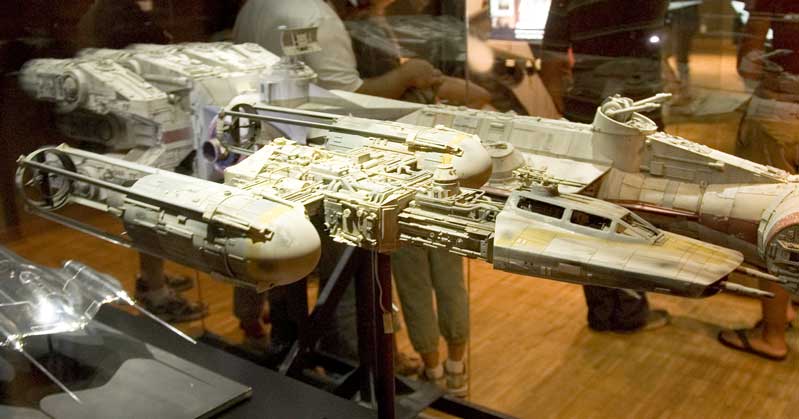
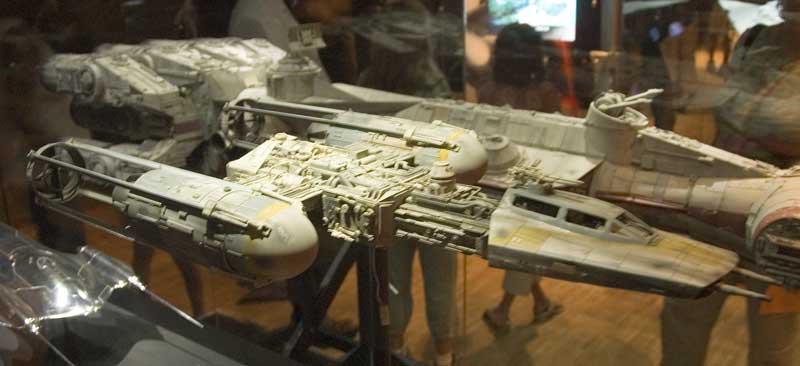
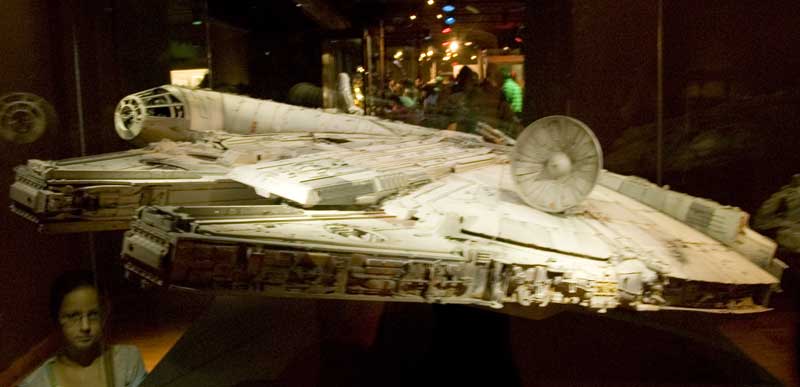
The first picture is a Y-Wing model used in the SW movies. ½-second exposure, F3.5, @ 18mm with VR turned on. The second is with the same settings but VR turned off. This was hand held and I had nothing to brace myself against. I just pushed my elbows against my chest/stomach, focused, exhaled slowly, then held my breath and hit the shutter release. The biggest difference is really seen in the droid. All the other images have VR turned on and ~1/2-second exposure. The Millennium Falcon was ~4-feet across, and I really should have used a smaller aperture to get it all in focus, but then my shutter speed would have been over 1-second.
Y-Wing (VR on)
Y-Wing (VR off)
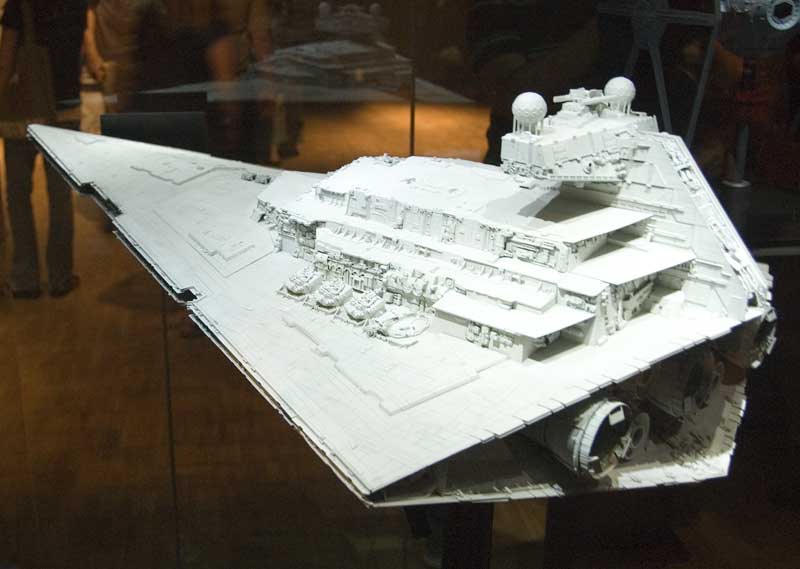
Star Destroyer from EpIV opening. Really tough lighting b/c it’s basically all white. The turrets looked to be 1/48th scale tanks!
Falcon
[This message has been edited by agracer (edited 9/6/2007 7:56a).]



