aggiehawg said:
Salient part of the rest:
Trump's loans were business loans, not home mortgages. Tish was applying for Fannie Mae loans. That's not a private bank, like in the Trump case. So yes, the victim is the government and the tax payer in Tish's case.
Ok, so the potential victim here is different between Jones and Trump. And, Jones' act is substantially worse for a number of reasons. But, Tish's prior prosecution of similar type claims against Trump makes her defense really, really difficult.
The house in question was direct collateral for the mortgage loan in James case. For Trump, the value of the real estate was only part of the statement of net worth that Trump gave.
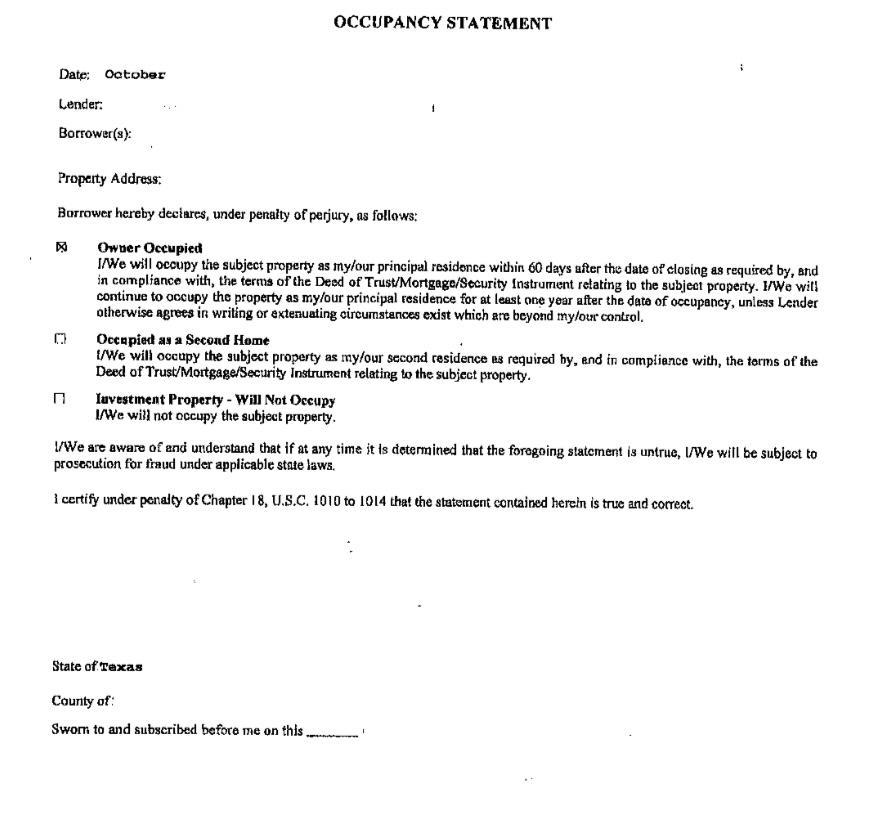
For James, the difference between an investment property and a 2nd home is substantial because:
a) The lender assumes you will take care of your own home better than a renter will.
b) Statistically, investment property owners are much more likely to walk away from an investment property that is underwater than an owner occupied property, so the risk of default is higher for investment properties.
c) The costs to enter into a mortgage transaction are low, making it expensive for the lender to do deep due-diligence on each property. The only incentive to tell the truth in the application is the steep criminal and civil penalty for getting caught. It's kind of why penalties for lying on your taxes are so high. It's hard to get caught, so the people that do get caught are subject to getting nailed to the wall. Simple economic theory related to how effective of a disincentive a punishment is.
d) These types of misrepresentations were the primary cause of the 2008 financial crises. People lying about their income and the value of the home they were buying, and how they were going to use them, is the exact reason why we see this very strongly worded form that the borrower has to sign related to misrepresentations. We have been down the road before of "this is no big deal", and, in aggregate, it is in fact a very big deal (especially when it is magnified exponentially with credit default swaps and the like, but that gets really complicated).
For Trump, the misstatement of his R/E value was pretty negligible, because:
a) The misstatement was part of his statement of net worth, which the lender used to assess the value of any owner guarantee that Trump was providing. My understanding is that the real estate in question was not direct collateral to the business loan, just a source of wealth for a potential judgement in the case of a bankruptcy. Very different, as collecting on a guarantee is substantially harder than foreclosing on collateral.
b) The lenders here were sophisticated lenders who had the time and ability to research the actual value of Trump's properties had they needed to. This wasn't a small loan with limited funds available for due diligence. This was a large business loan that had substantial transaction fees associated with it.
So basically, the situation completely cuts the legs out from under any defense she has.
1) Selective prosecution: um, you are much more guilty of that than the DOJ prosecutor, Ms. James.
2) Ignorance: um, you should have been much more aware of the situation than the person you prosecuted for financial crimes, Ms. James. By the way, the facts in the case belie the claim that you didn't know.
3) No real harm: um, collectively, these types of lies are much more likely to create harm than the crimes you prosecuted Ms. James. You can't say that you shouldn't be prosecuted because no one was hurt, because no one was hurt in the Trump case, either.
Her only real defense is, that this situation is (D)ifferent.