People's Salvation Cathedral
Largest in the world now.


Largest in the world now.
The organ in Jędrzejów Abbey in Poland, 1745-1754 CE pic.twitter.com/lP8iCEOFlZ
— Beyazıt (@theBestofSanat) December 10, 2025
nortex97 said:
Pretty cool.
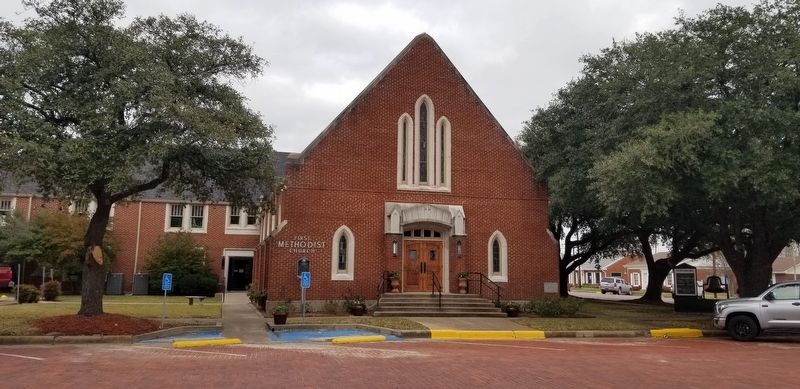
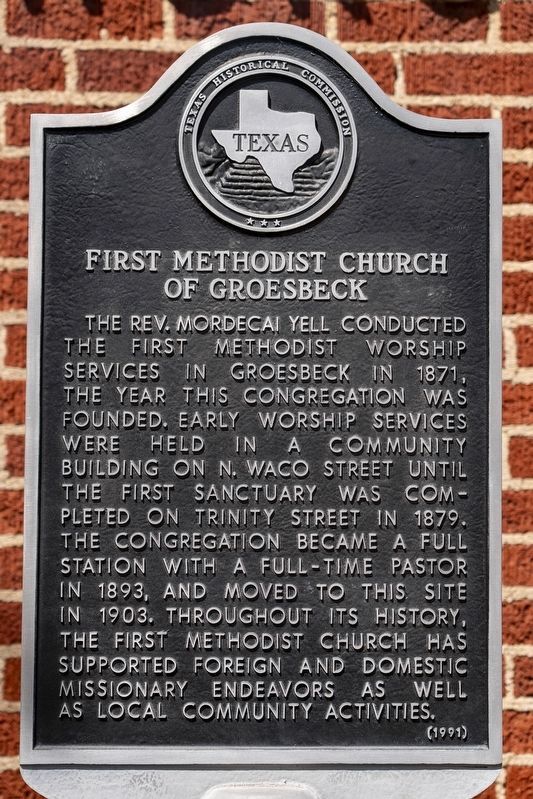
Many will know of this one, but it is neat to see/visit. St Mary's in Plantersville, TX ('the painted church').
(Yes, they have a periodic quilt show stilI I think).
Some cool older ones in Texas to see/visit are at this link;
http://texasescapes.com/Texas_architecture/TexasChurches.htm
Here are 5 cool ones I'd like to get to some day in South America.
Good morning 🌞 pic.twitter.com/PAqdp8Mffi
— Fascinating History (@Fascinate_Hist) December 12, 2025
Quote:
This is the interior of St. Stephen's Cathedral (Stephansdom) in Vienna, Austria.
The distinctive features that give it away are:
The extremely tall, ribbed Gothic vaulting with the colorful octagonal lantern/tower visible at the top center.
The famous multicolored tiled roof visible through the high windows (a hallmark of Stephansdom).
The characteristic layout and stone pulpit in the nave.
It's the most important church in Vienna and one of the city's most recognizable landmarks. The photo is taken looking eastward from the nave toward the high altar.


Tucked away in Smar Jbeil, Batroun District, Saydet el Maounet is one of the oldest churches in Lebanon 🇱🇧 , dating back to the 6th century.
— Cedars and Saints🇻🇦 (@CedarsAndSaints) December 27, 2025
Surrounded by silence, and nature, this historic church is a powerful reminder of Lebanon's rich architecture, and timeless landscapes. pic.twitter.com/sGFf0jlYc6


Quote:
Archaeologists recently discovered such a structure in Armenia's ancient city of Artaxata, considered the first Christian state in the world.
Dating to the mid-fourth century AD, it is the oldest archaeologically documented church in the country and provides additional evidence for early Christianity in Armenia, Achim Lichtenberger, professor at the University of Mnster, said in a statement.
"Octagonal churches were unknown here until now," Mkrtich Zardaryan of the National Academy of Sciences in Armenia said in a statement, "but we are very familiar with them from the Eastern Mediterranean region, where they first appeared in the fourth century AD."
94chem said:
Chartres is the greatest gothic cathedral of them all. It has the unfathomable age of Notre Dame, majestic and intricate stone work and stained glass, massive size made even more astonishing by its location. It is just stunning, consuming, and overwhelming.
Walked into Cathedral of the Assumption and was blown away—absolutely stunning. pic.twitter.com/Jg9objHEsA
— TacitusChrono (@TacitusChrono) April 7, 2026
Holy Trinity Cathedral in Arad is full of color and detail—every inch feels alive. pic.twitter.com/AsS3bhwLJ9
— TacitusChrono (@TacitusChrono) April 17, 2026
nortex97 said:
It's the Cathedral of the Assumption (also known as the Dormition Cathedral or Uspensky Sobor) in Moscow.Holy Trinity Cathedral in Arad is full of color and detail—every inch feels alive. pic.twitter.com/AsS3bhwLJ9
— TacitusChrono (@TacitusChrono) April 17, 2026
This one's their 'new one' post cold-war, in Arad, Romania. Pretty cool as well, imho.
Greece (a bit like Spain) has a whole bunch of churches that became mosques and then churches again.
— Dionisus (@dengersu) April 27, 2026
This leads to some fascinating aesthetics!
(This here is a Rotunda Church serving as a mosque until 1912) #greece #bizantine #Ottoman pic.twitter.com/vuPqPPExfk
Quote:
The circular building, with a diameter of 24m, is roofed by a dome with a height of 30m. The cylinder wall is 6,30m thick and is divided in its interior into eight rectangular conches, from which the southern one was the main entrance.
Initially it was a sanctuary of the Cabeiri, chthonic deities, or of Zeus, protector of Diocletian and Galerius. In the past it was believed that it might have been the tomb of Galerius, a view that has been abandoned, since his mausoleum was found in Romuliana, in Serbia.
During the years of early Christianity, around the middle of the 5th century, the Rotunda was converted into a church dedicated to the Archangels, while it took its present day name (Church of Agios Georgios) from a nearby chapel of Agios Georgios.
During the Ottoman Period (1430-1912) and more specifically from 1525-1590, it functioned as a metropolitan church, under the name Old Metropolis, Eski Metropol, as it is mentioned in Turkish sources. Then (1590-1591) it was converted into a mosque named Hortaci Sleyman Efendi Camii. When Thessaloniki was liberated in 1912 and until 1920 it was used again as a place for Christians. The earthquake in Thessaloniki in 1978 caused serious damages to the church and important restoration works were made. Today the church of Agios Georgios, the Rotunda, is one of the most important archaeological sites of the city.
In spite of the continuous changes in its use, the monument always kept its circular shape. In the 5th century, in order to use the monument as a church, they added an arch on the east and created the altar. On the western side they added the narthex with the new entrance.
Of particular interest are the mosaics, of exceptional quality, which are considered the most beautiful of the early Christian years. From the decoration of the dome that still survives we understand that it depicts Christ's Second Coming. Better preserved on the lower part are the saints, who are in front of an architectural setting. At the arches of the conches various decorative themes can be seen.
At the altar's conch there is a wall painting of the Ascension of Christ that dates from the second half of the 9th century.
When you visit the Church of St. Ignatius of Loyola in Rome, you can contemplate the ceiling throug a mirror. pic.twitter.com/awMVQcBAbm
— SereneLoop (@syed82560) May 5, 2026


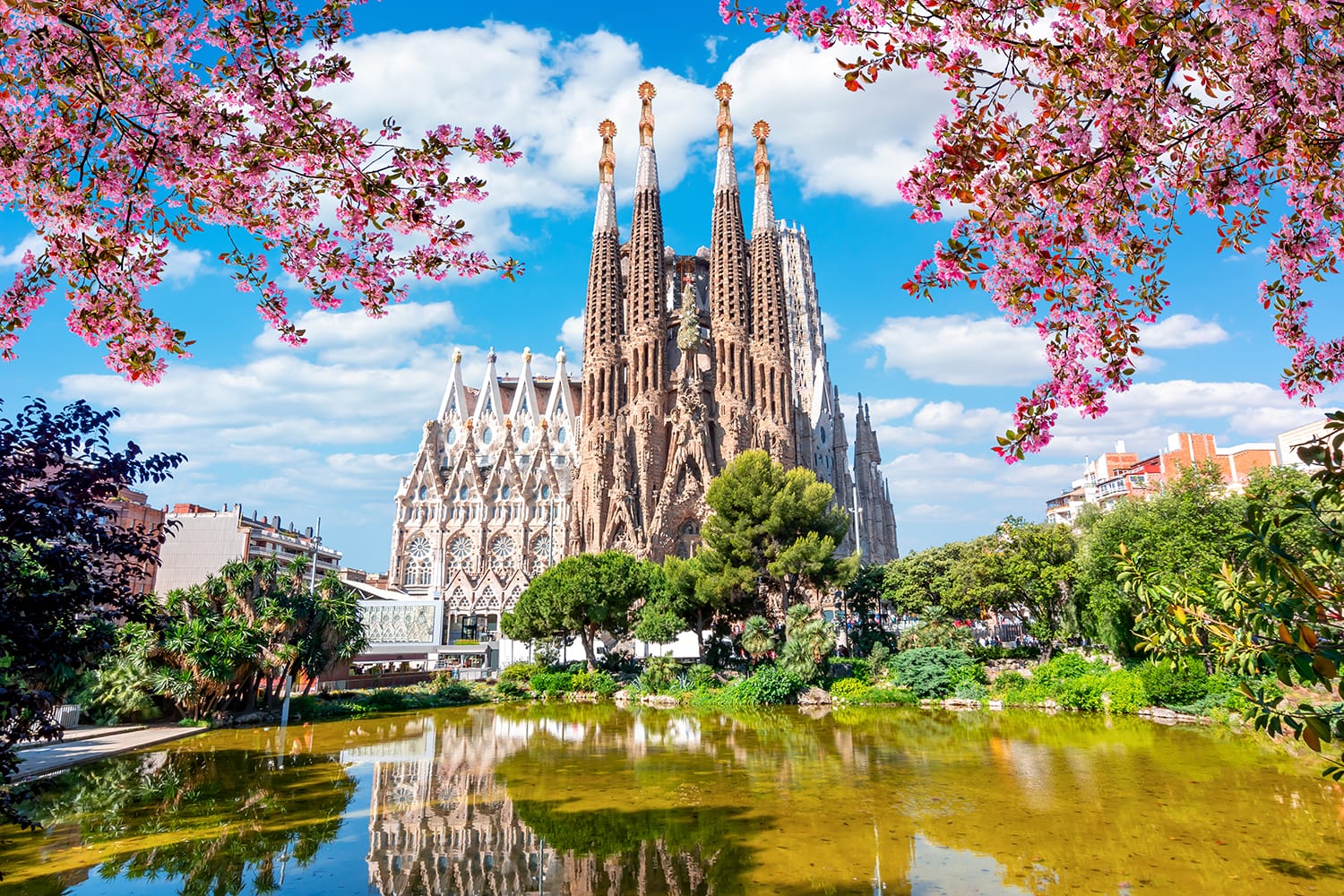
If you pitched this as a screenplay every studio would reject it for being too on-the-nose.
— Aakash Gupta (@aakashgupta) May 9, 2026
A 73-year-old architect walks to confession in 1926 and gets hit by a tram on the Gran Via in Barcelona. He's mistaken for a vagrant because of his worn clothes and left at a pauper's… https://t.co/jjcBWHtMw2
Quote:
If you pitched this as a screenplay every studio would reject it for being too on-the-nose.
A 73-year-old architect walks to confession in 1926 and gets hit by a tram on the Gran Via in Barcelona. He's mistaken for a vagrant because of his worn clothes and left at a pauper's hospital. He dies three days later. His name is Antoni Gaud. The cathedral he leaves behind is less than a quarter complete. The plans to finish it sit in his workshop as plaster models and detailed drawings.
Ten years after his death, in July 1936, FAI anarchists break into that workshop. They smash the plaster models. They burn the archive of drawings and calculations. They pry open Gaud's tomb. For the next 50 years, architects piece together a destroyed playbook from photographs and broken plaster fragments.
The geometry was the real problem. Gaud designed the church using upside-down hanging-chain models because the math for hyperboloid intersections did not yet exist on paper. He had solved it physically. Computers finally caught up to him in the 1980s. By 2010 the project was 50% complete. By 2015 stone elements that took months to hand-carve were being modelled digitally and machine-cut in days.
Now the kicker. The building is funded entirely by people paying admission to see scaffolding. 134.5 million of income in 2025, all private, none of it from the Spanish state or the Vatican. About 4.7 million tourists a year buying 26 tickets to watch a cathedral get built. The unfinished state was the product.
On June 10, 2026, exactly 100 years to the day after Gaud died, the cross goes up on the Tower of Jesus Christ. 144 years from groundbreaking. 172.5 meters tall. The tallest church building in the world, beating Ulm Minster, which took 513 years.
When asked why his project was taking so long, Gaud said one thing: "My client is not in a hurry."
Turns out neither was he.


kurt vonnegut said:jbryan10 said:
That is impressive! the pictures of Sagrada all look like renderings and not like something real.

Trinity Presbyterian Church in Owasso, OK pic.twitter.com/8pXkLWPunD
— Dmitriy Molla (@DmitriyMolla) August 19, 2026
🕌A stunning sunrise moment at Sacra di San Michele. This ancient monastery is located atop Mount Pirchiriano in the Piedmont region of northwestern Italy. Built between the 10th and 13th centuries, it bears the strong imprint of Romanesque and Gothic architecture.
— Western Melodies (@YuanmingV29627) September 7, 2026
📹 by:… pic.twitter.com/A4KjtbSKam