
Damn, I didn't catch Jon was part of this. Definite must watch now.
WWII with Tom Hanks
6,442 Views |
54 Replies |
Last: 3 mo ago by LMCane
Capstone said:
Same - looks like I'll subscribe for a month of the History Channel stand alone app... provided they carry the documentary.
maybe we can get it through the Amazon Prime channel?
Rex Racer said:LMCane said:
Grandma was a true American Babe!!
He met her at a pharmacy/soda fountain in Leesville, LA when he was stationed at Fort Polk in 1941. He went in for a slice of pie, and he kept going back for her!
In 1961, my Dad met my mother when he was stationed at Fort Polk, as well. I owe my existence to Fort Polk twice over!
wow that's an amazing story!!
women back in the 1940s were so much more stylish than today.
did you see "Soldier Story" the movie made in the 1980s about a fort in the South in 1943 with black troops?
It is a fantastic movie!
Harold Rollins I think who was an amazing actor but killed himself with drugs.
LMCane said:Rex Racer said:LMCane said:
Grandma was a true American Babe!!
He met her at a pharmacy/soda fountain in Leesville, LA when he was stationed at Fort Polk in 1941. He went in for a slice of pie, and he kept going back for her!
In 1961, my Dad met my mother when he was stationed at Fort Polk, as well. I owe my existence to Fort Polk twice over!
wow that's an amazing story!!
women back in the 1940s were so much more stylish than today.
did you see "Soldier Story" the movie made in the 1980s about a fort in the South in 1943 with black troops?
It is a fantastic movie!
Harold Rollins I think who was an amazing actor but killed himself with drugs.
I've not seen that movie, but I'll have to check it out.
Yeah, Granny was quite the seamstress. She doubtless made that dress herself. She typically used material from feed and flour sacks.
Rex Racer said:
I'm so in. My grandfather was a surgical technician in the 489th Armored Field Artillery Battalion (7th Armored Division). I take any opportunity I can to learn more about what he went through.

Very cool. My grandfather flew gliders in the Army Air Corps. Years after his death, my dad found a picture of him in a book about the air war in Europe. He also was able to locate the after action report from his flight during Operation Varsity, which is pretty amazing to read.

My biological grandfather was a Seabee in the Pacific and also served with the Army building the Panama Canal, but I don't have any specifics. He married a Navy nurse in 1944 (not my grandmother; that story is complicated and doesn't involve WWII), and my genealogy research hasn't turned up much on either of them after that point.
My grandfather fought in Northern Africa and italy in the Army. On Sicily, they were supposed to link up with some British paratroopers, but everything went haywire and only one of the Brits actually got to the rendezvous point. He was old enough to be the entire platoon's father, a vet of the Great War who had been called back to action.
While clearing some small town later that month, my grandfather reacted to a glint of metal in the sun and shoved the Brit out of the way, saving his life from an Italian sniper. When they parted ways, the Brit gave my grandfather his ceremonial sword from his house of some minor nobility. My grandfather tried to refuse, but the Brit said he had no children to leave it to, but would be proud to know my grandfather was taking care of it for him.
The sword hung above the front door of whatever home my grandparents lived in for the next 60+ years. When I was in junior high, I wrote a paper about it for history class and wound up recording almost 3 hours of my grandparents talking about the war. When my grandmother died in 2008, she left the sword to me.
I own nothing that I cherish more.

While clearing some small town later that month, my grandfather reacted to a glint of metal in the sun and shoved the Brit out of the way, saving his life from an Italian sniper. When they parted ways, the Brit gave my grandfather his ceremonial sword from his house of some minor nobility. My grandfather tried to refuse, but the Brit said he had no children to leave it to, but would be proud to know my grandfather was taking care of it for him.
The sword hung above the front door of whatever home my grandparents lived in for the next 60+ years. When I was in junior high, I wrote a paper about it for history class and wound up recording almost 3 hours of my grandparents talking about the war. When my grandmother died in 2008, she left the sword to me.
I own nothing that I cherish more.
Ever think about tracking down the family it belonged to?
That's an awesome story and artifact Charley
Awesome story. Thank you for sharing.
Wow that is super cool!
I have that book and it is excellent
showing that the Jap carriers were actually really devastated because they were former Cruisers with gaps between the flight deck where the wind/oxygen served to increase the fires and explosions.
I have that book and it is excellent
showing that the Jap carriers were actually really devastated because they were former Cruisers with gaps between the flight deck where the wind/oxygen served to increase the fires and explosions.
G Martin 87 said:
My biological grandfather was a Seabee in the Pacific and also served with the Army building the Panama Canal, but I don't have any specifics. He married a Navy nurse in 1944 (not my grandmother; that story is complicated and doesn't involve WWII), and my genealogy research hasn't turned up much on either of them after that point.
my paternal grandfather was a copilot on B-24 Liberators flying out of Foggia Italy in 1943 and 1944.
Here is one of the bombers from his squadron:
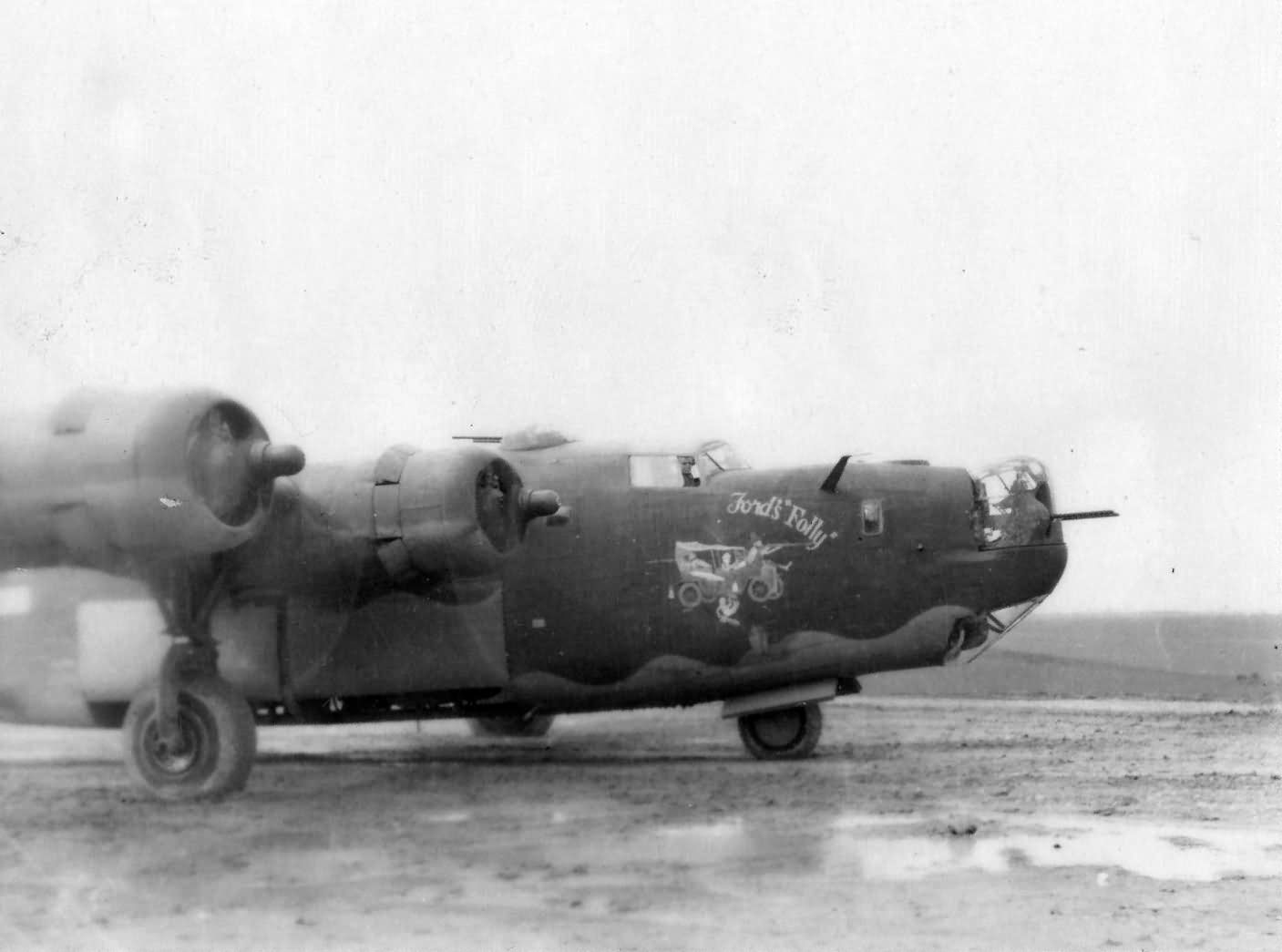
He served in the 455th BG and was shot down over Yugoslavia and being Jewish had to run away from the Nazis for three weeks before linking up with partisans.
The Vulgar Vultures was the nickname of the 455th Bombardment Group (Heavy), a B-24 Liberator unit of the U.S. Fifteenth Air Force based in Italy during World War II.
The group was activated in July 1943 with four bomb squadrons: the 740th, 741st, 742nd, and 743rd. After a nomadic training period with worn-out equipment, the group came together at Langley, Virginia in October 1943, where they were issued G and H models of the Consolidated B-24 Liberator. 455th
They departed Langley in December 1943 and flew to Tunisia by way of Brazil, arriving in January 1944. They remained in Tunisia until their airfield at San Giovanni, Italy about five miles west of Cerignola and 20 miles southwest of Foggia was completed. The group moved to San Giovanni in February 1944 and flew its first combat mission (Anzio) on February 16, 1944, as part of the 304th Bomb Wing, Fifteenth Air Force. 455th
Like other bomber units in the Foggia complex, the 455th was part of a sprawling network of airfields. Unlike bombers stationed in England, the four full bomb wings of the Fifteenth Air Force, based in Italy, could attack targets in southern Germany, Austria, and Eastern Europe. Warfare History Network
Combat Operations
The Vulgar Vultures flew deep strategic missions across Axis-controlled Europe. A standard formation typically massed 40 planes divided into two units of 20 B-24s each, with the mission commander leading a center box of six bombers, flanked by seven ships in the left and right combat boxes. Warfare History Network
One of their most intense missions was the raid on Steyr, Austria. Air attacks grew more intense as they neared Steyr, with the heaviest concentration of enemy fighters encountered 15 miles west of Graz. The interceptors included Messerschmitt Me-109s, Me-110s, and ****e-Wulf Fw-190s, with twin-engined aircraft firing rockets into the formation. Intelligence officers evaluated these German pilots as "very aggressive" and "experienced."
.
Great example of nose art on the B-24. The Ford factory at Willow Run, MI, was one of the production contractors for the B-24. Judging by the nose art, that one was probably produced there.
Very cool. I have a pocket watch that my Granddaddy took off of a dead German. It has an embossed image of the Kaiser inside of it, and it says for 25 years of loyal service to one of the Kaiser's powder mills (all in German, of course).
Similarly to your sword, it is my most cherished possession.


Similarly to your sword, it is my most cherished possession.

LMCane said:G Martin 87 said:
My biological grandfather was a Seabee in the Pacific and also served with the Army building the Panama Canal, but I don't have any specifics. He married a Navy nurse in 1944 (not my grandmother; that story is complicated and doesn't involve WWII), and my genealogy research hasn't turned up much on either of them after that point.
my paternal grandfather was a copilot on B-24 Liberators flying out of Foggia Italy in 1943 and 1944.
Here is one of the bombers from his squadron:
He served in the 455th BG and was shot down over Yugoslavia and being Jewish had to run away from the Nazis for three weeks before linking up with partisans.
The Vulgar Vultures was the nickname of the 455th Bombardment Group (Heavy), a B-24 Liberator unit of the U.S. Fifteenth Air Force based in Italy during World War II.
The group was activated in July 1943 with four bomb squadrons: the 740th, 741st, 742nd, and 743rd. After a nomadic training period with worn-out equipment, the group came together at Langley, Virginia in October 1943, where they were issued G and H models of the Consolidated B-24 Liberator. 455th
They departed Langley in December 1943 and flew to Tunisia by way of Brazil, arriving in January 1944. They remained in Tunisia until their airfield at San Giovanni, Italy about five miles west of Cerignola and 20 miles southwest of Foggia was completed. The group moved to San Giovanni in February 1944 and flew its first combat mission (Anzio) on February 16, 1944, as part of the 304th Bomb Wing, Fifteenth Air Force. 455th
Like other bomber units in the Foggia complex, the 455th was part of a sprawling network of airfields. Unlike bombers stationed in England, the four full bomb wings of the Fifteenth Air Force, based in Italy, could attack targets in southern Germany, Austria, and Eastern Europe. Warfare History Network
Combat Operations
The Vulgar Vultures flew deep strategic missions across Axis-controlled Europe. A standard formation typically massed 40 planes divided into two units of 20 B-24s each, with the mission commander leading a center box of six bombers, flanked by seven ships in the left and right combat boxes. Warfare History Network
One of their most intense missions was the raid on Steyr, Austria. Air attacks grew more intense as they neared Steyr, with the heaviest concentration of enemy fighters encountered 15 miles west of Graz. The interceptors included Messerschmitt Me-109s, Me-110s, and ****e-Wulf Fw-190s, with twin-engined aircraft firing rockets into the formation. Intelligence officers evaluated these German pilots as "very aggressive" and "experienced."
The book "The Wild Blue" gave me such a great appreciation and an immense amount of respect for the Liberator, their crews and what they experienced. Such a bummer that there is only a single air worthy B-24 left in existence.
My parents had kids later in life so by the time I was in middle school most of my relatives that fought in WW2 were gone. My maternal grandfather served in the Navy in the Pacific and I've been able to find very little of his time of service. My paternal grandfather was already in his mid 30s with multiple kids. He was a welder and working in Houston in the shipyards and refineries.
His brother-in-law (my great Uncle) however was one of the few US Army men who served in both theaters. A poor farmer, he was initially stationed in the Aleutian Islands at Dutch Harbor. He was there when the Japanese bombed them in June 1942 as part of their diversion prior to Midway. He island hopped the Aleutians helping build air bases on Adak and Amchitka and was on Attu island during the final week of the battle. He was involved in repelling the final banzai charge that the Japanese threw at the Americans on Attu (my dad and uncle said this was the only part of the war he wouldn't talk about).
Things get weird after his service on Attu and I have never been able to nail down exactly what happened or how he ended up in Europe. He was in the Aleutians until June of 1944, had a 30 day furlough back home (got married), was sent to Camp Atterbury, Ind. and then onto Europe in November 1944. He was sent to the 106th ID. They moved into the line on the German-Belgium border in December 1944 and less than a week later the Bulge happened. A large part of that division was captured in the first few days. His regiment fell back to St. Vith and fought there for several days with other units before being pushed further back to Vielsalm where they latched onto the 7th Armored. They continued fighting in Manhay, Belgium when my great uncle and several others were overrun and captured by the Germans on December 30th.
He spent the last 5 months of the war moving around several POW camps. I have the list of camps he was in as he was moved around, but I don't know how long his duration was in each camp.
He returned to the US in June of 1945.
His brother-in-law (my great Uncle) however was one of the few US Army men who served in both theaters. A poor farmer, he was initially stationed in the Aleutian Islands at Dutch Harbor. He was there when the Japanese bombed them in June 1942 as part of their diversion prior to Midway. He island hopped the Aleutians helping build air bases on Adak and Amchitka and was on Attu island during the final week of the battle. He was involved in repelling the final banzai charge that the Japanese threw at the Americans on Attu (my dad and uncle said this was the only part of the war he wouldn't talk about).
Things get weird after his service on Attu and I have never been able to nail down exactly what happened or how he ended up in Europe. He was in the Aleutians until June of 1944, had a 30 day furlough back home (got married), was sent to Camp Atterbury, Ind. and then onto Europe in November 1944. He was sent to the 106th ID. They moved into the line on the German-Belgium border in December 1944 and less than a week later the Bulge happened. A large part of that division was captured in the first few days. His regiment fell back to St. Vith and fought there for several days with other units before being pushed further back to Vielsalm where they latched onto the 7th Armored. They continued fighting in Manhay, Belgium when my great uncle and several others were overrun and captured by the Germans on December 30th.
He spent the last 5 months of the war moving around several POW camps. I have the list of camps he was in as he was moved around, but I don't know how long his duration was in each camp.
- He was initially sent to Stalag XIIA in Limburg, Germany near Frankfurt
- Then he went to Stalag IV-B with most of the other Americans captured in the Bulge near Mhlberg in eastern Germany
- He was then moved to Stalag III-B in Furstenberg, Germany towards the southeast of Berlin
- He was then moved to Stalag III-A in Luckenwalde, just 30 miles south of Berlin.
He returned to the US in June of 1945.
Also several great threads on the history board with TexAgs connections to the war.
https://texags.com/forums/49/topics/3506038/replies/69066884
https://texags.com/forums/49/topics/3506038/replies/69066884
Here are Liberators from the 455th Bomb Group (my Grandfathers) over Vienna deploying the new tactic of "Hedgehog defense" where the .50 calibers could protect all angles of the planes

Featured Stories
See All
UNLV transfer RHP Jase Evangelista commits to Aggie baseball
by Richard Zane
3:17
9h ago
3.2k
In-Home Visit: Haddad brings strong bloodlines to A&M's 2027 class
by TexAgs Recruiting
4:17
7h ago
931
3:05
1d ago
3.3k