
No, Sankey's "Plan B" does not sound like it is realistic at all
Texas A&M Football
Real vs. realistic? SEC's 'Plan B' rooted in culture of self-regulation
9.7k Views
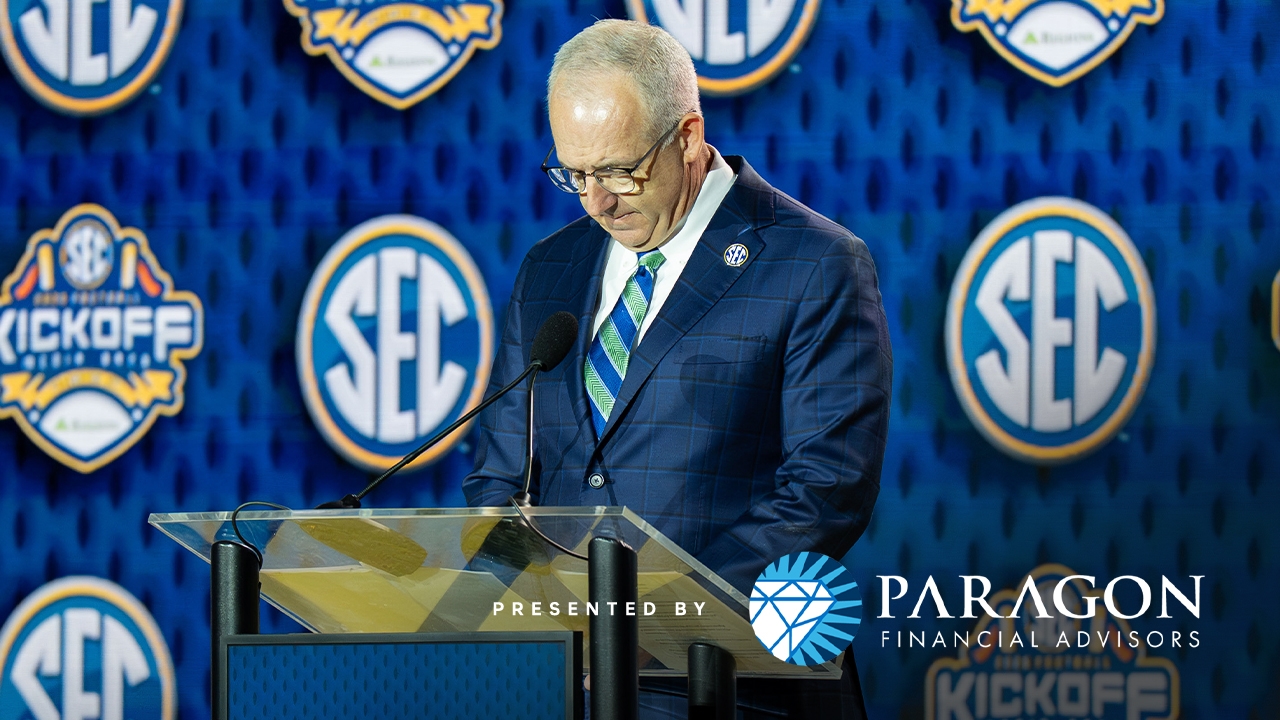
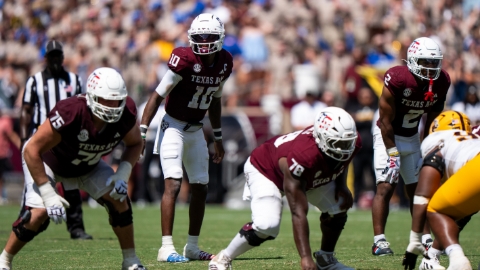
Photo by Callie Garner, TexAgs
TAMPA, Fla. — First choice isn’t always the right choice.
Plan B is often the smart move.
Aggies know this very well. Recall, some misguided soul considered Mark Stoops the right choice to coach the Texas A&M football team.
Then, “Plan B” went into effect via message boards and — viola — Mike Elko, fortunately, was hired instead.
Also, Ole Miss coach Chris Beard was “Plan A” to fill A&M’s basketball coaching vacancy. That didn’t work out. “Plan B” was Bucky McMillan.
A&M reached the NCAA Tournament. Ole Miss did not.
“Plan B” worked out for A&M.
But would Greg Sankey’s “Plan B” work for the Southeastern Conference?
Last week, the SEC Commissioner revealed the conference has contingency plans of self-governance and intra-league competition that could be implemented if agreements on college sports reform can’t be reached.
The “Protect College Sports Act,” a bill introduced by Senators Ted Cruz and Maria Cantrell, is designed to regulate college sports.
But several provisions of the bill, like pooling media rights or capping player compensation, have rankled the SEC.
Speaking at SEC Media Days on Monday, Sankey suggested “Plan B” is a viable option and not just a threat.
“I do not believe that is a leverage point. I think that's just honest communication,” Sankey said. “What I think is important is those comments represent a high level of frustration with the circumstance in which we find ourselves.
“We have regulated ourselves more progressively than other colleagues by choice, across our league. We've had different academic eligibility restrictions in the past. We had different transfer restrictions in the past. Some of what you hear comes out of a culture that we can regulate ourselves.”
“We have regulated ourselves more progressively than other colleagues by choice, across our league. We've had different academic eligibility restrictions in the past. We had different transfer restrictions in the past. Some of what you hear comes out of a culture that we can regulate ourselves.”
The SEC has a history of doing its own thing. In fact, the SEC, much to the chagrin of the NCAA at the time, was the first league to stage a football conference championship game.
But breaking away from the NCAA is a much greater and controversial idea.
Imagine a football regular season against only SEC rivals followed by a playoff featuring only SEC teams to name a “national” championship team.
That might have been a better idea a few years ago. An SEC team won the national championship 13 times in 17 seasons from 2006-2022.
Last year, the SEC had five teams in the 12-team College Football Playoff field, and two more — Texas and Vanderbilt — were arguably deserving.
However, Indiana became the third consecutive Big Ten team to win the national title.
It would be hard to claim a national championship when other leagues are beating you.
Other conferences also won national championships in men’s and women’s basketball, too.
“Plan B” doesn’t seem to be a realistic option.
But it is a strong reminder that the SEC won’t be forced to accept anything that it vehemently disagrees with.
Never miss the latest news from TexAgs!
Join our free email list
SPONSORED BY
_68b86d60.jpg)