

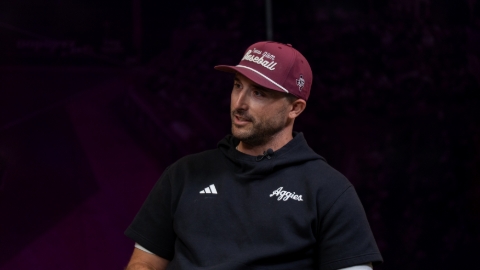

I expect Pennington to have a big impact on this team and their success this year.
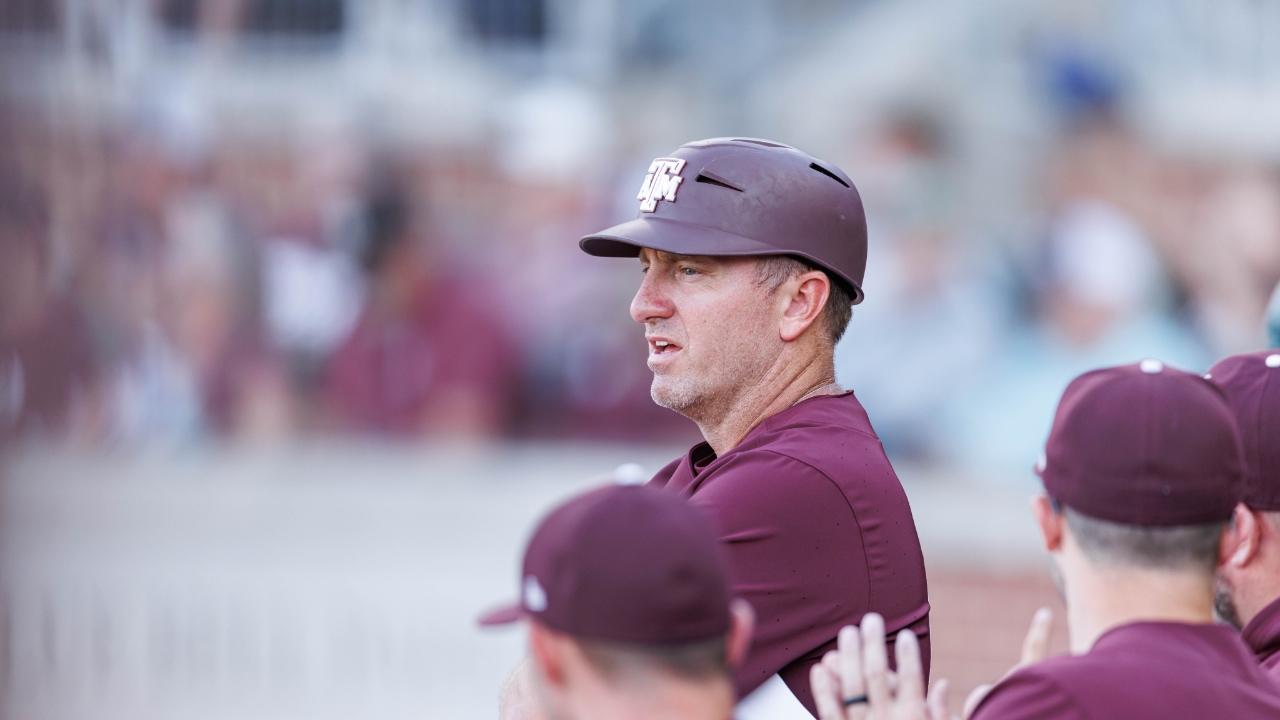
Photo by Will Huffman, TexAgs
In 154 years of Major League Baseball and over 238,000 games played, there have only been 24 official perfect games.
That means 24 individuals made the final out to complete perfection.
Cliff Pennington is one of the few.
To say the newest addition to Texas A&M’s coaching staff has “been there, done that” would be an understatement.
Now, he’s imparting the knowledge gained from a life in baseball on the next wave of Aggies, including what it’s like to cement Dallas Braden’s 2010 date with history.
“They ask about that all the time, like, ‘Oh, what were you thinking?’ I was scared to death,” Pennington said. “That’s not typically what they’re expecting you to say.
“If you’re not a little bit nervous in that moment, you're not alive... There’s an element there where I can relate and help them connect the dots and realize that some things they’re feeling are OK. Guess what? The best players in the world felt the same way, so you’re OK. That's not a bad thing.”
“There’s an element there where I can relate and help them connect the dots and realize that some things they’re feeling are OK. Guess what? The best players in the world felt the same way, so you’re OK. That's not a bad thing.”
Long before he threw across the Oakland Coliseum diamond on a sun-splashed afternoon to retire Gabe Kapler — 6-3, if you were scoring at home that Mother's Day — for out #27, Pennington was starring for Mark Johnson’s Aggies from 2003-05.
Long before his 11-year MLB career was complete, the All-American knew a future in coaching awaited.
“I knew I wanted to coach as soon as I left here,” Pennington said. “As soon as I went into pro ball, I talked to Coach Johnson, and the goal was to go play baseball as long as you can and then to come back and try to be like Coach Johnson.
“Try and carry on his legacy. Try and impact players the way he impacted me. I’ve known that since then.”
Which led him back here, to the same ballpark — albeit with a different facade — that his mentor once presided over.
Well, he's actually back here...again.
Pennington previously served as an A&M assistant under Rob Childress in 2020 and 2021, then spent four seasons with Dan Heefner at Dallas Baptist.
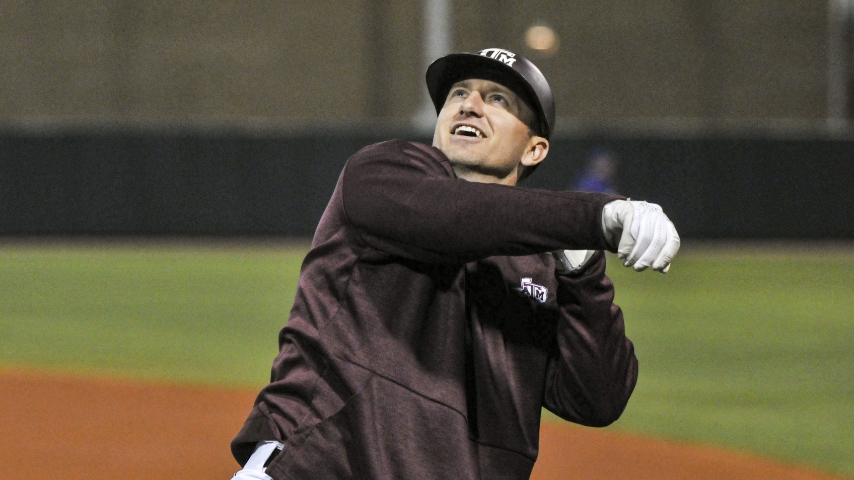
Anna Peterson, TexAgs
This represents Cliff Pennington’s second stint as an assistant coach at Texas A&M.
Along with Johnson, those two men — not to mention countless others in the professional ranks — have helped shape his coaching style.
“It’s just learning how to get to players. When you first start coaching, you have an idea of what you think is gonna work, and you coach to what you needed as a player and things like that,” the ex-big leaguer said. “You’ve got to be able to show them. They’ve got to be able to feel it. They got to be able to see it. That’s just how these guys learn.”
To Pennington, Johnson is A&M’s GOAT. With five conference championships, two trips to the College World Series and a program-best 876 victories, he might be.
But the impact one Texas A&M Hall of Famer has had on another goes well beyond baseball.
“He’s the greatest. I loved him,” Pennington said of Johnson. “First off, he built the relationships with you, got to know you, cared about you, and then was there for you to teach you everything he knew. The door was always open.
“He was open to sharing about his life and his testimony and why he believed what he believed with his players. That was awesome as a young Christian baseball player coming to Texas A&M and having a coach that was going to help you become the best baseball player you could be, but also was going to, more importantly, help you be the best man you can be and grow in your faith.”

Texas A&M Athletics
Mark Johnson was inducted into the Texas A&M Athletics Hall of Fame in 2012.
Pennington aims to carry that Johnson-esque approach with him two decades after his initial departure.
On the field, his major area of focus on Michael Earley’s “collaborative” staff will be infield defense and base running.
An infielder, he owned a .972 career fielding percentage, and he successfully swiped 75 percent of his stolen base attempts.
The goal on the dirt is for fans not to notice. On the bases, expect the Aggies to be more aggressive than in years past.
"We have an athletic team. We have some guys that can run. Earley is open to it, loves it, wants it,” Pennington explained. “Things we talk about as a staff is being able to win multiple types of games in different ways.
“You’ve got to put pressure on the defense. You’ve got to make them stop you. That comes from trying to stretch a single into a double, going first to third, stealing bases, being aggressive on a ball in the dirt. ... That kind of pressure in college baseball and amateur athletes will lead to mistakes and opportunities for us to score runs.”
That’s all in search of the ultimate prize, something that has eluded A&M baseball since its inception.
But much like Johnson before him, Pennington’s chase for championships goes beyond the diamond.
“The goal here is to be the last team standing,” he said. “That’s what the ultimate goal always is from a team perspective, but with our players, it’s helping each player become the best player and person they can be.”
Excelling in all of those facets might equal coaching perfection.
Never miss the latest news from TexAgs!
Join our free email list