Coming Death of Climate Hoax

11,841 Views | 134 Replies | Last: 2 mo ago by ShinerAggie
eric76
How long do you want to ignore this user?
Did you know that it was warmer during the Holocene Climatic Optimum?

That warmer climate was just what we needed to kickstart the civilizations we have today. If not for those warmer temperatures then, today's civiliations could probably not exist.
ShinerAggie
How long do you want to ignore this user?
Wow. Water vapor is pretty much the only greenhouse gas (a misnomer in itself) that matters. Water vapor concentration is present in the atmosphere in percentage points, not hundredths of a percent. It absorbs almost all radiation that pathetic little CO2 might in the absence of water vapor, and it doesn't drive climate? The catastrophic model predictions, that is what they are not data, depend on a runaway feedback from water vapor to calculate any warming effect from CO2, and the feedback mechanism does not exist. Yet, an essential trace gas drives the climate. Right. And the atmosphere is a larger driver of climate than the oceans.
________________________________________________________
“Those who cannot change their minds cannot change anything.”
- George Bernard Shaw
ShinerAggie
How long do you want to ignore this user?
________________________________________________________
“Those who cannot change their minds cannot change anything.”
- George Bernard Shaw
YouBet
How long do you want to ignore this user?
agclassof2012 said:

techno-ag said:

agclassof2012 said:

techno-ag said:

agclassof2012 said:

MemphisAg1 said:

Man-made climate change is a sham driven by the left to justify redistribution from makers to takers.

CO2 is only 0.04% of the atmosphere. 99.96% is other stuff, primarily nitrogen and oxygen.

Of the 0.04%, 95% of that is from natural causes like volcanoes, forest fires, decomposition, etc.

Only 5% of the 0.04% is from human activity.

It's a non-starter, yet Joe and Jane Q Public have bought the climate alarmism narrative hook, line, and sinker.


It's estimated that closer to 30% of the CO2 in the atmosphere is from human activity. Pre-industrial CO2 for the last million years ranged from 170 ppm to 300 ppm. In the last century, CO2 increased from ~280 ppm to ~430 ppm. This increase is not due to natural CO2 sources.

https://science.nasa.gov/climate-change/evidence/

https://www.epa.gov/climatechange-science/causes-climate-change

https://www.csiro.au/en/research/environmental-impacts/climate-change/Climate-change-QA/Sources-of-CO2


So you're saying it went up from 0.038% of the atmosphere to 0.04%. Oh no.

My rebuttal to anyone who makes this argument is that percentage is not what matters...it's potency. I'm assuming you wouldn't want high levels of arsenic in your drinking water. Up to 0.00001% (100 ppb) can be toxic and that is why the EPA limit is 0.000001% (10 ppb). This is a very small percentage but potency is high. CO2 behaves the same way in the atmosphere even in trace amounts. It's extremely potent at trapping heat.

Such a tired argument. Proximity to the sun and particulate matter in the upper atmosphere from volcanic eruptions affect the surface temperature of the earth far more than 0.02 % more of the atmosphere consisting of CO2.


I'm not aware of changes in earth's proximity to the sun in the past century that would explain a 1.2C increase in average global temperature. Please enlighten me.

Volcanic particulates and aerosols released from the size/frequency of eruptions we have witnessed in the past century are short-lived (less than a decade) and do not drive long-term climate trends such as the temperature rise we are currently in. Massive, persistent eruptions would have long-term climate impacts.

The science behind CO2's greenhouse effect is well-established. The rise in atmospheric CO2 concentration from 0.028% to 0.043% is significant.


Even if true that we caused it...I don't care. There is nothing to be done about it. Are you gong to advocate that we invade China and India to send them back to Stone Age so they can't be the outsized contributors to this anymore? Because our own emissions peaked almost 20 years ago now. We are all good here.

And warming up a little bit is a hell of a lot better than the alternative. Besides global population is about to tail off and hit the slide downwards so we won't be impacting the planet with as much carbon in the future anyway. The problem took care of itself through TFRs that make us endangered over the long haul.

So, I think we can all just move on from this pointless carbon scare that is wrapped up in fake data whose only solution seems to be wealth redistribution from rich western countries to the poor Global South.
agent-maroon
How long do you want to ignore this user?
Quote:

If you do not trust the work of agencies like NASA, NOAA, and other scientific agencies that came up with this data, then I doubt I'll convince you.

On this you would be correct. Although, I'm not sure why I should trust any of these agencies when all they've got are these "trust me" videos. That's not science. That's propaganda...
techno-ag
How long do you want to ignore this user?
The Sun said:

techno-ag said:

agclassof2012 said:

techno-ag said:

agclassof2012 said:

techno-ag said:

agclassof2012 said:

MemphisAg1 said:

Man-made climate change is a sham driven by the left to justify redistribution from makers to takers.

CO2 is only 0.04% of the atmosphere. 99.96% is other stuff, primarily nitrogen and oxygen.

Of the 0.04%, 95% of that is from natural causes like volcanoes, forest fires, decomposition, etc.

Only 5% of the 0.04% is from human activity.

It's a non-starter, yet Joe and Jane Q Public have bought the climate alarmism narrative hook, line, and sinker.


It's estimated that closer to 30% of the CO2 in the atmosphere is from human activity. Pre-industrial CO2 for the last million years ranged from 170 ppm to 300 ppm. In the last century, CO2 increased from ~280 ppm to ~430 ppm. This increase is not due to natural CO2 sources.

https://science.nasa.gov/climate-change/evidence/

https://www.epa.gov/climatechange-science/causes-climate-change

https://www.csiro.au/en/research/environmental-impacts/climate-change/Climate-change-QA/Sources-of-CO2


So you're saying it went up from 0.038% of the atmosphere to 0.04%. Oh no.

My rebuttal to anyone who makes this argument is that percentage is not what matters...it's potency. I'm assuming you wouldn't want high levels of arsenic in your drinking water. Up to 0.00001% (100 ppb) can be toxic and that is why the EPA limit is 0.000001% (10 ppb). This is a very small percentage but potency is high. CO2 behaves the same way in the atmosphere even in trace amounts. It's extremely potent at trapping heat.

Such a tired argument. Proximity to the sun and particulate matter in the upper atmosphere from volcanic eruptions affect the surface temperature of the earth far more than 0.02 % more of the atmosphere consisting of CO2.


I'm not aware of changes in earth's proximity to the sun in the past century that would explain a 1.2C increase in average global temperature. Please enlighten me.

Volcanic particulates and aerosols released from the size/frequency of eruptions we have witnessed in the past century are short-lived (less than a decade) and do not drive long-term climate trends such as the temperature rise we are currently in. Massive, persistent eruptions would have long-term climate impacts.

The science behind CO2's greenhouse effect is well-established. The rise in atmospheric CO2 concentration from 0.028% to 0.043% is significant.


One year after Tambora there was no summer. It was devastating.

https://en.wikipedia.org/wiki/Year_Without_a_Summer

Look the climate is always changing. You don't know the perfect temp of the Earth because it's always in flux over time.

And if you don't believe proximity to the sun affects temperature just wait until this winter.


I'm pretty hot.

Always enjoy seeing your shiny face in these threads.
The left cannot kill the Spirit of Charlie Kirk.
agclassof2012
How long do you want to ignore this user?
ShinerAggie said:

Wow. Water vapor is pretty much the only greenhouse gas (a misnomer in itself) that matters. Water vapor concentration is present in the atmosphere in percentage points, not hundredths of a percent. It absorbs almost all radiation that pathetic little CO2 might in the absence of water vapor, and it doesn't drive climate? The catastrophic model predictions, that is what they are not data, depend on a runaway feedback from water vapor to calculate any warming effect from CO2, and the feedback mechanism does not exist. Yet, an essential trace gas drives the climate. Right. And the atmosphere is a larger driver of climate than the oceans.


Water vapor helps retain heat but doesn't force climate change in the same way CO2 does because water is short-lived in the atmosphere and condenses when excessive quantities exist in the atmosphere. The air will reach a saturation point when excessive water vapor is introduced into the atmosphere so at some point, no matter how much water you pump into the atmosphere, the water will cycle itself out of the atmosphere assuming a constant temperature. It's not until in the presence of a temperature increase can the amount of water vapor increase in the atmosphere. This is why water vapor only plays a feedback mechanism in climate change and not a forcing mechanism.

Please read this: https://climate.mit.edu/ask-mit/why-do-we-blame-climate-change-carbon-dioxide-when-water-vapor-much-more-common-greenhouse

If you can find a source that states water vapor is the main forcing agent for climate change today while CO2 is not, I will gladly shut up.

agclassof2012
How long do you want to ignore this user?
YouBet said:

agclassof2012 said:

techno-ag said:

agclassof2012 said:

techno-ag said:

agclassof2012 said:

MemphisAg1 said:

Man-made climate change is a sham driven by the left to justify redistribution from makers to takers.

CO2 is only 0.04% of the atmosphere. 99.96% is other stuff, primarily nitrogen and oxygen.

Of the 0.04%, 95% of that is from natural causes like volcanoes, forest fires, decomposition, etc.

Only 5% of the 0.04% is from human activity.

It's a non-starter, yet Joe and Jane Q Public have bought the climate alarmism narrative hook, line, and sinker.


It's estimated that closer to 30% of the CO2 in the atmosphere is from human activity. Pre-industrial CO2 for the last million years ranged from 170 ppm to 300 ppm. In the last century, CO2 increased from ~280 ppm to ~430 ppm. This increase is not due to natural CO2 sources.

https://science.nasa.gov/climate-change/evidence/

https://www.epa.gov/climatechange-science/causes-climate-change

https://www.csiro.au/en/research/environmental-impacts/climate-change/Climate-change-QA/Sources-of-CO2


So you're saying it went up from 0.038% of the atmosphere to 0.04%. Oh no.

My rebuttal to anyone who makes this argument is that percentage is not what matters...it's potency. I'm assuming you wouldn't want high levels of arsenic in your drinking water. Up to 0.00001% (100 ppb) can be toxic and that is why the EPA limit is 0.000001% (10 ppb). This is a very small percentage but potency is high. CO2 behaves the same way in the atmosphere even in trace amounts. It's extremely potent at trapping heat.

Such a tired argument. Proximity to the sun and particulate matter in the upper atmosphere from volcanic eruptions affect the surface temperature of the earth far more than 0.02 % more of the atmosphere consisting of CO2.


I'm not aware of changes in earth's proximity to the sun in the past century that would explain a 1.2C increase in average global temperature. Please enlighten me.

Volcanic particulates and aerosols released from the size/frequency of eruptions we have witnessed in the past century are short-lived (less than a decade) and do not drive long-term climate trends such as the temperature rise we are currently in. Massive, persistent eruptions would have long-term climate impacts.

The science behind CO2's greenhouse effect is well-established. The rise in atmospheric CO2 concentration from 0.028% to 0.043% is significant.


Even if true that we caused it...I don't care. There is nothing to be done about it. Are you gong to advocate that we invade China and India to send them back to Stone Age so they can't be the outsized contributors to this anymore? Because our own emissions peaked almost 20 years ago now. We are all good here.

And warming up a little bit is a hell of a lot better than the alternative. Besides global population is about to tail off and hit the slide downwards so we won't be impacting the planet with as much carbon in the future anyway. The problem took care of itself through TFRs that make us endangered over the long haul.

So, I think we can all just move on from this pointless carbon scare that is wrapped up in fake data whose only solution seems to be wealth redistribution from rich western countries to the poor Global South.


I understand this sentiment. I do believe that as a collective, we can make impacts that can drive change with an understanding that probability of success is not guaranteed. I'm a big outdoor recreationalist and I'm pretty in tune with state of the natural environment in my corner of the country. I think my personal observations of the environment around me have driven my interest to understand the climate more because I have a desire to protect it. I don't see how warmer summers and winters would have a net positive where I live. What little I can do to help is worth it in my opinion.
agclassof2012
How long do you want to ignore this user?
eric76 said:

Did you know that it was warmer during the Holocene Climatic Optimum?

That warmer climate was just what we needed to kickstart the civilizations we have today. If not for those warmer temperatures then, today's civiliations could probably not exist.


I'm not necessarily concerned about a warming climate. I think the issue is the rate of change. Humans will most likely adapt to rapid warming. Some other species will benefit and adapt too. However, I do believe there will be far more problems for humans and the natural world in a rapidly warming climate when compared to world that was either slowly warming or slowly cooling climate. These problems may not be as significant as some "climate alarmists" are saying but are probably not as inconsequential as what the "climate deniers" are saying. I'm somewhere in between.
eric76
How long do you want to ignore this user?
In my case, I'm strongly in favor of the warming.
Over_ed
How long do you want to ignore this user?
i am not well versed enough in climate "science" to converse at even a Masters' level, but will toss this out...

One of the scare tactics promoted by "climate warriors" is the idea that we will enter periods of famines. This seems not to be borne out so far, in fact the average number of calories available to the poorest have been increasing steadily over the past 20 years. In that period up < 200 calories per day. And the poorest nations are generally improving the most.

If there is a negative effect caused by climate it is either negligible, and/or counterbalanced by the benefits of increased energy availability.

ETA - Agreeing with eric76 here

ETA2 - oops some stat guy I am , should be >200 calories per day (with the common usage of meaning Kilocalories)
agent-maroon
How long do you want to ignore this user?
I wonder if there's something that the natural world can do with all that extra CO2 that somehow translates into more available food.
agclassof2012
How long do you want to ignore this user?
agent-maroon said:

I wonder if there's something that the natural world can do with all that extra CO2 that somehow translates into more available food.


Any food shortages experienced in today's world is not due to a lack of CO2 in the atmosphere.
Ag with kids
How long do you want to ignore this user?
agclassof2012 said:

techno-ag said:

agclassof2012 said:

techno-ag said:

agclassof2012 said:

techno-ag said:

agclassof2012 said:

MemphisAg1 said:

Man-made climate change is a sham driven by the left to justify redistribution from makers to takers.

CO2 is only 0.04% of the atmosphere. 99.96% is other stuff, primarily nitrogen and oxygen.

Of the 0.04%, 95% of that is from natural causes like volcanoes, forest fires, decomposition, etc.

Only 5% of the 0.04% is from human activity.

It's a non-starter, yet Joe and Jane Q Public have bought the climate alarmism narrative hook, line, and sinker.


It's estimated that closer to 30% of the CO2 in the atmosphere is from human activity. Pre-industrial CO2 for the last million years ranged from 170 ppm to 300 ppm. In the last century, CO2 increased from ~280 ppm to ~430 ppm. This increase is not due to natural CO2 sources.

https://science.nasa.gov/climate-change/evidence/

https://www.epa.gov/climatechange-science/causes-climate-change

https://www.csiro.au/en/research/environmental-impacts/climate-change/Climate-change-QA/Sources-of-CO2


So you're saying it went up from 0.038% of the atmosphere to 0.04%. Oh no.

My rebuttal to anyone who makes this argument is that percentage is not what matters...it's potency. I'm assuming you wouldn't want high levels of arsenic in your drinking water. Up to 0.00001% (100 ppb) can be toxic and that is why the EPA limit is 0.000001% (10 ppb). This is a very small percentage but potency is high. CO2 behaves the same way in the atmosphere even in trace amounts. It's extremely potent at trapping heat.

Such a tired argument. Proximity to the sun and particulate matter in the upper atmosphere from volcanic eruptions affect the surface temperature of the earth far more than 0.02 % more of the atmosphere consisting of CO2.


I'm not aware of changes in earth's proximity to the sun in the past century that would explain a 1.2C increase in average global temperature. Please enlighten me.

Volcanic particulates and aerosols released from the size/frequency of eruptions we have witnessed in the past century are short-lived (less than a decade) and do not drive long-term climate trends such as the temperature rise we are currently in. Massive, persistent eruptions would have long-term climate impacts.

The science behind CO2's greenhouse effect is well-established. The rise in atmospheric CO2 concentration from 0.028% to 0.043% is significant.


One year after Tambora there was no summer. It was devastating.

https://en.wikipedia.org/wiki/Year_Without_a_Summer

Look the climate is always changing. You don't know the perfect temp of the Earth because it's always in flux over time.

And if you don't believe proximity to the sun affects temperature just wait until this winter.

As I previously stated, volcanic activity can have short-lived impacts on global temperatures. Volcanic activity is not the reason the global average temperature has increased 1.2C in the past century.

Seasonal changes aren't due to the Earth's center of mass getting closer or further from the sun. It's due to the Earth's tilt on its axis. When it's summer in the northern hemisphere, it is winter in the southern hemisphere that is because the northern hemisphere is tilted in the direction of the sun...not because the Earth overall is closer. Now the Earth does have a slight elliptical orbit but this doesn't play a significant role in Earth's seasons or long-term climate change.


Well, if you're blaming CO2, then don't look at the US.

We emit less CO2 now than we did it 1990.

Maybe go talk to China and India instead.
agclassof2012
How long do you want to ignore this user?
Over_ed said:

i am not well versed enough in climate "science" to converse at even a Masters' level, but will toss this out...

One of the scare tactics promoted by "climate warriors" is the idea that we will enter periods of famines. This seems not to be borne out so far, in fact the average number of calories available to the poorest have been increasing steadily over the past 20 years. In that period up < 200 calories per day. And the poorest nations are generally improving the most.

If there is a negative effect caused by climate it is either negligible, and/or counterbalanced by the benefits of increased energy availability.

ETA - Agreeing with eric76 here

From what I've read, much of the discussion around climate change carries a pre-emptive or early-warning tone rather than suggesting we're already feeling its FULL effects. I agree that famine would be an extreme consequence we're not yet experiencing. While there may be some short-term benefits in a warming climate, such as longer growing seasons in colder regions, the rapid rate of warming is concerning imo because it leaves less time for ecosystems and societies to adapt. Farming practices and technologies will likely evolve to cope with changing conditions, but some areas will become less suitable for agriculture even as others gain new opportunities.

The negative impacts of a warming climate are complex due to many confounding variables. People's perceptions of climate change also depend heavily on where they live and how they interact with the environment. I live in the Pacific Northwest and spend much of my time on forest service lands, where the effects are increasingly visible to me.

Snowpack is the lifeline of our region. Beyond providing amazing recreational opportunities, it provides a large portion of the water that sustains life here. Over the past 30-40 years (since reliable snow measurement), snowpack has declined significantly, likely due to a warming climate. This reduction has lowered river flows and reservoir levels, intensified water scarcity and leading to more frequent water curtailments that directly affect agricultural growers in my area. Glacier retreat, another well-documented sign of warming, has further reduced year-round water flow and eliminated a key cooling influence that once kept rivers at healthy temperatures year-around for salmon and trout. The river ecosystems then impact coastal marine life.

Wildfire activity has also increased dramatically over the past four decades. While factors like human encroachment and forest management practices contribute, higher temperatures and drier conditions have intensified fire behavior. The resulting smoke has become a recurring problem across the western US especially from August through September. Warmer summers have also brought new challenges for many Northwest communities, particularly in older homes and cities without widespread air conditioning. Heat stress has become a growing health risk for vulnerable populations and a financial burden for those now needing to install A/C systems.

Overall, while some impacts of climate change remain gradual, the evidence in the Pacific Northwest from my experience are being felt today.
agclassof2012
How long do you want to ignore this user?
Ag with kids said:

agclassof2012 said:

techno-ag said:

agclassof2012 said:

techno-ag said:

agclassof2012 said:

techno-ag said:

agclassof2012 said:

MemphisAg1 said:

Man-made climate change is a sham driven by the left to justify redistribution from makers to takers.

CO2 is only 0.04% of the atmosphere. 99.96% is other stuff, primarily nitrogen and oxygen.

Of the 0.04%, 95% of that is from natural causes like volcanoes, forest fires, decomposition, etc.

Only 5% of the 0.04% is from human activity.

It's a non-starter, yet Joe and Jane Q Public have bought the climate alarmism narrative hook, line, and sinker.


It's estimated that closer to 30% of the CO2 in the atmosphere is from human activity. Pre-industrial CO2 for the last million years ranged from 170 ppm to 300 ppm. In the last century, CO2 increased from ~280 ppm to ~430 ppm. This increase is not due to natural CO2 sources.

https://science.nasa.gov/climate-change/evidence/

https://www.epa.gov/climatechange-science/causes-climate-change

https://www.csiro.au/en/research/environmental-impacts/climate-change/Climate-change-QA/Sources-of-CO2


So you're saying it went up from 0.038% of the atmosphere to 0.04%. Oh no.

My rebuttal to anyone who makes this argument is that percentage is not what matters...it's potency. I'm assuming you wouldn't want high levels of arsenic in your drinking water. Up to 0.00001% (100 ppb) can be toxic and that is why the EPA limit is 0.000001% (10 ppb). This is a very small percentage but potency is high. CO2 behaves the same way in the atmosphere even in trace amounts. It's extremely potent at trapping heat.

Such a tired argument. Proximity to the sun and particulate matter in the upper atmosphere from volcanic eruptions affect the surface temperature of the earth far more than 0.02 % more of the atmosphere consisting of CO2.


I'm not aware of changes in earth's proximity to the sun in the past century that would explain a 1.2C increase in average global temperature. Please enlighten me.

Volcanic particulates and aerosols released from the size/frequency of eruptions we have witnessed in the past century are short-lived (less than a decade) and do not drive long-term climate trends such as the temperature rise we are currently in. Massive, persistent eruptions would have long-term climate impacts.

The science behind CO2's greenhouse effect is well-established. The rise in atmospheric CO2 concentration from 0.028% to 0.043% is significant.


One year after Tambora there was no summer. It was devastating.

https://en.wikipedia.org/wiki/Year_Without_a_Summer

Look the climate is always changing. You don't know the perfect temp of the Earth because it's always in flux over time.

And if you don't believe proximity to the sun affects temperature just wait until this winter.

As I previously stated, volcanic activity can have short-lived impacts on global temperatures. Volcanic activity is not the reason the global average temperature has increased 1.2C in the past century.

Seasonal changes aren't due to the Earth's center of mass getting closer or further from the sun. It's due to the Earth's tilt on its axis. When it's summer in the northern hemisphere, it is winter in the southern hemisphere that is because the northern hemisphere is tilted in the direction of the sun...not because the Earth overall is closer. Now the Earth does have a slight elliptical orbit but this doesn't play a significant role in Earth's seasons or long-term climate change.


Well, if you're blaming CO2, then don't look at the US.

We emit less CO2 now than we did it 1990.

Maybe go talk to China and India instead.

I have no influence over India or China. I, however, might be able to provide a different perspective for some fellow Ags. That's all I'm doing here.
Over_ed
How long do you want to ignore this user?
agclassof2012 said:

Over_ed said:

i am not well versed enough in climate "science" to converse at even a Masters' level, but will toss this out...

One of the scare tactics promoted by "climate warriors" is the idea that we will enter periods of ...

ETA - Agreeing with eric76 here

From what I've read, much of the discussion around climate change carries a pre-emptive or early-warning tone rather than suggesting we're already feeling its FULL effects. I agree that famine would be an extreme consequence we're not yet experiencing. ...

The negative impacts of a warming climate are complex due to many confounding variables. ...

Snowpack is the lifeline of our region....
Wildfire activity has also increased dramatically over the past four decades....

Overall, while some impacts of climate change remain gradual, the evidence in the Pacific Northwest from my experience are being felt today.

Like i say, I am not an expert. But we've had worse U.S. warming in the last 100 years. Look at the mid-1930's. I posted on F16 (maybe last year???) about how the all-time highs in 34?-some-odd states was recorded in a 3 or 4 year span. Records that have stood for almost 100 years.

Or the 50's, which again experienced a solar-max cycle. The drought in Texas was devastating nd lated many years. Mind-numbing. Horrifying to imagine that happening again with so many more Texans . But it is probable. (2nd order solar cycle is ~90 years and the 50's was the last 2nd order solar max)

So how is what is going on now in your neck of the woods different/worse than what was going on in the 30's and 50's? And 100% attributable to greenhouse gasses?

techno-ag
How long do you want to ignore this user?
agclassof2012 said:

Over_ed said:

i am not well versed enough in climate "science" to converse at even a Masters' level, but will toss this out...

One of the scare tactics promoted by "climate warriors" is the idea that we will enter periods of famines. This seems not to be borne out so far, in fact the average number of calories available to the poorest have been increasing steadily over the past 20 years. In that period up < 200 calories per day. And the poorest nations are generally improving the most.

If there is a negative effect caused by climate it is either negligible, and/or counterbalanced by the benefits of increased energy availability.

ETA - Agreeing with eric76 here

From what I've read, much of the discussion around climate change carries a pre-emptive or early-warning tone rather than suggesting we're already feeling its FULL effects. I agree that famine would be an extreme consequence we're not yet experiencing. While there may be some short-term benefits in a warming climate, such as longer growing seasons in colder regions, the rapid rate of warming is concerning imo because it leaves less time for ecosystems and societies to adapt. Farming practices and technologies will likely evolve to cope with changing conditions, but some areas will become less suitable for agriculture even as others gain new opportunities.

The negative impacts of a warming climate are complex due to many confounding variables. People's perceptions of climate change also depend heavily on where they live and how they interact with the environment. I live in the Pacific Northwest and spend much of my time on forest service lands, where the effects are increasingly visible to me.

Snowpack is the lifeline of our region. Beyond providing amazing recreational opportunities, it provides a large portion of the water that sustains life here. Over the past 30-40 years (since reliable snow measurement), snowpack has declined significantly, likely due to a warming climate. This reduction has lowered river flows and reservoir levels, intensified water scarcity and leading to more frequent water curtailments that directly affect agricultural growers in my area. Glacier retreat, another well-documented sign of warming, has further reduced year-round water flow and eliminated a key cooling influence that once kept rivers at healthy temperatures year-around for salmon and trout. The river ecosystems then impact coastal marine life.

Wildfire activity has also increased dramatically over the past four decades. While factors like human encroachment and forest management practices contribute, higher temperatures and drier conditions have intensified fire behavior. The resulting smoke has become a recurring problem across the western US especially from August through September. Warmer summers have also brought new challenges for many Northwest communities, particularly in older homes and cities without widespread air conditioning. Heat stress has become a growing health risk for vulnerable populations and a financial burden for those now needing to install A/C systems.

Overall, while some impacts of climate change remain gradual, the evidence in the Pacific Northwest from my experience are being felt today.

Except that the climate is changing all the time. So you saw some changes in your lifetime. Good. The last ice age lasted 400 years.
The left cannot kill the Spirit of Charlie Kirk.
Ag with kids
How long do you want to ignore this user?
agclassof2012 said:

Ag with kids said:

agclassof2012 said:

techno-ag said:

agclassof2012 said:

techno-ag said:

agclassof2012 said:

techno-ag said:

agclassof2012 said:

MemphisAg1 said:

Man-made climate change is a sham driven by the left to justify redistribution from makers to takers.

CO2 is only 0.04% of the atmosphere. 99.96% is other stuff, primarily nitrogen and oxygen.

Of the 0.04%, 95% of that is from natural causes like volcanoes, forest fires, decomposition, etc.

Only 5% of the 0.04% is from human activity.

It's a non-starter, yet Joe and Jane Q Public have bought the climate alarmism narrative hook, line, and sinker.


It's estimated that closer to 30% of the CO2 in the atmosphere is from human activity. Pre-industrial CO2 for the last million years ranged from 170 ppm to 300 ppm. In the last century, CO2 increased from ~280 ppm to ~430 ppm. This increase is not due to natural CO2 sources.

https://science.nasa.gov/climate-change/evidence/

https://www.epa.gov/climatechange-science/causes-climate-change

https://www.csiro.au/en/research/environmental-impacts/climate-change/Climate-change-QA/Sources-of-CO2


So you're saying it went up from 0.038% of the atmosphere to 0.04%. Oh no.

My rebuttal to anyone who makes this argument is that percentage is not what matters...it's potency. I'm assuming you wouldn't want high levels of arsenic in your drinking water. Up to 0.00001% (100 ppb) can be toxic and that is why the EPA limit is 0.000001% (10 ppb). This is a very small percentage but potency is high. CO2 behaves the same way in the atmosphere even in trace amounts. It's extremely potent at trapping heat.

Such a tired argument. Proximity to the sun and particulate matter in the upper atmosphere from volcanic eruptions affect the surface temperature of the earth far more than 0.02 % more of the atmosphere consisting of CO2.


I'm not aware of changes in earth's proximity to the sun in the past century that would explain a 1.2C increase in average global temperature. Please enlighten me.

Volcanic particulates and aerosols released from the size/frequency of eruptions we have witnessed in the past century are short-lived (less than a decade) and do not drive long-term climate trends such as the temperature rise we are currently in. Massive, persistent eruptions would have long-term climate impacts.

The science behind CO2's greenhouse effect is well-established. The rise in atmospheric CO2 concentration from 0.028% to 0.043% is significant.


One year after Tambora there was no summer. It was devastating.

https://en.wikipedia.org/wiki/Year_Without_a_Summer

Look the climate is always changing. You don't know the perfect temp of the Earth because it's always in flux over time.

And if you don't believe proximity to the sun affects temperature just wait until this winter.

As I previously stated, volcanic activity can have short-lived impacts on global temperatures. Volcanic activity is not the reason the global average temperature has increased 1.2C in the past century.

Seasonal changes aren't due to the Earth's center of mass getting closer or further from the sun. It's due to the Earth's tilt on its axis. When it's summer in the northern hemisphere, it is winter in the southern hemisphere that is because the northern hemisphere is tilted in the direction of the sun...not because the Earth overall is closer. Now the Earth does have a slight elliptical orbit but this doesn't play a significant role in Earth's seasons or long-term climate change.


Well, if you're blaming CO2, then don't look at the US.

We emit less CO2 now than we did it 1990.

Maybe go talk to China and India instead.

I have no influence over India or China. I, however, might be able to provide a different perspective for some fellow Ags. That's all I'm doing here.

Well, nothing the US does can change the fact that China and India are driving the increase in CO2.

I mean, the left could have been embracing nuclear power, but THAT was off the table...so, the left has never been serious about actually lowering CO2 output in the US. It's always been about money and hurting "Big Oil"...

And since it wasn't about lowering CO2, it was never really about any kind of "climate change"...
agclassof2012
How long do you want to ignore this user?
techno-ag said:

agclassof2012 said:

Over_ed said:

i am not well versed enough in climate "science" to converse at even a Masters' level, but will toss this out...

One of the scare tactics promoted by "climate warriors" is the idea that we will enter periods of famines. This seems not to be borne out so far, in fact the average number of calories available to the poorest have been increasing steadily over the past 20 years. In that period up < 200 calories per day. And the poorest nations are generally improving the most.

If there is a negative effect caused by climate it is either negligible, and/or counterbalanced by the benefits of increased energy availability.

ETA - Agreeing with eric76 here

From what I've read, much of the discussion around climate change carries a pre-emptive or early-warning tone rather than suggesting we're already feeling its FULL effects. I agree that famine would be an extreme consequence we're not yet experiencing. While there may be some short-term benefits in a warming climate, such as longer growing seasons in colder regions, the rapid rate of warming is concerning imo because it leaves less time for ecosystems and societies to adapt. Farming practices and technologies will likely evolve to cope with changing conditions, but some areas will become less suitable for agriculture even as others gain new opportunities.

The negative impacts of a warming climate are complex due to many confounding variables. People's perceptions of climate change also depend heavily on where they live and how they interact with the environment. I live in the Pacific Northwest and spend much of my time on forest service lands, where the effects are increasingly visible to me.

Snowpack is the lifeline of our region. Beyond providing amazing recreational opportunities, it provides a large portion of the water that sustains life here. Over the past 30-40 years (since reliable snow measurement), snowpack has declined significantly, likely due to a warming climate. This reduction has lowered river flows and reservoir levels, intensified water scarcity and leading to more frequent water curtailments that directly affect agricultural growers in my area. Glacier retreat, another well-documented sign of warming, has further reduced year-round water flow and eliminated a key cooling influence that once kept rivers at healthy temperatures year-around for salmon and trout. The river ecosystems then impact coastal marine life.

Wildfire activity has also increased dramatically over the past four decades. While factors like human encroachment and forest management practices contribute, higher temperatures and drier conditions have intensified fire behavior. The resulting smoke has become a recurring problem across the western US especially from August through September. Warmer summers have also brought new challenges for many Northwest communities, particularly in older homes and cities without widespread air conditioning. Heat stress has become a growing health risk for vulnerable populations and a financial burden for those now needing to install A/C systems.

Overall, while some impacts of climate change remain gradual, the evidence in the Pacific Northwest from my experience are being felt today.

Except that the climate is changing all the time. So you saw some changes in your lifetime. Good. The last ice age lasted 400 years.

The last glacial period occurred between roughly 120,000 and 11,500 years ago and we are currently in an interglacial period (NOAA National Environmental Satellite, Data, and Information Service: Glacial-Interglacial Cycles ). The 400 year cooling period you mentioned was not technically an ice age but was a localized temperature drop of about 1C in the Northern Hemisphere caused by natural forces such as reduced solar activity and volcanic eruptions (The Effects of the Little Ice Age (c. 1300-1850) - Climate in Arts and History). The Little Ice Age was naturally caused and not global while the today's warming is human-caused and global. This is important to take into account when forming opinions on whether we should take action and how to take action.
techno-ag
How long do you want to ignore this user?
agclassof2012 said:

techno-ag said:

agclassof2012 said:

Over_ed said:

i am not well versed enough in climate "science" to converse at even a Masters' level, but will toss this out...

One of the scare tactics promoted by "climate warriors" is the idea that we will enter periods of famines. This seems not to be borne out so far, in fact the average number of calories available to the poorest have been increasing steadily over the past 20 years. In that period up < 200 calories per day. And the poorest nations are generally improving the most.

If there is a negative effect caused by climate it is either negligible, and/or counterbalanced by the benefits of increased energy availability.

ETA - Agreeing with eric76 here

From what I've read, much of the discussion around climate change carries a pre-emptive or early-warning tone rather than suggesting we're already feeling its FULL effects. I agree that famine would be an extreme consequence we're not yet experiencing. While there may be some short-term benefits in a warming climate, such as longer growing seasons in colder regions, the rapid rate of warming is concerning imo because it leaves less time for ecosystems and societies to adapt. Farming practices and technologies will likely evolve to cope with changing conditions, but some areas will become less suitable for agriculture even as others gain new opportunities.

The negative impacts of a warming climate are complex due to many confounding variables. People's perceptions of climate change also depend heavily on where they live and how they interact with the environment. I live in the Pacific Northwest and spend much of my time on forest service lands, where the effects are increasingly visible to me.

Snowpack is the lifeline of our region. Beyond providing amazing recreational opportunities, it provides a large portion of the water that sustains life here. Over the past 30-40 years (since reliable snow measurement), snowpack has declined significantly, likely due to a warming climate. This reduction has lowered river flows and reservoir levels, intensified water scarcity and leading to more frequent water curtailments that directly affect agricultural growers in my area. Glacier retreat, another well-documented sign of warming, has further reduced year-round water flow and eliminated a key cooling influence that once kept rivers at healthy temperatures year-around for salmon and trout. The river ecosystems then impact coastal marine life.

Wildfire activity has also increased dramatically over the past four decades. While factors like human encroachment and forest management practices contribute, higher temperatures and drier conditions have intensified fire behavior. The resulting smoke has become a recurring problem across the western US especially from August through September. Warmer summers have also brought new challenges for many Northwest communities, particularly in older homes and cities without widespread air conditioning. Heat stress has become a growing health risk for vulnerable populations and a financial burden for those now needing to install A/C systems.

Overall, while some impacts of climate change remain gradual, the evidence in the Pacific Northwest from my experience are being felt today.

Except that the climate is changing all the time. So you saw some changes in your lifetime. Good. The last ice age lasted 400 years.

The last glacial period occurred between roughly 120,000 and 11,500 years ago and we are currently in an interglacial period (NOAA National Environmental Satellite, Data, and Information Service: Glacial-Interglacial Cycles ). The 400 year cooling period you mentioned was not technically an ice age but was a localized temperature drop of about 1C in the Northern Hemisphere caused by natural forces such as reduced solar activity and volcanic eruptions (The Effects of the Little Ice Age (c. 1300-1850) - Climate in Arts and History). The Little Ice Age was naturally caused and not global while the today's warming is human-caused and global. This is important to take into account when forming opinions on whether we should take action and how to take action.


No. Global warming is based on faulty data, often falsified data. We don't even know the "perfect" temp for Earth because it's always been in flux. This is a scam designed to coerce, control and con people out of money and liberty.
The left cannot kill the Spirit of Charlie Kirk.
Ellis Wyatt
How long do you want to ignore this user?
It's all a hoax. Stop listening to leftists. They're incapable of telling the truth.
ShinerAggie
How long do you want to ignore this user?
Nice switch from global warming to the unscientific, unfalsifiable "climate change".

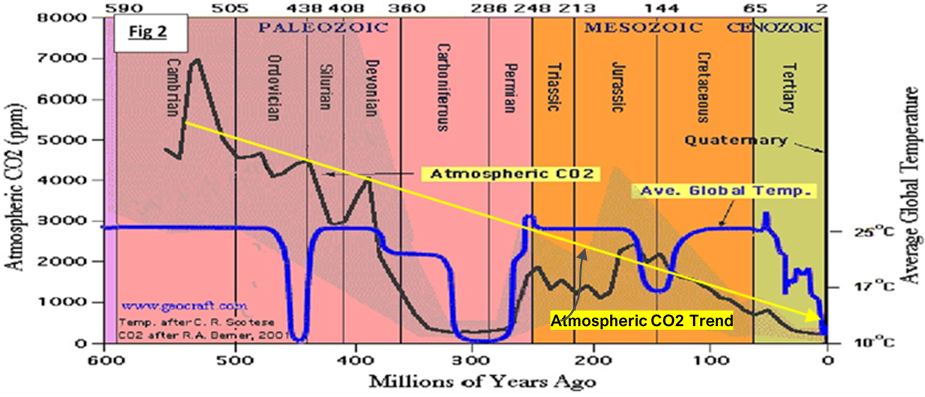
The claim is made that CO2 drives climate. It doesn't and never has. CO2 concentrations have been MUCH higher in the past (notice the subtly shaded error areas around the CO2 curve) without any "runaway greenhouse effect" or "climate change":


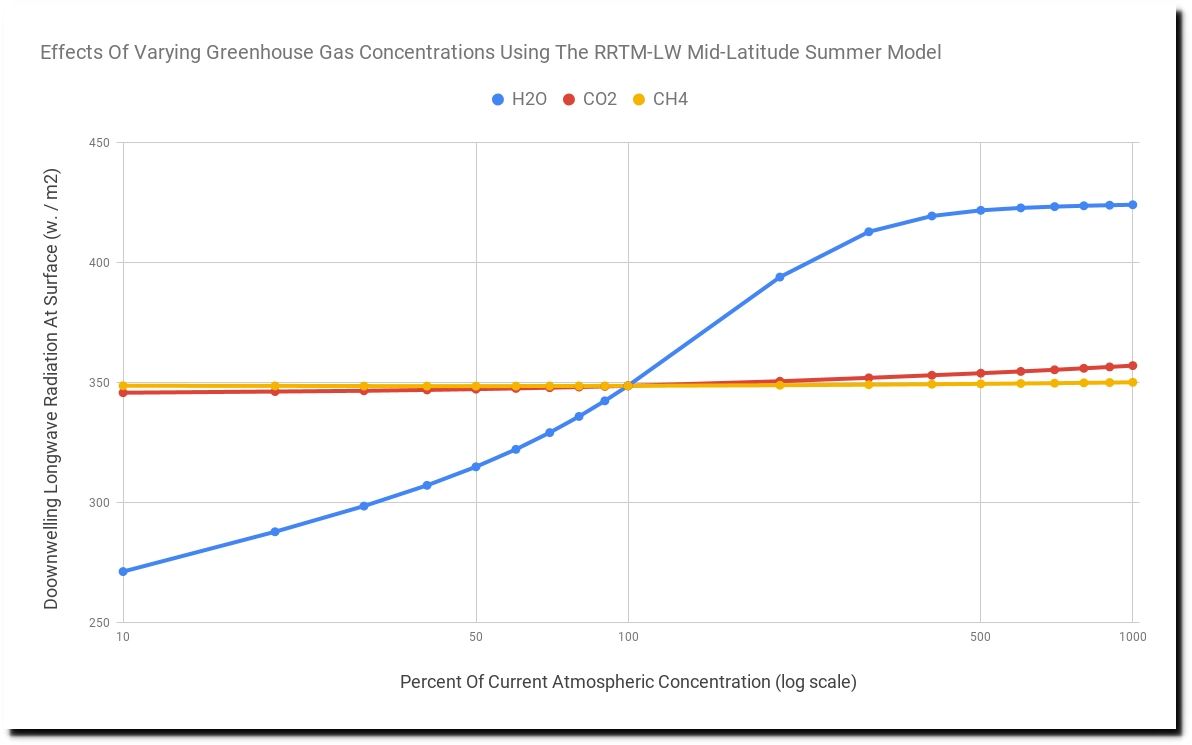
The claim is made that water vapor does not affect climate. In fact, water vapor dominates climate effects:


The claim is made that CO2 is "potent". It is not and cannot be if CO2 absorption bands are saturated by water vapor absorption:

Also on potency, not that GWP has any real significant meaning or value, but CO2 is a bit player:


The claim is made that CO2 causes warming without an amplification from water vapor absorption. This is not true. GCMs assume the water vapor amplification happens or else the warming effect of CO2, if any, is negligible. GCMs have consistently predicted a tropospheric hot spot from water vapor amplification that millions of actual observations (data, not model outputs) contradict:


In fact, temperature increases are driven by natural and anthropogenic factors. One of the biggest anthropogenic factors is data "adjustment' that has no basis in physics or statistical justification:
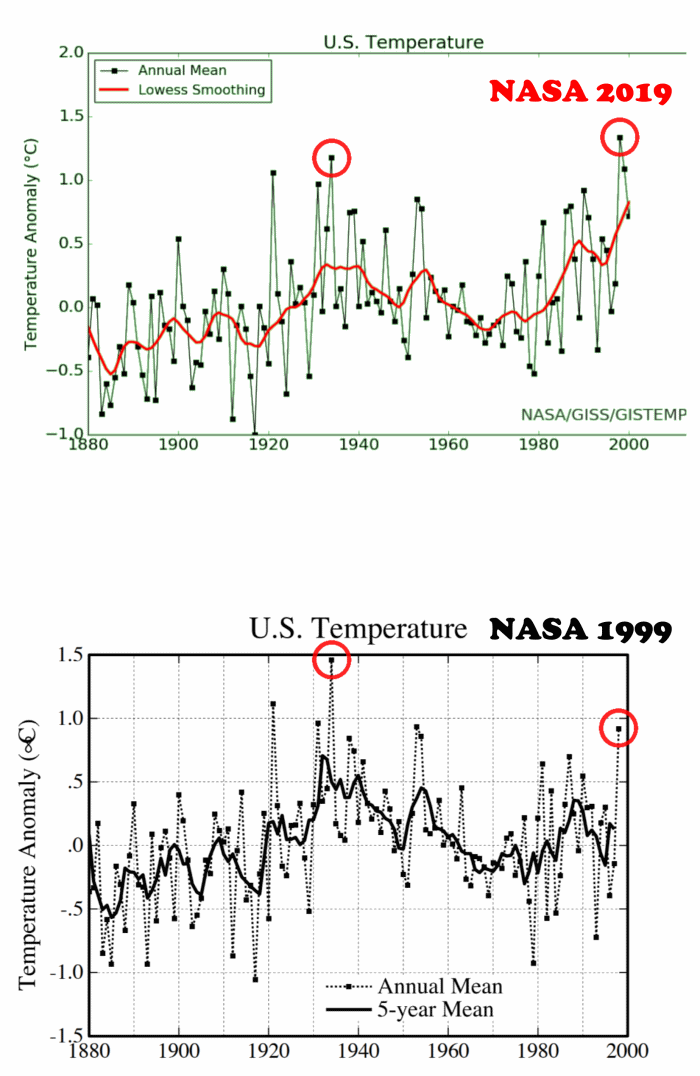
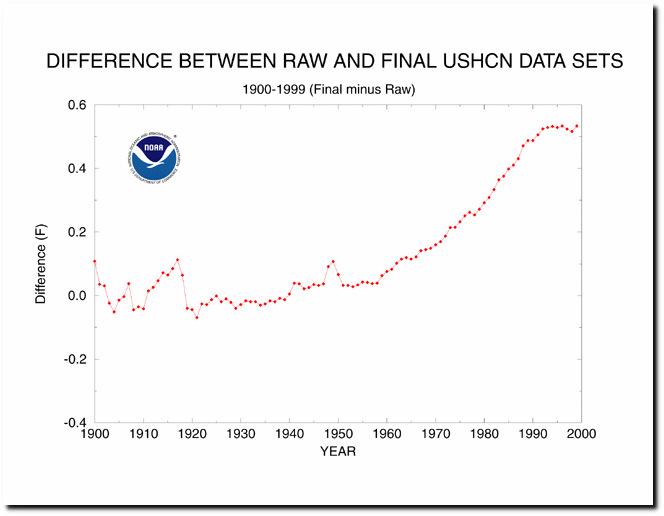
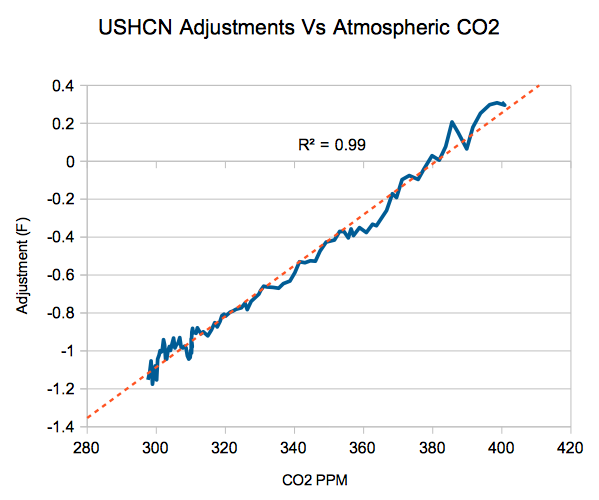
Amazing how the temperature record adjustments are almost a perfect correlation to changes in atmospheric CO2 concentration.
________________________________________________________
“Those who cannot change their minds cannot change anything.”
- George Bernard Shaw

agent-maroon
How long do you want to ignore this user?
Quote:

The Little Ice Age was naturally caused and not global while the today's warming is human-caused and global. This is important to take into account when forming opinions on whether we should take action and how to take action.

It's even more important to recognize that there is NO proven manmade global warming and so any other discussion should be for entertainment purposes only (i.e. - science fiction)

Edit for correction (of course we've warming from previous ice ages so I misspoke)
techno-ag
How long do you want to ignore this user?
Quote:

The 400 year cooling period you mentioned was not technically an ice age but was a localized temperature drop of about 1C in the Northern Hemisphere caused by natural forces such as reduced solar activity and volcanic eruptions.

Correct. As stated earlier, the sun and volcanic eruptions have far more effect on the climate than man.
The left cannot kill the Spirit of Charlie Kirk.
ShinerAggie
How long do you want to ignore this user?
The Little Ice Age Was Global, Scripps Researchers Say

Little Ice Age was global: Implications for current global warming

More Evidence for a Truly Global Little Ice Age
________________________________________________________
“Those who cannot change their minds cannot change anything.”
- George Bernard Shaw
titan
How long do you want to ignore this user?
Ag with kids said:

agclassof2012 said:

Ag with kids said:

agclassof2012 said:

techno-ag said:

agclassof2012 said:

techno-ag said:

agclassof2012 said:

techno-ag said:

agclassof2012 said:

MemphisAg1 said:

Man-made climate change is a sham driven by the left to justify redistribution from makers to takers.

CO2 is only 0.04% of the atmosphere. 99.96% is other stuff, primarily nitrogen and oxygen.

Of the 0.04%, 95% of that is from natural causes like volcanoes, forest fires, decomposition, etc.

Only 5% of the 0.04% is from human activity.

It's a non-starter, yet Joe and Jane Q Public have bought the climate alarmism narrative hook, line, and sinker.


It's estimated that closer to 30% of the CO2 in the atmosphere is from human activity. Pre-industrial CO2 for the last million years ranged from 170 ppm to 300 ppm. In the last century, CO2 increased from ~280 ppm to ~430 ppm. This increase is not due to natural CO2 sources.

https://science.nasa.gov/climate-change/evidence/

https://www.epa.gov/climatechange-science/causes-climate-change

https://www.csiro.au/en/research/environmental-impacts/climate-change/Climate-change-QA/Sources-of-CO2


So you're saying it went up from 0.038% of the atmosphere to 0.04%. Oh no.

My rebuttal to anyone who makes this argument is that percentage is not what matters...it's potency. I'm assuming you wouldn't want high levels of arsenic in your drinking water. Up to 0.00001% (100 ppb) can be toxic and that is why the EPA limit is 0.000001% (10 ppb). This is a very small percentage but potency is high. CO2 behaves the same way in the atmosphere even in trace amounts. It's extremely potent at trapping heat.

Such a tired argument. Proximity to the sun and particulate matter in the upper atmosphere from volcanic eruptions affect the surface temperature of the earth far more than 0.02 % more of the atmosphere consisting of CO2.


I'm not aware of changes in earth's proximity to the sun in the past century that would explain a 1.2C increase in average global temperature. Please enlighten me.

Volcanic particulates and aerosols released from the size/frequency of eruptions we have witnessed in the past century are short-lived (less than a decade) and do not drive long-term climate trends such as the temperature rise we are currently in. Massive, persistent eruptions would have long-term climate impacts.

The science behind CO2's greenhouse effect is well-established. The rise in atmospheric CO2 concentration from 0.028% to 0.043% is significant.


One year after Tambora there was no summer. It was devastating.

https://en.wikipedia.org/wiki/Year_Without_a_Summer

Look the climate is always changing. You don't know the perfect temp of the Earth because it's always in flux over time.

And if you don't believe proximity to the sun affects temperature just wait until this winter.

As I previously stated, volcanic activity can have short-lived impacts on global temperatures. Volcanic activity is not the reason the global average temperature has increased 1.2C in the past century.

Seasonal changes aren't due to the Earth's center of mass getting closer or further from the sun. It's due to the Earth's tilt on its axis. When it's summer in the northern hemisphere, it is winter in the southern hemisphere that is because the northern hemisphere is tilted in the direction of the sun...not because the Earth overall is closer. Now the Earth does have a slight elliptical orbit but this doesn't play a significant role in Earth's seasons or long-term climate change.


Well, if you're blaming CO2, then don't look at the US.

We emit less CO2 now than we did it 1990.

Maybe go talk to China and India instead.

I have no influence over India or China. I, however, might be able to provide a different perspective for some fellow Ags. That's all I'm doing here.

Well, nothing the US does can change the fact that China and India are driving the increase in CO2.

I mean, the left could have been embracing nuclear power, but THAT was off the table...so, the left has never been serious about actually lowering CO2 output in the US. It's always been about money and hurting "Big Oil"...

And since it wasn't about lowering CO2, it was never really about any kind of "climate change"...

Worse, if anything is going to trigger worldwide famines, it is the steady expansion of socialist/marxist political thought which leads to collapse of growth and individual innovation. For example, Aggies probably know how their school helped partly end the disastrous impact of monsoons in Southeast Asia by developing certain ag and crop techniques. This kind of thing doesn't happen under Marxism -- look at the difference between Haiti and the Dominican Republic, or the two Koreas, or the two Germany's for just a few examples. Its no accident that China partly avoids this by not being entirely communist where that sector of the nation is concerned.

The expansion of a 3rd world cultural outlook represented by the entire "cut back and regress" drive of the Left is far more likely to cause such famines. The WEF wanted to deliberately cause one in Europe with the cutbacks in Holland.

And on this, Eric76 has generally always been right --- fear global cooling, especially a quick one, far, far more. Technology can overcome heat better than cold where agriculture is concerned.

Ag with kids
How long do you want to ignore this user?
agclassof2012 said:

techno-ag said:

agclassof2012 said:

Over_ed said:

i am not well versed enough in climate "science" to converse at even a Masters' level, but will toss this out...

One of the scare tactics promoted by "climate warriors" is the idea that we will enter periods of famines. This seems not to be borne out so far, in fact the average number of calories available to the poorest have been increasing steadily over the past 20 years. In that period up < 200 calories per day. And the poorest nations are generally improving the most.

If there is a negative effect caused by climate it is either negligible, and/or counterbalanced by the benefits of increased energy availability.

ETA - Agreeing with eric76 here

From what I've read, much of the discussion around climate change carries a pre-emptive or early-warning tone rather than suggesting we're already feeling its FULL effects. I agree that famine would be an extreme consequence we're not yet experiencing. While there may be some short-term benefits in a warming climate, such as longer growing seasons in colder regions, the rapid rate of warming is concerning imo because it leaves less time for ecosystems and societies to adapt. Farming practices and technologies will likely evolve to cope with changing conditions, but some areas will become less suitable for agriculture even as others gain new opportunities.

The negative impacts of a warming climate are complex due to many confounding variables. People's perceptions of climate change also depend heavily on where they live and how they interact with the environment. I live in the Pacific Northwest and spend much of my time on forest service lands, where the effects are increasingly visible to me.

Snowpack is the lifeline of our region. Beyond providing amazing recreational opportunities, it provides a large portion of the water that sustains life here. Over the past 30-40 years (since reliable snow measurement), snowpack has declined significantly, likely due to a warming climate. This reduction has lowered river flows and reservoir levels, intensified water scarcity and leading to more frequent water curtailments that directly affect agricultural growers in my area. Glacier retreat, another well-documented sign of warming, has further reduced year-round water flow and eliminated a key cooling influence that once kept rivers at healthy temperatures year-around for salmon and trout. The river ecosystems then impact coastal marine life.

Wildfire activity has also increased dramatically over the past four decades. While factors like human encroachment and forest management practices contribute, higher temperatures and drier conditions have intensified fire behavior. The resulting smoke has become a recurring problem across the western US especially from August through September. Warmer summers have also brought new challenges for many Northwest communities, particularly in older homes and cities without widespread air conditioning. Heat stress has become a growing health risk for vulnerable populations and a financial burden for those now needing to install A/C systems.

Overall, while some impacts of climate change remain gradual, the evidence in the Pacific Northwest from my experience are being felt today.

Except that the climate is changing all the time. So you saw some changes in your lifetime. Good. The last ice age lasted 400 years.

The last glacial period occurred between roughly 120,000 and 11,500 years ago and we are currently in an interglacial period (NOAA National Environmental Satellite, Data, and Information Service: Glacial-Interglacial Cycles ). The 400 year cooling period you mentioned was not technically an ice age but was a localized temperature drop of about 1C in the Northern Hemisphere caused by natural forces such as reduced solar activity and volcanic eruptions (The Effects of the Little Ice Age (c. 1300-1850) - Climate in Arts and History). The Little Ice Age was naturally caused and not global while the today's warming is human-caused and global. This is important to take into account when forming opinions on whether we should take action and how to take action.

Quote:

The 400 year cooling period you mentioned was not technically an ice age but was a localized temperature drop of about 1C in the Northern Hemisphere caused by natural forces such as reduced solar activity and volcanic eruptions

So, when these measurements were taken, during that period, where were the measurement instruments placed besides in the northern hemisphere? I'd also like to see that measured data in the southern hemisphere. Emphasis on MEASURED...
Dirty_Mike&the_boys
How long do you want to ignore this user?
"We're going to turn this red Prius into a soup kitchen!"
ShinerAggie
How long do you want to ignore this user?
What's even funnier is that it won't even have serious consequences unless we allow it as an excuse to install global communism.
________________________________________________________
“Those who cannot change their minds cannot change anything.”
- George Bernard Shaw
 
×
subscribe Verify your student status
See Subscription Benefits
Trial only available to users who have never subscribed or participated in a previous trial.