
Because the left pretends that women are under attack as well as minorities.
They're not. But they teach them to be victims.
They're not. But they teach them to be victims.
rocky the dog said:
AgBQ-00 said:
So her answer to the issue is we need to make men more like women. Typical liberal who can't understand why their rhetoric falls on deaf ears and harms everything they put their mind to.
"We've" been sold a con?Quote:
We've all been sold a con: that progress is a zero-sum game. That when women rise, men must fall. That when someone new gets a seat at the table, yours disappears. And we're so intentionally divided we can't see we're all losing in this game.
Quote:
I Founded Girls Who Code. Now I'm Worried About Boys
https://time.com/7286184/worried-about-boys/
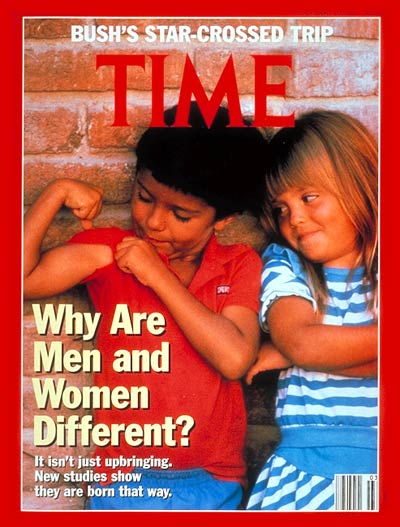
I disagree. Golf, backyard hangouts, Vegas weekends with the boys with no agenda other than goofing off are as important as having a purpose and a goal. Those things nurture the soul and provide the energy to act on ones purpose and goal.lb3 said:Connection with others is a byproduct of having a purpose, a goal, or a team. Connection itself is a byproduct not the end state.Sweep4-2 said:
Not sure I agree completely re connection. Men are becoming more and more isolated at a younger age than ever before. And the outcome isn't good. I don't think having friendship, seeking help, helping others, etc makes them a weak person. And I've told friends that.
But then again, I live the exact opposite life….never seek help for anything, purposely avoid church and mimimize friendship if at all possible, etc. Basically, I still believe nobody likes a weak person and only weak people ask for help.
Those things are important but you can't tell an incel that if they just sign up for a tee time their lives will improve. Those activities and the rewards that follow are made possible by having a place and purpose in society.Malibu said:I disagree. Golf, backyard hangouts, Vegas weekends with the boys with no agenda other than goofing off are as important as having a purpose and a goal. Those things nurture the soul and provide the energy to act on ones purpose and goal.lb3 said:Connection with others is a byproduct of having a purpose, a goal, or a team. Connection itself is a byproduct not the end state.Sweep4-2 said:
Not sure I agree completely re connection. Men are becoming more and more isolated at a younger age than ever before. And the outcome isn't good. I don't think having friendship, seeking help, helping others, etc makes them a weak person. And I've told friends that.
But then again, I live the exact opposite life….never seek help for anything, purposely avoid church and mimimize friendship if at all possible, etc. Basically, I still believe nobody likes a weak person and only weak people ask for help.
The emotional aspect of this is key. They are on the board because they want to feel important, useful, and powerful. Ther's never any self-reflection on whether or not catering to these feelings is actually good for them or anyone else. They won't because they don't want to be challenged that the traditional roles and character of women just might actually be better than their beliefs.Pinochet said:
This feminist is like the HOA board. They make up a problem and decide they know how to fix it. They don't even confirm it is actually a problem and don't define the end goal. They just act "on behalf" of a large group and decide what is best for them. When the exact thing happens that someone predicted, they have to make more changes to fix that new problem. It makes them feel useful, but they're just idiots. They're not even useful idiots.
I'd like for you to have a word with my wife if you would please. I need a messenger that isn't me.Malibu said:I disagree. Golf, backyard hangouts, Vegas weekends with the boys with no agenda other than goofing off are as important as having a purpose and a goal. Those things nurture the soul and provide the energy to act on ones purpose and goal.lb3 said:Connection with others is a byproduct of having a purpose, a goal, or a team. Connection itself is a byproduct not the end state.Sweep4-2 said:
Not sure I agree completely re connection. Men are becoming more and more isolated at a younger age than ever before. And the outcome isn't good. I don't think having friendship, seeking help, helping others, etc makes them a weak person. And I've told friends that.
But then again, I live the exact opposite life….never seek help for anything, purposely avoid church and mimimize friendship if at all possible, etc. Basically, I still believe nobody likes a weak person and only weak people ask for help.
I still disagree and this sounds a lot like hustle culture. Golf outings/equivalents and BBQs are as much of the big thing as a career and family. I would absolutely tell an incel that a tee time, volunteering, etc. will improve their lives. Social bonding for its own sake isnt a reward for after youve earned it by grinding, its a complement and IMHO a prerequesite to a fulfilling life with purpose.lb3 said:Those things are important but you can't tell an incel that if they just sign up for a tee time their lives will improve. Those activities and the rewards that follow are made possible by having a place and purpose in society.Malibu said:I disagree. Golf, backyard hangouts, Vegas weekends with the boys with no agenda other than goofing off are as important as having a purpose and a goal. Those things nurture the soul and provide the energy to act on ones purpose and goal.lb3 said:Connection with others is a byproduct of having a purpose, a goal, or a team. Connection itself is a byproduct not the end state.Sweep4-2 said:
Not sure I agree completely re connection. Men are becoming more and more isolated at a younger age than ever before. And the outcome isn't good. I don't think having friendship, seeking help, helping others, etc makes them a weak person. And I've told friends that.
But then again, I live the exact opposite life….never seek help for anything, purposely avoid church and mimimize friendship if at all possible, etc. Basically, I still believe nobody likes a weak person and only weak people ask for help.
Another way to put it is if we take care of the big things like providing men with purpose and meaning in their lives, the small things like golf outings and BBQs will take care of themselves.
Mrs. Hardwood, your husband needs 1-2 weekends a year, and 2-3x 3-4 hour sessions per month spent with his male friends to show up fully as a husband, father, and employer/ee. So do you with your lady friends. Figure out how to support each other to make this work.American Hardwood said:I'd like for you to have a word with my wife if you would please. I need a messenger that isn't me.Malibu said:I disagree. Golf, backyard hangouts, Vegas weekends with the boys with no agenda other than goofing off are as important as having a purpose and a goal. Those things nurture the soul and provide the energy to act on ones purpose and goal.lb3 said:Connection with others is a byproduct of having a purpose, a goal, or a team. Connection itself is a byproduct not the end state.Sweep4-2 said:
Not sure I agree completely re connection. Men are becoming more and more isolated at a younger age than ever before. And the outcome isn't good. I don't think having friendship, seeking help, helping others, etc makes them a weak person. And I've told friends that.
But then again, I live the exact opposite life….never seek help for anything, purposely avoid church and mimimize friendship if at all possible, etc. Basically, I still believe nobody likes a weak person and only weak people ask for help.
YouBet said:AgBQ-00 said:
So her answer to the issue is we need to make men more like women. Typical liberal who can't understand why their rhetoric falls on deaf ears and harms everything they put their mind to.
Yep, that's all I got out of that article. We've left men behind so let's catch them up by making them like women.
What?
Quote:
Where have all the good men gone?
lb3 said:Those things are important but you can't tell an incel that if they just sign up for a tee time their lives will improve. Those activities and the rewards that follow are made possible by having a place and purpose in society.Malibu said:I disagree. Golf, backyard hangouts, Vegas weekends with the boys with no agenda other than goofing off are as important as having a purpose and a goal. Those things nurture the soul and provide the energy to act on ones purpose and goal.lb3 said:Connection with others is a byproduct of having a purpose, a goal, or a team. Connection itself is a byproduct not the end state.Sweep4-2 said:
Not sure I agree completely re connection. Men are becoming more and more isolated at a younger age than ever before. And the outcome isn't good. I don't think having friendship, seeking help, helping others, etc makes them a weak person. And I've told friends that.
But then again, I live the exact opposite life….never seek help for anything, purposely avoid church and mimimize friendship if at all possible, etc. Basically, I still believe nobody likes a weak person and only weak people ask for help.
Another way to put it is if we take care of the big things like providing men with purpose and meaning in their lives, the small things like golf outings and BBQs will take care of themselves.
The good news is that once everything has been taken from men and given to women, men can just pretend to BE women and take it all back again!infinity ag said:lb3 said:Exactly, She's trying to fit men into a female construct. Men don't need connection, men need a purpose. Men need to provide and protect, to be leaders of other men, and to a lesser extent, to build things.samurai_science said:
She sounds dumb and still doesn't understand what males need
Today's society is stealing all opportunities from men to be leaders. We cannot go into the forest and hunt anymore like men used to 1000+ years ago. We do it at school and at work. DEI has taken that away from men and given it to undeserving women.
Of course she doesn't. Having a feminist world view makes it fundamentally impossible to understand men and boys.samurai_science said:
She sounds dumb and still doesn't understand what males need
Muktheduck said:Of course she doesn't. Having a feminist world view makes it fundamentally impossible to understand men and boys.samurai_science said:
She sounds dumb and still doesn't understand what males need
Not that she's trying to anyways, she's just recognizing that her current messaging has failed and she's trying to repackage the propaganda.
The dangerous thing is mens titles matter to women a lot. If you give the "male" titles to women (under the merit of sex not actually earning it), what you have is a bunch of women who only want to date men at their level, the men at their level don't want to date them, and you have men at a lower rung who cant get the attention that they want because the opportunities were taken from them unfairly- so it hurts both parties.infinity ag said:
The summary is that Reshma Saujani founded Girls Who Code and was probably one of those women who pushes for women at the cost of men. Until she had sons. Now she worries about men.
Why is society leaving men out? I see so many programs to help women, but none to help men. I have a son and a daughter and I am worried for my son. Men are still valued in society for their income and job title. Women are not. Society is actively trying to undermine men. Women find it much easier to become VPs in companies, I have seen this myself.
Is it because the people in control are also simps?
I Founded Girls Who Code. Now I'm Worried About Boys
https://time.com/7286184/worried-about-boys/Quote:
A few years ago, I gave what I thought was the perfect commencement speech at a women's college. It was my feminist manifesto. The ultimate mic drop after years of fighting for gender equality as founder and CEO of Girls Who Code. I walked off the stage feeling electric.
My two little boys ran up to me, gave me a hug, and then, my oldest son Shaan pulled me aside.
He asked, "Mommy, why do you always talk about girls? How come you never talk about boys?"
At the time, I totally dismissed him. I thought, He's little. He doesn't get it.
But now, as diversity pipeline programs like the one I've spent my career building are systematically dismantled and women's fundamental rights are rolled back to chants of "your body, my choice," all by and in the name of men, I see that I was the one who didn't get it.
I spent years teaching girls to be brave, not perfect. But I barely considered how we need to teach boys to be soft, not just stoic. To connect, not control. To imagine a version of manhood where strength requires empathy, vulnerability, and care.
While we were pushing our girls forward, we were leaving our boys behind. And now, they're struggling.
Boys and men are less likely to turn to their communities for social connection and support. Less likely to go to college. More likely to die by suicide or overdose. Too often, instead of being met with care, they've been manipulated and handed division. Not just by podcast bros, but by a government that's actively stoking the divide for their own political gain.
The biggest problem we face right now isn't just climate, healthcare, or AI ethicsit's disconnection. Disconnection across gender, race, class, even reality itself. And that disconnection is blocking progress on every issue we care about.
We've all been sold a con: that progress is a zero-sum game. That when women rise, men must fall. That when someone new gets a seat at the table, yours disappears. And we're so intentionally divided we can't see we're all losing in this game.
Disconnection isn't just a consequence, it may also be the goal. Because powerful men from Silicon Valley to Pennsylvania Avenue know that if we don't see each other, we won't stand up for each other. If we're too busy blaming each other, we'll never imagine what we could build together.
And while we've been distracted, our boys have been searching for connection and finding it in the worst places. Small men with loud voices who hold court over internet echo chambers, like Andrew Tate, offer them simplistic answers for all of their complicated fears and insecurities. Man up. Toughen up. Win at all costs. And those answers are harming boys and men. We failed to offer them belonging, so they're grappling for control.
The question we've avoided for too long is: What conversations should we be having with our boys?
The issue at hand won't be solved with better messaging, another podcast, or a new influencer to follow. We are not going to out-algorithm the "manosphere." We need a deeper response. A braver one.
Yes, we need structural change. We need schools that teach emotional literacy alongside academics. We need public investment in youth mental health. We need a "Men Who Nurse" and a "Guys Who Teach," pipeline programs that can offer boys real pathways forward in fields that desperately need them. And we need to build social media platforms and governmental policies that aren't driven by isolation and outrage.
But most of all, we need connection. Especially at home. Because no policy can replace what happens across a dinner table or on the walk home from school. We need to start asking our boys better questions. How are you feeling? What's been hard for you? Who do you trust? What scares you?
And when they struggle to answer, we can't shut down. We need to help boys and men build the language necessary for them to live full, happy lives. We need to show them that we, too, can change and grow. That means moms showing that care and empathy are signs of courage. And it means dads, especially, stepping in with presence and vulnerability to say, "I love you. I'm proud of you. I cry too."
And we need to tell our boys that the loudest voices with the simplest answers are often the most dangerous. Instead, real power listens, real might is judicious, and real leadership invites doubt. Often, real bravery sounds like, "I don't know, but let's figure it out together."
The story we've told our boys that power is a pie, and we have to fight for slicesis a lie that has broken their ability to connect with others and with themselves.
Let's be clear: this isn't about ignoring girls, or pretending their fight is finished. It's about building a future big enough for both to thrive because opportunity is not zero-sum, progress is not zero-sum, and empathy is not zero-sum.
Boys today don't need perfect parents, perfect systems, or perfect answers. They just need people willing to listen to them and who choose to care about them, even when it's complicated
Grok's summaryQuote:
Summary of "I Founded Girls Who Code. Now I'm Worried About Boys" by Reshma Saujani (Time, May 19, 2025)
Reshma Saujani, founder of Girls Who Code, reflects on her past focus on empowering girls and her growing concern for boys, prompted by her son's question about why she emphasizes girls over boys. She acknowledges that while advocating for gender equality, she overlooked the struggles of boys and men, who face increasing disconnection, lower college enrollment, and higher rates of suicide and overdose. Saujani argues that societal narratives framing progress as a zero-sum gamewhere women's gains mean men's lossesfuel division and harm both genders.
Boys, she notes, are vulnerable to toxic influences like Andrew Tate, who exploit their insecurities with simplistic, harmful ideals of masculinity. Saujani calls for a deeper response beyond better messaging, advocating for structural changes like emotional literacy in schools, mental health investment, and pipeline programs for boys in fields like nursing and teaching. Most critically, she emphasizes fostering connection at home through open, empathetic conversations with boys about their feelings and fears.
She challenges the notion that power is limited, urging parentsespecially fathersto model vulnerability and care, and to teach boys that real strength lies in empathy, listening, and collaboration. Saujani stresses that supporting boys doesn't diminish girls' progress but builds a future where both can thrive, as empathy and opportunity are not zero-sum.
"But I barely considered how we need to teach boys to be soft, not just stoic. ". This sounds like she is still working for women - soft men is what she is really advocating for in her push for DEI.samurai_science said:
She sounds dumb and still doesn't understand what males need
whytho987654 said:The dangerous thing is mens titles matter to women a lot. If you give the "male" titles to women (under the merit of sex not actually earning it), what you have is a bunch of women who only want to date men at their level, the men at their level don't want to date them, and you have men at a lower rung who cant get the attention that they want because the opportunities were taken from them unfairly- so it hurts both parties.infinity ag said:
The summary is that Reshma Saujani founded Girls Who Code and was probably one of those women who pushes for women at the cost of men. Until she had sons. Now she worries about men.
Why is society leaving men out? I see so many programs to help women, but none to help men. I have a son and a daughter and I am worried for my son. Men are still valued in society for their income and job title. Women are not. Society is actively trying to undermine men. Women find it much easier to become VPs in companies, I have seen this myself.
Is it because the people in control are also simps?
I Founded Girls Who Code. Now I'm Worried About Boys
https://time.com/7286184/worried-about-boys/Quote:
A few years ago, I gave what I thought was the perfect commencement speech at a women's college. It was my feminist manifesto. The ultimate mic drop after years of fighting for gender equality as founder and CEO of Girls Who Code. I walked off the stage feeling electric.
My two little boys ran up to me, gave me a hug, and then, my oldest son Shaan pulled me aside.
He asked, "Mommy, why do you always talk about girls? How come you never talk about boys?"
At the time, I totally dismissed him. I thought, He's little. He doesn't get it.
But now, as diversity pipeline programs like the one I've spent my career building are systematically dismantled and women's fundamental rights are rolled back to chants of "your body, my choice," all by and in the name of men, I see that I was the one who didn't get it.
I spent years teaching girls to be brave, not perfect. But I barely considered how we need to teach boys to be soft, not just stoic. To connect, not control. To imagine a version of manhood where strength requires empathy, vulnerability, and care.
While we were pushing our girls forward, we were leaving our boys behind. And now, they're struggling.
Boys and men are less likely to turn to their communities for social connection and support. Less likely to go to college. More likely to die by suicide or overdose. Too often, instead of being met with care, they've been manipulated and handed division. Not just by podcast bros, but by a government that's actively stoking the divide for their own political gain.
The biggest problem we face right now isn't just climate, healthcare, or AI ethicsit's disconnection. Disconnection across gender, race, class, even reality itself. And that disconnection is blocking progress on every issue we care about.
We've all been sold a con: that progress is a zero-sum game. That when women rise, men must fall. That when someone new gets a seat at the table, yours disappears. And we're so intentionally divided we can't see we're all losing in this game.
Disconnection isn't just a consequence, it may also be the goal. Because powerful men from Silicon Valley to Pennsylvania Avenue know that if we don't see each other, we won't stand up for each other. If we're too busy blaming each other, we'll never imagine what we could build together.
And while we've been distracted, our boys have been searching for connection and finding it in the worst places. Small men with loud voices who hold court over internet echo chambers, like Andrew Tate, offer them simplistic answers for all of their complicated fears and insecurities. Man up. Toughen up. Win at all costs. And those answers are harming boys and men. We failed to offer them belonging, so they're grappling for control.
The question we've avoided for too long is: What conversations should we be having with our boys?
The issue at hand won't be solved with better messaging, another podcast, or a new influencer to follow. We are not going to out-algorithm the "manosphere." We need a deeper response. A braver one.
Yes, we need structural change. We need schools that teach emotional literacy alongside academics. We need public investment in youth mental health. We need a "Men Who Nurse" and a "Guys Who Teach," pipeline programs that can offer boys real pathways forward in fields that desperately need them. And we need to build social media platforms and governmental policies that aren't driven by isolation and outrage.
But most of all, we need connection. Especially at home. Because no policy can replace what happens across a dinner table or on the walk home from school. We need to start asking our boys better questions. How are you feeling? What's been hard for you? Who do you trust? What scares you?
And when they struggle to answer, we can't shut down. We need to help boys and men build the language necessary for them to live full, happy lives. We need to show them that we, too, can change and grow. That means moms showing that care and empathy are signs of courage. And it means dads, especially, stepping in with presence and vulnerability to say, "I love you. I'm proud of you. I cry too."
And we need to tell our boys that the loudest voices with the simplest answers are often the most dangerous. Instead, real power listens, real might is judicious, and real leadership invites doubt. Often, real bravery sounds like, "I don't know, but let's figure it out together."
The story we've told our boys that power is a pie, and we have to fight for slicesis a lie that has broken their ability to connect with others and with themselves.
Let's be clear: this isn't about ignoring girls, or pretending their fight is finished. It's about building a future big enough for both to thrive because opportunity is not zero-sum, progress is not zero-sum, and empathy is not zero-sum.
Boys today don't need perfect parents, perfect systems, or perfect answers. They just need people willing to listen to them and who choose to care about them, even when it's complicated
Grok's summaryQuote:
Summary of "I Founded Girls Who Code. Now I'm Worried About Boys" by Reshma Saujani (Time, May 19, 2025)
Reshma Saujani, founder of Girls Who Code, reflects on her past focus on empowering girls and her growing concern for boys, prompted by her son's question about why she emphasizes girls over boys. She acknowledges that while advocating for gender equality, she overlooked the struggles of boys and men, who face increasing disconnection, lower college enrollment, and higher rates of suicide and overdose. Saujani argues that societal narratives framing progress as a zero-sum gamewhere women's gains mean men's lossesfuel division and harm both genders.
Boys, she notes, are vulnerable to toxic influences like Andrew Tate, who exploit their insecurities with simplistic, harmful ideals of masculinity. Saujani calls for a deeper response beyond better messaging, advocating for structural changes like emotional literacy in schools, mental health investment, and pipeline programs for boys in fields like nursing and teaching. Most critically, she emphasizes fostering connection at home through open, empathetic conversations with boys about their feelings and fears.
She challenges the notion that power is limited, urging parentsespecially fathersto model vulnerability and care, and to teach boys that real strength lies in empathy, listening, and collaboration. Saujani stresses that supporting boys doesn't diminish girls' progress but builds a future where both can thrive, as empathy and opportunity are not zero-sum.
AgDad121619 said:"But I barely considered how we need to teach boys to be soft, not just stoic. ". This sounds like she is still working for women - soft men is what she is really advocating for in her push for DEI.samurai_science said:
She sounds dumb and still doesn't understand what males need
Her sons will be ok because she and her husband are gazillionaires and the rules don't apply to them.infinity ag said:AgDad121619 said:"But I barely considered how we need to teach boys to be soft, not just stoic. ". This sounds like she is still working for women - soft men is what she is really advocating for in her push for DEI.samurai_science said:
She sounds dumb and still doesn't understand what males need
She will feminize her sons, make them sensitive crybabies, and then girls their age will find them beta and hence unattractive as a mate, and refuse to date them. Then she will start hating females because they refuse to date her sons, and write another article about how modern women suck.
Oh what a tangled web we weave.
Clown World has completely confused too many people, particularly in the west and Europe how utterly important the 'hard man' is. But beyond the more common reasons, I want to discuss the importance of the "hard man" as a symbol of that which is 'immutable'.AgDad121619 said:"But I barely considered how we need to teach boys to be soft, not just stoic. ". This sounds like she is still working for women - soft men is what she is really advocating for in her push for DEI.samurai_science said:
She sounds dumb and still doesn't understand what males need
Very well put. Im an IR/DR resident, and I know lots of women who are medicine, surgical, derm, other rads, anesthesia, other high paying potential field residents, and they all want to date men in ROAD fields or a surgical subspecialty. They don't want men in FM or peds or general IM. Now the men in ped/fm/IM don't give af, because they have tons of options within their field and outside of medicine, and the men in the road/surg sub fields also have tons of options likewise that they explore. Meanwhile the men who didn't get into medical school due to dei and nonmerit reasons are in some crappy lab are in an awful dating position, even if they look like a chadinfinity ag said:whytho987654 said:The dangerous thing is mens titles matter to women a lot. If you give the "male" titles to women (under the merit of sex not actually earning it), what you have is a bunch of women who only want to date men at their level, the men at their level don't want to date them, and you have men at a lower rung who cant get the attention that they want because the opportunities were taken from them unfairly- so it hurts both parties.infinity ag said:
The summary is that Reshma Saujani founded Girls Who Code and was probably one of those women who pushes for women at the cost of men. Until she had sons. Now she worries about men.
Why is society leaving men out? I see so many programs to help women, but none to help men. I have a son and a daughter and I am worried for my son. Men are still valued in society for their income and job title. Women are not. Society is actively trying to undermine men. Women find it much easier to become VPs in companies, I have seen this myself.
Is it because the people in control are also simps?
I Founded Girls Who Code. Now I'm Worried About Boys
https://time.com/7286184/worried-about-boys/Quote:
A few years ago, I gave what I thought was the perfect commencement speech at a women's college. It was my feminist manifesto. The ultimate mic drop after years of fighting for gender equality as founder and CEO of Girls Who Code. I walked off the stage feeling electric.
My two little boys ran up to me, gave me a hug, and then, my oldest son Shaan pulled me aside.
He asked, "Mommy, why do you always talk about girls? How come you never talk about boys?"
At the time, I totally dismissed him. I thought, He's little. He doesn't get it.
But now, as diversity pipeline programs like the one I've spent my career building are systematically dismantled and women's fundamental rights are rolled back to chants of "your body, my choice," all by and in the name of men, I see that I was the one who didn't get it.
I spent years teaching girls to be brave, not perfect. But I barely considered how we need to teach boys to be soft, not just stoic. To connect, not control. To imagine a version of manhood where strength requires empathy, vulnerability, and care.
While we were pushing our girls forward, we were leaving our boys behind. And now, they're struggling.
Boys and men are less likely to turn to their communities for social connection and support. Less likely to go to college. More likely to die by suicide or overdose. Too often, instead of being met with care, they've been manipulated and handed division. Not just by podcast bros, but by a government that's actively stoking the divide for their own political gain.
The biggest problem we face right now isn't just climate, healthcare, or AI ethicsit's disconnection. Disconnection across gender, race, class, even reality itself. And that disconnection is blocking progress on every issue we care about.
We've all been sold a con: that progress is a zero-sum game. That when women rise, men must fall. That when someone new gets a seat at the table, yours disappears. And we're so intentionally divided we can't see we're all losing in this game.
Disconnection isn't just a consequence, it may also be the goal. Because powerful men from Silicon Valley to Pennsylvania Avenue know that if we don't see each other, we won't stand up for each other. If we're too busy blaming each other, we'll never imagine what we could build together.
And while we've been distracted, our boys have been searching for connection and finding it in the worst places. Small men with loud voices who hold court over internet echo chambers, like Andrew Tate, offer them simplistic answers for all of their complicated fears and insecurities. Man up. Toughen up. Win at all costs. And those answers are harming boys and men. We failed to offer them belonging, so they're grappling for control.
The question we've avoided for too long is: What conversations should we be having with our boys?
The issue at hand won't be solved with better messaging, another podcast, or a new influencer to follow. We are not going to out-algorithm the "manosphere." We need a deeper response. A braver one.
Yes, we need structural change. We need schools that teach emotional literacy alongside academics. We need public investment in youth mental health. We need a "Men Who Nurse" and a "Guys Who Teach," pipeline programs that can offer boys real pathways forward in fields that desperately need them. And we need to build social media platforms and governmental policies that aren't driven by isolation and outrage.
But most of all, we need connection. Especially at home. Because no policy can replace what happens across a dinner table or on the walk home from school. We need to start asking our boys better questions. How are you feeling? What's been hard for you? Who do you trust? What scares you?
And when they struggle to answer, we can't shut down. We need to help boys and men build the language necessary for them to live full, happy lives. We need to show them that we, too, can change and grow. That means moms showing that care and empathy are signs of courage. And it means dads, especially, stepping in with presence and vulnerability to say, "I love you. I'm proud of you. I cry too."
And we need to tell our boys that the loudest voices with the simplest answers are often the most dangerous. Instead, real power listens, real might is judicious, and real leadership invites doubt. Often, real bravery sounds like, "I don't know, but let's figure it out together."
The story we've told our boys that power is a pie, and we have to fight for slicesis a lie that has broken their ability to connect with others and with themselves.
Let's be clear: this isn't about ignoring girls, or pretending their fight is finished. It's about building a future big enough for both to thrive because opportunity is not zero-sum, progress is not zero-sum, and empathy is not zero-sum.
Boys today don't need perfect parents, perfect systems, or perfect answers. They just need people willing to listen to them and who choose to care about them, even when it's complicated
Grok's summaryQuote:
Summary of "I Founded Girls Who Code. Now I'm Worried About Boys" by Reshma Saujani (Time, May 19, 2025)
Reshma Saujani, founder of Girls Who Code, reflects on her past focus on empowering girls and her growing concern for boys, prompted by her son's question about why she emphasizes girls over boys. She acknowledges that while advocating for gender equality, she overlooked the struggles of boys and men, who face increasing disconnection, lower college enrollment, and higher rates of suicide and overdose. Saujani argues that societal narratives framing progress as a zero-sum gamewhere women's gains mean men's lossesfuel division and harm both genders.
Boys, she notes, are vulnerable to toxic influences like Andrew Tate, who exploit their insecurities with simplistic, harmful ideals of masculinity. Saujani calls for a deeper response beyond better messaging, advocating for structural changes like emotional literacy in schools, mental health investment, and pipeline programs for boys in fields like nursing and teaching. Most critically, she emphasizes fostering connection at home through open, empathetic conversations with boys about their feelings and fears.
She challenges the notion that power is limited, urging parentsespecially fathersto model vulnerability and care, and to teach boys that real strength lies in empathy, listening, and collaboration. Saujani stresses that supporting boys doesn't diminish girls' progress but builds a future where both can thrive, as empathy and opportunity are not zero-sum.
Absolutely.
I see it in my own MBA class. My city is terrible for jobs but the female classmates who are in this city are all VP and up in tech companies. Not a single male is at VP in tech. I asked one of them about what she felt about the job market here and she said "what? really? It seems good to me!". Well, she was VP and being a minority female helped, so she has no idea what it is to be a male. I had a job call last year. I interviewed with the recruiter. He said he will send my resume to the hiring manager and if he was okay to his manager, Ms XYZ. The name XYZ was familiar so I googled her. Sure enough, she was my former classmate! I didn't want to work 2 levels below my classmate (who isn't extraordinary by any means), so I declined the interviews. Oh well.
So to your point, so many women have been pushed up artificially, that they only want men who are higher. But there aren't many as men have been artificially kept down. Now women are disgruntled as marrying down is not in their nature.
Women often boast about their husband's titles. Some are subtle about it, some are not.
1000000%, back when life wasnt soft and easy like it is now, if men weren't anchors, other foreign men would come in and steal their women and society. Being a hard man is necessary for a subgroup to surviveAmerican Hardwood said:Clown World has completely confused too many people, particularly in the west and Europe how utterly important the 'hard man' is. But beyond the more common reasons, I want to discuss the importance of the "hard man" as a symbol of that which is 'immutable'.AgDad121619 said:"But I barely considered how we need to teach boys to be soft, not just stoic. ". This sounds like she is still working for women - soft men is what she is really advocating for in her push for DEI.samurai_science said:
She sounds dumb and still doesn't understand what males need
It is common to see in culture and ideology, such as in the OP, the idea that men need to be made soft. Soft men, like most women are more malleable, less committed to ideology, more subject to emotive responses, less likely to sacrifice all to edify and protect a persistent value including their lives.
The 'hard man' is an anchor. Unmoving yet forceful in action when called. Human society needs anchors; it needs a sense of dependability and permanence. A malleable society is not one you can count on to protect your values. Hard men are not to be confused with the brutish 'tough guy' that the propagandists would have you believe. Don't be fooled.
This is the reason hard men and the institutions they operate, from religious clergy who are steadfast in their doctrine, to soldiers in the army who are obedient to the chain of command, and to the fathers who don't spare the rod amongst others are under assault from the enemies of liberty, an enemy that wants a soft, malleable world in order to rule without the opposition of hard men.
How do you form your principle if not through ideology? Some might say religious beliefs are similar code, but 'principled' to me doesn't mean anything until you can answer "principled about what?".Malibu said:
I would change committed to ideology to committed to principles. I dont want ideologically rigid people being anchors in our society, I want deeply principled people to lead.
Theres also what I view as performative masculinity vs. actual masculinity. An important example is the fact of the existence of emotions and how to deal with them. Theres a tendency to view emotions as somehow bad rather than just innate facts of biology. Actual masculinity is self mastery to not be controlled by emotions, performative masculinity is burying or denying emotions.

