
Nixter -why don't you re-read Cold Steel's comments and the websites you have been referred to @ www.fairlds.org.? You will have a better and deeper understanding from the experts in this field.
Egpytian exhibit lays bare the fraudulent nature of the Mormon "Book of Abraham"
3,104 Views |
134 Replies |
Last: 19 yr ago by Seamaster
quote:
Nixter: I would like to see answers to the Book of Abraham questions.
Nixter, the problems with the questions are numerous. And unfortunately I don’t have the time to address them as thoroughly as would be required. For example El Sid states:
quote:
The drawing from the papyrus is a common funerary scene…
That statement is completely false. There is nothing common about the scene as illustrated in facsimile 1. For example here are some features in Joseph Smith's facsimile 1, which are in no others:
1. In how many lion-couch scenes are the figures on the couch with both hands raised? NONE.
2. How many other lion-couch scenes have one hand upraised without having the other clearly visible? NONE. Though there is one example that the hand is shown beside the body, but very clearly shown almost touching the knee.
3. How many other lion-couch scenes show the figure on the lion-couch clothed in the manner on our facsimile #1? NONE All are either nude or fully invested as mummy's. One exception is one with just a loincloth on.
4. How many lion-couch scenes have the figure wearing anklets or slippers? NONE.
5. In how many are the couch, the figure on the couch, and the priest out of line with each other in the strange manner of the Abraham papyrus? NONE. We have no replicas in which the artist has made such blunders or anything comparable to it.
6. How many have crocodiles beneath the couch? NONE.
7. How many have hatched lines designated as "Expanse" or "Firmament"? NONE of the others have such a design.
8. How many have the twelve gates or pillars of heaven or anything like them? NONE.
9. How many show the lotus and offering table, otherwise common in Egyptian religious and secular scenes? NONE.
10. How many show the resurrection, procreation, or embalming scene without the presence of the two ladies, Isis and Nephthys, and/or other dignitaries? NONE.
So our facsimile 1 is different. So when you start with a false premise, it demonstrates you clearly do not understand what your dealing with and quite frankly, I’m not interested in spending hours trying to educate all of you. I have provided several links that if someone is truly looking for answers, they can find them. If you are not looking for answers, they you will simply dismiss the articles as some have done here.
Cold Steel
Since when does uniqueness signify authenticity?
That alone is a big head start!
quote:
2. How many other lion-couch scenes have one hand upraised without having the other clearly visible? NONE. Though there is one example that the hand is shown beside the body, but very clearly shown almost touching the knee.

You are nitting about minor details.
Imagine I show you a picture of a stage with lights, three guitarists, a drum set, three women standing in front of microphones and a man with his own microphone.
You would be right to assume it was a music show.
Now imagine it has some unusual aspects. Imagine the drum set is pink. Imagine one of the guitars has three necks. Imagine all of the musicians are wearing sunglasses. Those details may distinguish this concert photo from others, but it is still a concert photo.
In the same way, the facsimiles still show common funerary scenes.
In the "concert photo" example, you do not say, "Well, this has some unusual elements, we really cannot assume it depicts a music show at all." Nonsense! It is obviously a music show. If you investigate further, you may find that sunglasses were the trademark for this particular band and that the guitarist with the three neck guitar was inspired by the band Cheap Trick.
The same reasoning applies to the papyrus. It is what it is. Canopic jars are canopic jars. The scene in various forms is repeated again and again in ancient Egyptian art.
Importantly, NOTHING in your alleged list of unique traits could cause the scenes depicted to match the text of the Book of Abraham.
[This message has been edited by El Sid (edited 1/8/2007 8:24a).]
Imagine I show you a picture of a stage with lights, three guitarists, a drum set, three women standing in front of microphones and a man with his own microphone.
You would be right to assume it was a music show.
Now imagine it has some unusual aspects. Imagine the drum set is pink. Imagine one of the guitars has three necks. Imagine all of the musicians are wearing sunglasses. Those details may distinguish this concert photo from others, but it is still a concert photo.
In the same way, the facsimiles still show common funerary scenes.
In the "concert photo" example, you do not say, "Well, this has some unusual elements, we really cannot assume it depicts a music show at all." Nonsense! It is obviously a music show. If you investigate further, you may find that sunglasses were the trademark for this particular band and that the guitarist with the three neck guitar was inspired by the band Cheap Trick.
The same reasoning applies to the papyrus. It is what it is. Canopic jars are canopic jars. The scene in various forms is repeated again and again in ancient Egyptian art.
Importantly, NOTHING in your alleged list of unique traits could cause the scenes depicted to match the text of the Book of Abraham.
[This message has been edited by El Sid (edited 1/8/2007 8:24a).]
Sid -that never slows you down. But keep wearing yourself out.
quote:
Nixter -why don't you re-read Cold Steel's comments and the websites you have been referred to @ www.fairlds.org.? You will have a better and deeper understanding from the experts in this field.
OMG! Now I am either going to have to convert to Christian Science or go over to Scott & White to get this hernia repaired. The hernia I developed from laughing so hard over that statement.
Suggesting that anyone over at the fair boards is an expert at anything other than bald-faced and bizarre!!! apologetics is beyond the realm.
You can find out pretty much everything you need to know at www.utlm.org. IBM, I would heartly recommend you spend some time there.
And if you are passing thru SLC, go by an see Sandra. Tell her TxAgKuwait sent you. If you call ahead, she'll put on the coffee pot for ya.
Egyptian hieroglyphs = BOA = Mormonism disproved.
quote:
Egyptian hieroglyphs = BOA = Mormonism disproved.
That's correct, but when it comes to Mormonism one must remember that rationality, logic, historical Christian thought - all of these are trumped by a case of heartburn or warm fuzzies dba a "burning in the bosom."
If a modern day prophet screwed 14 yr old girls and tried to use the defense "an angel with a fiery sword ordered me to do it" we would throw him in prison or worse, let Janet Reno set him on fire.
But if you are Mormon, that sort of behavior is somehow justified by the prophet.
If a modern day prophet tried to destroy the printing presses of a newspaper which was publishing an expose', again he'd get a prison sentence and folks would cluck their tongues about a free press.
That sort of behavior gets a free pass from Mormons.
What's wrong with Mormons? You name it.
Dead dunking holocaust victims in the temple. Then promising to stop when the Jewish community and holocaust survivors start to howl. But they continue to do it anyway.
Bishops asking teenager if they masturbate in private interviews without parents present.
Billion dollar malls and ostentatious temples when money needs to be spent on people in poverty, AIDS babies in Africa, hurricane victims in Nawlins. (Although, in defense of the LDS church, they did contribute some expired medical supplies for tsunami relief).
The BOA is just one of many. many indicators on the falseness of the Mormon church. But those who choose to believe in it will continue to do so. People still believe in Scientology, Quakers on the Moon, and socialized medicine. Some people believe that Hillary will make a truly fine president of the U.S. Despite any and all evidence to the contrary, people will believe what they want to believe, truth be damned.
It's like when your wife catches you doing something you ought not be doing. All you can say is "honey, who are you gonna believe - me or your own eyes?"
Exactly!! And, they deny, but I was there, that Moroni got fried black by a lightning bolt the day before the San Diego temple was to open to the public....in a freak thunderstorm, only 2 in the 3 years I was stationed in San Diego.
ibmagg promised to look into it, but of course he never did.
[This message has been edited by fahraint (edited 1/7/2007 7:59p).]
ibmagg promised to look into it, but of course he never did.
[This message has been edited by fahraint (edited 1/7/2007 7:59p).]
You will have a better and deeper understanding from the experts in this field.
Really? Again, where are your non-Mormon Egyptologists supporting the Mormon reconstruction of this papryus?
What a joke.
Really? Again, where are your non-Mormon Egyptologists supporting the Mormon reconstruction of this papryus?
What a joke.
Why don't you go on the website I gave you and learn for yourself? Have you read the Book of Abraham?
You didnt answer his question
I am still hopeful that Cold Steel will engage in the requested dialogue.
quote:
Exactly!! And, they deny, but I was there, that Moroni got fried black by a lightning bolt the day before the San Diego temple was to open to the public
But after a good rubdown with some comet, clorox, pressure washer....I'd be willing to bet that they got him back to being white and delightsome before too long. Am I right?
are you a seer?
Am I a seer?
Friend, you're talking to the chief prophet, seer, and revelator of the Church of Cheese and Rice and Rattle Day Snakes.
There's an angel at my front door right now, he needs to get his story straight. Just threatened to kill me if I didn't marry Anna Nicole Smith and Rosie O'Donnell in addition to my current wife.
Let's see if he comes back with a better suggestion.
Friend, you're talking to the chief prophet, seer, and revelator of the Church of Cheese and Rice and Rattle Day Snakes.
There's an angel at my front door right now, he needs to get his story straight. Just threatened to kill me if I didn't marry Anna Nicole Smith and Rosie O'Donnell in addition to my current wife.
Let's see if he comes back with a better suggestion.
Here are some more facts. First, let's review Joseph Smith's oficial explanation of Facsimile 1 (with his misdrawings in place).

Smith explains the drawing this way:
From Wikipedia:

So, here again is irrefutable proof that Joseph Smith was DEAD WRONG in his explanation of the canpoic jars. Egyptologists know what canpoic jars are. They know such jars hold organs and relate to the sons of Horus.
Joseph Smith, Jr., could have made a powerful claim to being a prophet of God if he had been able to identify these canopic jars for what they really were. Instead, the jars are another exposure of Smith's outright fraud.
EDIT: I should add that despite the supposed "priest of Elkenah" and the "idol" of "Elkenah" which Jospeh Smith describes, there is no sign in human history (much less Egyptian history) of any supposed god named "Elkenah." Surely with all of our vast knowledge of Egypt, we would have stumbled across some other reference to "Elkenah."
This is the common problem of the Mormon apologists. The response from them must be that Egyptologists/archeologists simply haven't found Elkenah yet. So, they would have you believe that 1) all 4 of the well known sons of Horus on the jars should be disregarded; 2) people should wait for evidence of Elkenah to be unearthed; and 3) we should ignore the fact in the meantime that "Elkenah" is identical to a known son of Horus!
[This message has been edited by El Sid (edited 1/8/2007 3:48p).]
Smith explains the drawing this way:
quote:In truth, figures 5, 6, 7 and 8 are all, as discussed in the first post in this thread, canopic jars.
Fig. 1. The Angel of the Lord.
Fig. 2. Abraham fastened upon an altar.
Fig. 3. The idolatrous priest of Elkenah attempting to offer up Abraham as a sacrifice.
Fig. 4. The altar for sacrifice by the idolatrous priests, standing before the gods of Elkenah, Libnah, Mahmackrah, Korash, and Pharaoh.
Fig. 5. The idolatrous god of Elkenah.
Fig. 6. The idolatrous god of Libnah.
Fig. 7. The idolatrous god of Mahmackrah.
Fig. 8. The idolatrous god of Korash.
Fig. 9. The idolatrous god of Pharaoh.
Fig. 10. Abraham in Egypt.
Fig. 11. Designed to represent the pillars of heaven, as understood by the Egyptians.
Fig. 12. Raukeeyang, signifying expanse, or the firmament over our heads; but in this case, in relation to this subject, the Egyptians meant it to signify Shaumau, to be high, or the heavens, answering to the Hebrew word, Shaumahyeem
From Wikipedia:
quote:In a review of the actual image, the heads of "man, baboon, jackal and falcon" may be seen:
Canopic Jar
Among the ancient Egyptians, canopic jars were covered funerary vases, intended to keep the viscera of mummified corpses. Jars were made from various materials, including alabaster, limestone, pottery, wood, and bronze. All the viscera were not kept in a single canopic jar, but rather each organ in its own.
In addition to hieroglyphics, figures of gods were often hand painted on the jars. These were the Four sons of Horus, the guardians of the organs.
* Imsety (man-headed): liver
* Hapy (baboon-headed): lungs
* Duamutef (jackal-headed): stomach
* Qebehsenuef (falcon-headed): intestines
Alternatively, the jars themselves, or the jar lids, were made in the shape of [same.].
So, here again is irrefutable proof that Joseph Smith was DEAD WRONG in his explanation of the canpoic jars. Egyptologists know what canpoic jars are. They know such jars hold organs and relate to the sons of Horus.
Joseph Smith, Jr., could have made a powerful claim to being a prophet of God if he had been able to identify these canopic jars for what they really were. Instead, the jars are another exposure of Smith's outright fraud.
EDIT: I should add that despite the supposed "priest of Elkenah" and the "idol" of "Elkenah" which Jospeh Smith describes, there is no sign in human history (much less Egyptian history) of any supposed god named "Elkenah." Surely with all of our vast knowledge of Egypt, we would have stumbled across some other reference to "Elkenah."
This is the common problem of the Mormon apologists. The response from them must be that Egyptologists/archeologists simply haven't found Elkenah yet. So, they would have you believe that 1) all 4 of the well known sons of Horus on the jars should be disregarded; 2) people should wait for evidence of Elkenah to be unearthed; and 3) we should ignore the fact in the meantime that "Elkenah" is identical to a known son of Horus!
[This message has been edited by El Sid (edited 1/8/2007 3:48p).]
ibmagg and Cold Steel - Here is a very helpful link with more details and analysis:
http://www.nowscape.com/mormon/papyrus/by_his_own_hand.htm
http://www.nowscape.com/mormon/papyrus/by_his_own_hand.htm

As a non-religious, disinterested third-party, I declare the non-morman christians (if that be the right designation) to be the hands-down winner of this debate.
Mormans, time to pick up your game(or choose your battles more wisely).
Mormans, time to pick up your game(or choose your battles more wisely).
Refugio -This was never "our" battle. Start with a false premise, hard to explain to some who don't really want an answer.
^ ^ ^ ^
| | | |
| | | |
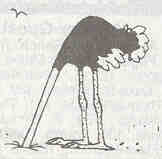
| | | |
| | | |
Oooooooooooooooor . . .
Start with an egyptian rendering from a few thousand years ago . . . provide a crack-ass interpreation of that rendering that has no basis in modern scholarship . . . follow that with well-accepted and peer-reviewed studies that, without serious exception, provide an alternate theory and, well . . . you lose.
I'm an atheist and, at the risk of angering other religious types, I think you all are nuts--christian, morman, hindu, etc.--ALL, crazy. But, from a debate standpoint, you mormans have not only failed to prove that the BOA was "real"--but your evidence is comparable to the heaven's gate-type logic. In other words, loooooooooooooooooney toons.

Start with an egyptian rendering from a few thousand years ago . . . provide a crack-ass interpreation of that rendering that has no basis in modern scholarship . . . follow that with well-accepted and peer-reviewed studies that, without serious exception, provide an alternate theory and, well . . . you lose.
I'm an atheist and, at the risk of angering other religious types, I think you all are nuts--christian, morman, hindu, etc.--ALL, crazy. But, from a debate standpoint, you mormans have not only failed to prove that the BOA was "real"--but your evidence is comparable to the heaven's gate-type logic. In other words, loooooooooooooooooney toons.
Refugio:
we resEMBLE that remark!
we resEMBLE that remark!
El Sid:
Thanks for that link.
Good stuff.
Thanks for that link.
Good stuff.
This has been an important discussion. This discussion cuts right to the very heart of Mormonism - whether or not Joseph Smith was a prophet of God. The Book of Mormon and the Church of Jesus Christ of Latter Day Saints both claim that prophets seers and revelators have the gift of translation. The president, seer and revelator of the LDS church is supposed to have the power to translate from any language (by the power of God).
If Joseph Smith was really what he claimed to be, and what the LDS church says he was, then the Book of Abraham is a great test for him.
If Joseph Smith, Jr. really translated Egyptian scrolls which contained holy scripture, then it is evidence that he was a true prophet. If Joseph Smith, Jr. was unable to translate the Egyptian scrolls but instead simply made up a farce, then it is absolute proof that he was NOT a prophet of God.
The Mormons on this thread, as you can see, have given no credible or responsive answers. The Book of Abraham is one of the strongest evidences that Joseph Smith, Jr. was no prophet.
There are, of course, other evidences of Joseph Smith's failings, but there is always some room for debate on such things. Mormons will never believe the (unverifiable) stories of Smith's abuse of teenage girls and such. The Book of Abraham is not subject to such debate. We have it before us. It is black and white. Smith either translated it from papyrus or he did not.
It has been shown conclusively that he did not. Mormonism stands or falls on Joseph Smith, and Joseph Smith stands or falls on the Book of Abraham. The evidence, as you can see clearly in this thread, is that Joseph Smith falls. I have seen no reasonable argument in favor of the Book of Abraham. As such, the final conclusion is inescapable.
[This message has been edited by El Sid (edited 1/9/2007 8:55a).]
If Joseph Smith was really what he claimed to be, and what the LDS church says he was, then the Book of Abraham is a great test for him.
If Joseph Smith, Jr. really translated Egyptian scrolls which contained holy scripture, then it is evidence that he was a true prophet. If Joseph Smith, Jr. was unable to translate the Egyptian scrolls but instead simply made up a farce, then it is absolute proof that he was NOT a prophet of God.
The Mormons on this thread, as you can see, have given no credible or responsive answers. The Book of Abraham is one of the strongest evidences that Joseph Smith, Jr. was no prophet.
There are, of course, other evidences of Joseph Smith's failings, but there is always some room for debate on such things. Mormons will never believe the (unverifiable) stories of Smith's abuse of teenage girls and such. The Book of Abraham is not subject to such debate. We have it before us. It is black and white. Smith either translated it from papyrus or he did not.
It has been shown conclusively that he did not. Mormonism stands or falls on Joseph Smith, and Joseph Smith stands or falls on the Book of Abraham. The evidence, as you can see clearly in this thread, is that Joseph Smith falls. I have seen no reasonable argument in favor of the Book of Abraham. As such, the final conclusion is inescapable.
[This message has been edited by El Sid (edited 1/9/2007 8:55a).]
This thread just goes to show you how "faith" can warp your reasoning and decision making process. I hope people of all faiths take note to not let religion lead you down a path that you wouldn't reasonably go.
^
|
|
Oink, Oink, my good man.
|
|
Oink, Oink, my good man.
There are many many reasons why Mormonism is a Christian heresy at best and a satan inspired falacy at worst.
The unfortunate thing is that blatent evidence of fraud on the part of Joseph Smith doesn't even convince some of the faithfull.
IBMAGG takes a lot of abuse on this board. He does dish out a little at times but overall he seems like a genuinly nice human being. I think he'd be a great neighbor, coworker or whatever.
I hope and pray that he does receive truth about Jesus Christ in his lifetime. The beautiful thing about Catholicism is that we believe that Christ can save anybody by his blood...even a well meaning Mormon.
The unfortunate thing is that blatent evidence of fraud on the part of Joseph Smith doesn't even convince some of the faithfull.
IBMAGG takes a lot of abuse on this board. He does dish out a little at times but overall he seems like a genuinly nice human being. I think he'd be a great neighbor, coworker or whatever.
I hope and pray that he does receive truth about Jesus Christ in his lifetime. The beautiful thing about Catholicism is that we believe that Christ can save anybody by his blood...even a well meaning Mormon.
Featured Stories
See All
17:52
5h ago
3.5k
A&M prevails in Round 1 of highly-dramatic Lone Star Showdown
by Richard Zane
10:37
6h ago
2.0k
Rapid Reaction: A&M take series opener in thrilling, seesaw affair
by Ryan Brauninger
Kansas State transfer guard P.J. Haggerty commits to Texas A&M hoops
by Luke Evangelist
7:49
14h ago
1.3k
0:38
8h ago
1.7k
Hot start fuels No. 13 Texas A&M in 10-6 win in Oxford
by Emily Dreger
Infection_Ag11
Not sure I've ever heard such uniform boos at an A&M sporting event before
in Billy Liucci's TexAgs Premium
60
JDUB08AG
Not sure I've ever heard such uniform boos at an A&M sporting event before
in Billy Liucci's TexAgs Premium
45
AgLiftPilot
Whoever put the pineapples behind Schlos... needs a raise.
in Billy Liucci's TexAgs Premium
40
LeagueCityAg
Not sure I've ever heard such uniform boos at an A&M sporting event before
in Billy Liucci's TexAgs Premium
35
ChAg1799
Whoever put the pineapples behind Schlos... needs a raise.
in Billy Liucci's TexAgs Premium
33