There have been so many comments on this subject and "Liam" was going to give the explanation but his new job has not afforded him the opportunity so I will give you the answers that you have been waiting for.
In the summer of 1835 members of the Church purchased from Michael Chandler 4 mummies and two or more papyrus scrolls that had been discovered in Egypt by a man named Antonio Lebolo. The Prophet Joseph Smith showed little interest in the mummies but was fascinated by the papyri. Through the use of the Urim and Thummim and with W.W. Phelps and Oliver Cowdrey as scribes, Joseph began to translate "some of the characters or hieroglyphics, and much to our joy found one of the scrolls contained the writing of Abraham, another the writings of Joseph of Egypt, etc.--a more full account of which will appear in its place, as I proceed to examine or unfold them. Truly we can say, the Lord is beginning to reveal the abundance of peace and truth."
In the Prophet Joseph's journal entry of 10/01/1835, The Prophet recorded that "during the research, the principles of astronomy as understood by Father Abraham and the ancients unfolded to our understanding." Oliver Cowdrey reported that "when the translation of these valuable documents will be completed, I am unable to say; neither can I give you a probable idea how large volumes they will make; but judging from their size, and the comprehensiveness of the language, one might reasonably expect to see sufficient to develop much of the mighty acts of the ancient men of God, and of his dealing with the children of men when they saw him face to face." In 1838 Anson Call visited the Prophet in Far West, Mo. Joseph invited him in and said "sit down and we will read to you from the translations of the Book of Abraham." (Sorry, interuption; back in 15 min.) Oliver Cowdrey then read until he was tired when Thomas Marsh read, making all together about TWO HOURS. I was much interested in the work." The Book of Abraham and the three facsimiles, as we now have them in our "Pearl of Great Price", were published in the "Times and Seasons" in March 1842. Nearly a year later, in the Feb.1, 1843 issue, "Times and Seasons" editor John Taylor encouraged the Saints to renew their suscriptions to the paper adding: "We would further state that "we had the promise of Br. Joseph, to furnish us with further extracts from the Book of Abraham."
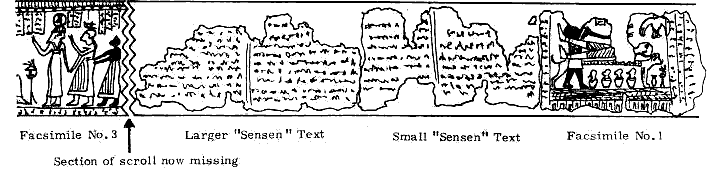
The history of the papyri after the death of the prophet is sketchy. The Egyptian relics were kept by Lucy Mack Smith until her death and were then sold by Emma Smith Bidamon to a Mr. A. Combs. Combs sold two of the mummies with some papyri to the St. Louis Museum in 1856 and in 1863 they were sold to the Chicago Musuem (later renamed the Woods Musuem). It has generally been assumed that all of the papyri were destroyed in the great Chicago fire in 1871. In 1967, however it was announced that Dr. Aziz Atiya, a professor of Middle Eastern Studies at the University of Utah had found 11 papyrus "fragments", including Facsimile 1, in the New York Metropolitan Museum of Art. Not being a Latter-day Saint himself (he was a Coptic Christian) but somewhat familiar with Latter-day Saint culture and the Pearl of Great Price, Dr. Atiya recognized Facsimile 1 and made contact with Church leaders, who eventually acquired the papyrus fragments.
Committed latter-day Saints and critics of the faith alike were intrigued with what would come of the find. The latter group exulted that once and for all the Book of Abraham could be exposed as a figment of Joseph Smith's fertle imagination. The translation of the eleven fragments and the facsmile by trained Egyptologists revealed parts of the ancient Egyptian Book of Breathings, an excerpt of the larger Book of the Dead, which are actually funeral texts, material associated with the burial and future state of the dead. In other words, the fragments presumably had nothing to do with the person and work of Abraham. The late H. Donl Peterson, professor of ancient scripture at BYU and dedicated student of the book of Abraham, replied: "The Book of Abraham and Joseph papyri were described as "Beautifully written on papyrus, with black, and a small part red, ink or paint, in perfect preservation." The eleven fragments recovered from the Metropolitan Musuem of Art in New York City DO NOT FIT THAT DESCRIPTION AT ALL! What was discovered was Facsimile 1 and some fragments UNRELATED to the published account of the present Book of Abraham. They were part of the original scrolls once owned by Joseph Smith but NOT directly related to the Abrahamic text. The partial text of the Book of Breathings returned to the Church in 1967 was NOT the text for the Book of Abraham."
Professor Peterson said that the book of Abraham "was not finished. In fact, it was hardly begun. The Book of Abraham was a LENGTHY record...Oliver Cowdrey spoke of VOLUMES necessary to contain it. Only two short installments were published during Joseph Smith's lifetime, although more was promised. Had not Joseph Smith's last 16 months been so turbulent, no doubt more of the translation would have been forth coming, as he had promised. We have but a SMALL fraction of a rather lengthy record."
"Is the Book of Abraham true?" Elder Bruce R. McConkie asked. "Yes, but it is not complete; it stops almost in midair. Would that the Prophet had gone on in his translation or revelation, as the case may be."
Hope this explains thing for some of you.
IBMAGG
[This message has been edited by ibmagg (edited 7/15/2006 1:17p).]
[This message has been edited by ibmagg (edited 7/15/2006 1:21p).]
In the summer of 1835 members of the Church purchased from Michael Chandler 4 mummies and two or more papyrus scrolls that had been discovered in Egypt by a man named Antonio Lebolo. The Prophet Joseph Smith showed little interest in the mummies but was fascinated by the papyri. Through the use of the Urim and Thummim and with W.W. Phelps and Oliver Cowdrey as scribes, Joseph began to translate "some of the characters or hieroglyphics, and much to our joy found one of the scrolls contained the writing of Abraham, another the writings of Joseph of Egypt, etc.--a more full account of which will appear in its place, as I proceed to examine or unfold them. Truly we can say, the Lord is beginning to reveal the abundance of peace and truth."
In the Prophet Joseph's journal entry of 10/01/1835, The Prophet recorded that "during the research, the principles of astronomy as understood by Father Abraham and the ancients unfolded to our understanding." Oliver Cowdrey reported that "when the translation of these valuable documents will be completed, I am unable to say; neither can I give you a probable idea how large volumes they will make; but judging from their size, and the comprehensiveness of the language, one might reasonably expect to see sufficient to develop much of the mighty acts of the ancient men of God, and of his dealing with the children of men when they saw him face to face." In 1838 Anson Call visited the Prophet in Far West, Mo. Joseph invited him in and said "sit down and we will read to you from the translations of the Book of Abraham." (Sorry, interuption; back in 15 min.) Oliver Cowdrey then read until he was tired when Thomas Marsh read, making all together about TWO HOURS. I was much interested in the work." The Book of Abraham and the three facsimiles, as we now have them in our "Pearl of Great Price", were published in the "Times and Seasons" in March 1842. Nearly a year later, in the Feb.1, 1843 issue, "Times and Seasons" editor John Taylor encouraged the Saints to renew their suscriptions to the paper adding: "We would further state that "we had the promise of Br. Joseph, to furnish us with further extracts from the Book of Abraham."
The history of the papyri after the death of the prophet is sketchy. The Egyptian relics were kept by Lucy Mack Smith until her death and were then sold by Emma Smith Bidamon to a Mr. A. Combs. Combs sold two of the mummies with some papyri to the St. Louis Museum in 1856 and in 1863 they were sold to the Chicago Musuem (later renamed the Woods Musuem). It has generally been assumed that all of the papyri were destroyed in the great Chicago fire in 1871. In 1967, however it was announced that Dr. Aziz Atiya, a professor of Middle Eastern Studies at the University of Utah had found 11 papyrus "fragments", including Facsimile 1, in the New York Metropolitan Museum of Art. Not being a Latter-day Saint himself (he was a Coptic Christian) but somewhat familiar with Latter-day Saint culture and the Pearl of Great Price, Dr. Atiya recognized Facsimile 1 and made contact with Church leaders, who eventually acquired the papyrus fragments.
Committed latter-day Saints and critics of the faith alike were intrigued with what would come of the find. The latter group exulted that once and for all the Book of Abraham could be exposed as a figment of Joseph Smith's fertle imagination. The translation of the eleven fragments and the facsmile by trained Egyptologists revealed parts of the ancient Egyptian Book of Breathings, an excerpt of the larger Book of the Dead, which are actually funeral texts, material associated with the burial and future state of the dead. In other words, the fragments presumably had nothing to do with the person and work of Abraham. The late H. Donl Peterson, professor of ancient scripture at BYU and dedicated student of the book of Abraham, replied: "The Book of Abraham and Joseph papyri were described as "Beautifully written on papyrus, with black, and a small part red, ink or paint, in perfect preservation." The eleven fragments recovered from the Metropolitan Musuem of Art in New York City DO NOT FIT THAT DESCRIPTION AT ALL! What was discovered was Facsimile 1 and some fragments UNRELATED to the published account of the present Book of Abraham. They were part of the original scrolls once owned by Joseph Smith but NOT directly related to the Abrahamic text. The partial text of the Book of Breathings returned to the Church in 1967 was NOT the text for the Book of Abraham."
Professor Peterson said that the book of Abraham "was not finished. In fact, it was hardly begun. The Book of Abraham was a LENGTHY record...Oliver Cowdrey spoke of VOLUMES necessary to contain it. Only two short installments were published during Joseph Smith's lifetime, although more was promised. Had not Joseph Smith's last 16 months been so turbulent, no doubt more of the translation would have been forth coming, as he had promised. We have but a SMALL fraction of a rather lengthy record."
"Is the Book of Abraham true?" Elder Bruce R. McConkie asked. "Yes, but it is not complete; it stops almost in midair. Would that the Prophet had gone on in his translation or revelation, as the case may be."
Hope this explains thing for some of you.
IBMAGG
[This message has been edited by ibmagg (edited 7/15/2006 1:17p).]
[This message has been edited by ibmagg (edited 7/15/2006 1:21p).]