
Thanks. those were really interesting stats and observations.
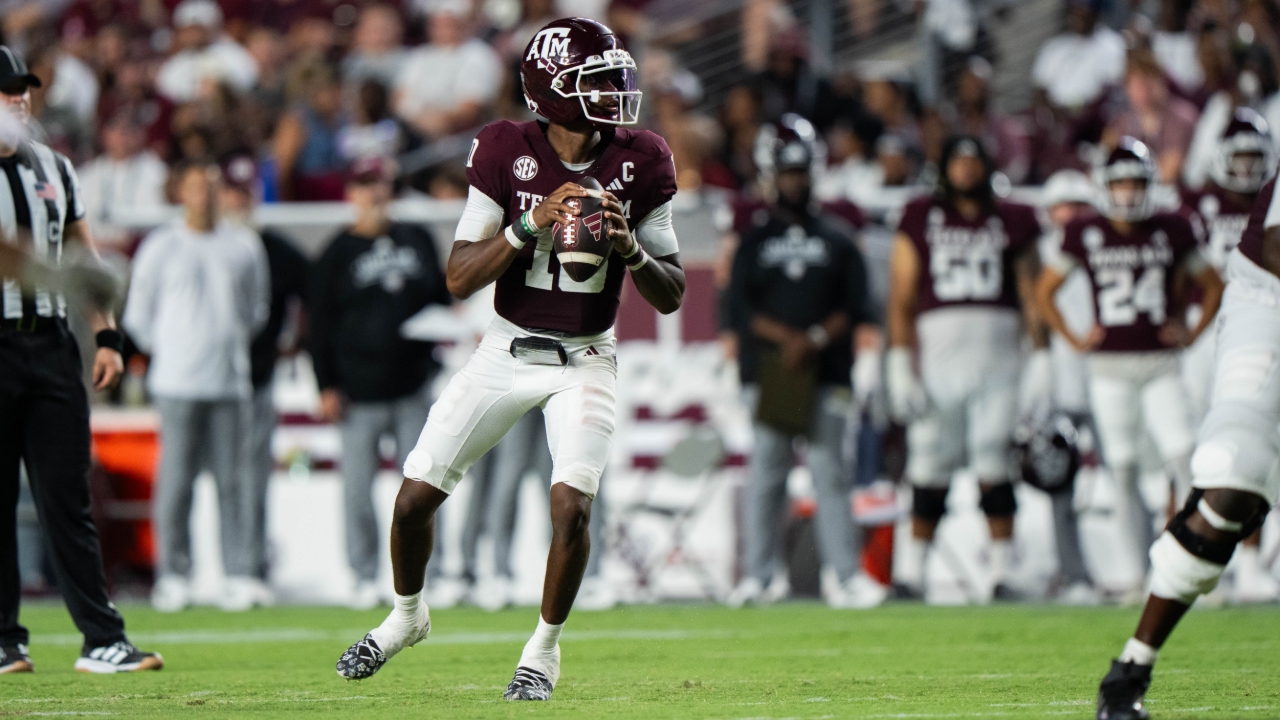
Photo by Danny Grant, TexAgs
This early in the season, context is everything when it comes to quarterback play.
There are 12 starting SEC quarterbacks who can say “I faced Power Conference competition this year,” and there are four who cannot. Those four — Gunner Stockton, Aaron Philo, LaNorris Sellers and Jared Curtis — will check that box this weekend. That’s worth remembering as we discuss quarterback stats that stand out.
This won’t be the place where we use raw passing yards through Week 2 as some sort of rest-of-season barometer. Those numbers are still a bit skewed based on competition.
You might be trying to figure out what’s real compared to what’s not. You came to the right place for that.
These are 10 SEC quarterback stats that are worth knowing as we enter Week 3 (stats via PFF and cfbstats.com):
10. Gunner Stockton has yet to throw a pass later than the 7:44 mark of the second quarter because he’s got the nation’s best QB rating (284.5) and a perfect NFL QB rating (158.3)
I told you that we were going to need context for these guys who have been playing against non-Power Conference foes, and Stockton is a good place to start. For the first time in recent memory, Georgia has been an efficient, high-octane offense from the jump. With a new-look group of pass-catchers, Stockton was so dominant against Tennessee State and Western Kentucky that backup Ryan Puglisi came into the game in the middle of the second quarter.
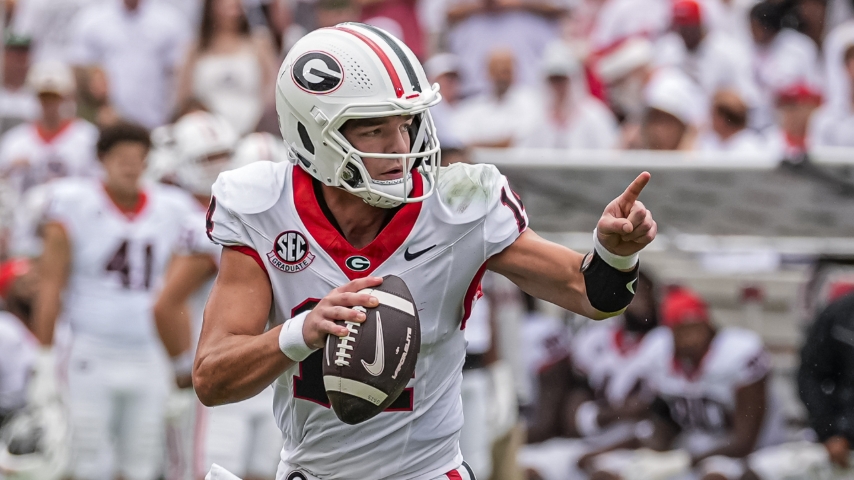
IMAGN IMAGES via Reuters Connect
Gunner Stockton has thrown for 436 yards and eight touchdowns as Georgia is averaging 66.5 points per game.
So essentially, Stockton has basically played about three quarters total this season. Will that change against an Arkansas team that might just be more air for the Georgia offense to rip through? I wouldn’t bank on it. But Stockton had the SEC’s best QB rating in the second half last year, which means if and when he’s actually needed to throw a pass in the final 37 minutes, don’t expect any sort of drop-off.
9. The SEC QB who has faced the most pressured drop-backs through Week 2 is … Sam Leavitt (23)
We’ll wait and see what Leavitt’s status is for Week 3, but through two games, it’s safe to say that it’s been a roller-coaster experience. Three first-half interceptions against Louisiana Tech quieted some of the post-Clemson Heisman Trophy discussion. If you can believe it, he was pressured on 15 drop-backs in that Louisiana Tech game, which also saw him take five sacks.
You could argue that LSU was perhaps keeping the playbook basic ahead of the all-important Ole Miss showdown, but it’s noteworthy that Leavitt has seen so much pressure after returning from that Lisfranc injury that sidelined him throughout spring ball. His 10 scrambles for 98 yards suggest that escapability isn’t necessarily a hindrance to his game at this point, so that speaks more to what Leavitt is reading post-snap. If he does end up shaking off the “doubtful” tag and playing on Saturday in Oxford, it’ll be fascinating to see if Pete Golding can continue to keep the heat on the decorated Arizona State transfer.
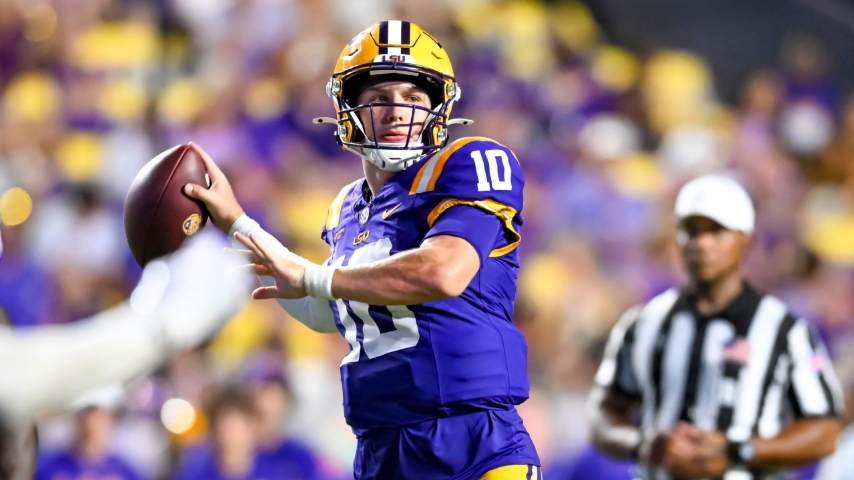
USA TODAY Network via Reuters Connect
Sam Leavitt was listed as “doubtful” on Wednesday’s initial availability report ahead of No. 7 LSU’s road trip to No. 8 Ole Miss.
8. But the SEC QB who has been pressured on the highest percentage of his drop-backs through Week 2 is … Jared Curtis (48.6%)
Just for a little perspective on that 48.6 percent number, LaNorris Sellers had the highest pressured drop-back rate among Power Conference quarterbacks (min. 100 drop-backs) last year at 42.4 percent. In other words, that number desperately needs to come down as the competition ramps up, beginning this weekend against an experienced defensive-minded coach in Dave Doeren. To Curtis’ credit, he’s only taken two sacks, and he doesn’t have a turnover-worthy play on those 17 pressured drop-backs (he’s also been blitzed on 62.9 percent of his drop-backs).
We’re gonna get to another five-star true freshman quarterback later who has had seemingly little to no pressure to worry about through two games. That’s a different story than what Curtis experienced so far. Of course, neither of his first two games were as a starter. That’ll change on Saturday against an NC State team that would like to frustrate Curtis in his first action against Power Conference competition.
7. Nobody in FBS has had more of his passes dropped than LaNorris Sellers (9)
I know. You thought it was Arch Manning. You were close. He’s had eight of his passes dropped so far.
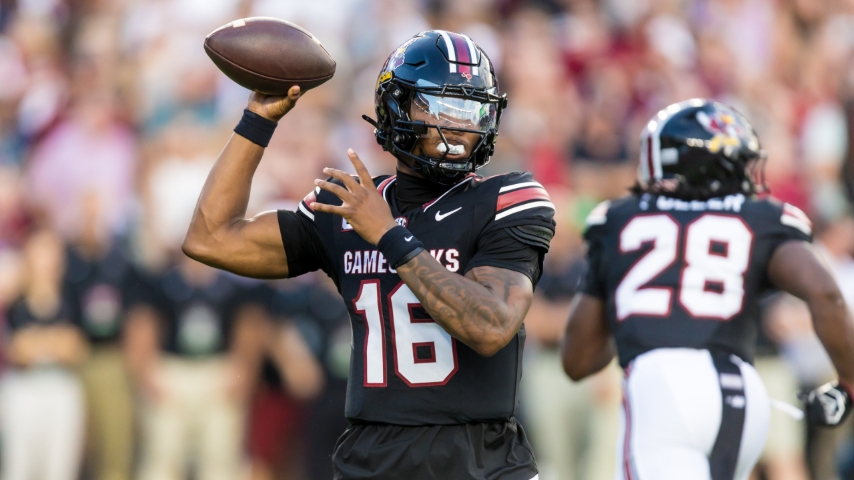
IMAGN IMAGES via Reuters Connect
LaNorris Sellers has completed 63.0 percent of his passes for 366 yards through two weeks.
It’s too early to say “here we go again” with the South Carolina passing attack because Sellers has at least seen much less pressure (27.5%) than the aforementioned 42.4 percent pressured drop-back rate he saw in the disastrous 2025 Mike Shula offense. The Kendal Briles version of the South Carolina offense has been steadier, also because the run game actually exists.
But it’s a number that’s worth monitoring because the Gamecocks are facing their first Power Conference foe (Mississippi State) this weekend. It’s also different from last year’s passing game issue, which was more about a lack of separation and time to throw than drops (15 all season). Ten drops compared to just two contested catches is not a ratio South Carolina can sustain if it wants the best version of Sellers in 2026.
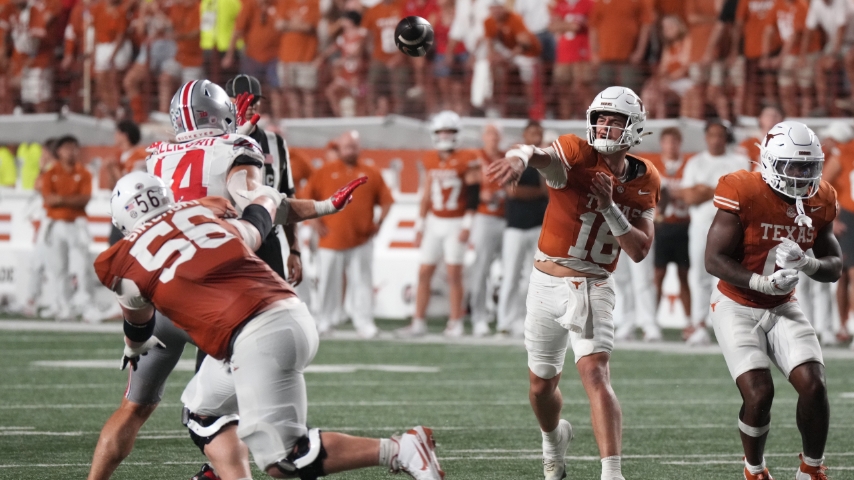
6. Arch Manning was 15th of 17 SEC-qualified QBs in adjusted completion percentage on 0-9 yard throws in 2025, but he’s at 100% through two games in 2026
That’s a huge early positive for Manning. While the first three quarters of that Ohio State game were far from perfect, seeing Manning have more precision in the short-yardage passing game was paramount in 2026. There was no way that Manning was going to come close to living up to the Year 2 hype if he didn’t improve at getting those all-important “easy” yards in Steve Sarkisian’s offense.
IMAGN IMAGES via Reuters Connect
Arch Manning threw for 195 yards, one touchdown and one interception Texas’ Week 2 comeback vs. Ohio State.
That number was going to be the best early indicator of whether Manning had improved his mechanics and/or gotten over whatever mental “yips” limited him as a first-time starter. Also of note? Manning is averaging six completions left of the hash per game so far, which is significant after he averaged just 2.3 such completions per game last year. Those are small, but important positives for the highly scrutinized quarterback.
5. Marcel Reed had just one designed run in each of A&M’s first two games
I’m surprised by that. And to a certain extent, I get it. Why would anybody call 10 designed runs for Reed against Missouri State? That wouldn’t have made sense. Texas A&M offensive coordinator Holmon Wiggins would’ve been putting his quarterback in harm’s way at a time when he needed to be developing a rapport with his receivers in a favorable matchup.
But I thought we’d see more than one designed run from Reed against Arizona State, especially after the running game was held in check. So far, he’s had one designed run in each start in 2026, which is less than the nearly three designed runs per game that he averaged in 2025. It’s interesting that when the A&M offense struggled down the stretch last year, Reed never had more than two designed runs in any of the final five games. He still averaged 8.5 yards per designed run in that five-game stretch, so it’s not as if it was getting stuffed. Reed was and continues to be a weapon with his legs. Perhaps we’ll see more of that on Saturday against Kentucky.
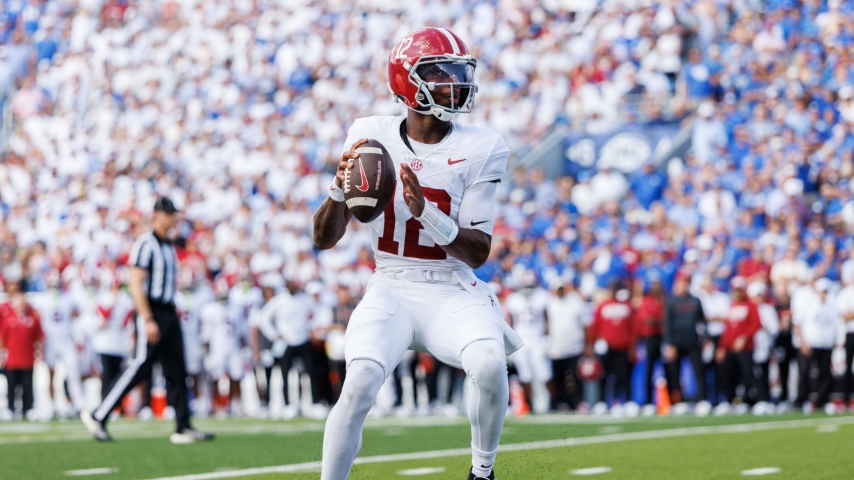
4. The SEC QBs with the most completions on 20-yard throws downfield are Keelon Russell and Austin Simmons (6)
That’s two guys who have already won lopsided Power Conference road starts. Hitting on explosive plays in the passing game usually helps make that sort of thing happen. Simmons has looked much more polished than Russell, who endured a sloppy start at Kentucky before settling in late and hitting a trio of downfield throws to the right side. That was after an impressive season-opening showing vs. East Carolina in which Russell was perfect on two downfield throws to the left side. He’s not a finished product, but the ability to stretch the field and possibly open up running lanes is there.
IMAGN IMAGES via Reuters Connect
Keelon Russell was guilty of two interceptions in Alabama’s 42-17 win at Kentucky.
Simmons, on the other hand (literally), looks like he’s in Year 4 as a starter. With Ahmad Hardy out, the southpaw has been the driving force behind the new-look Mizzou offense. Arm strength is not lacking. On passes that traveled at least 10 yards past the line of scrimmage, he’s 17-for-23 for 357 yards (15.5 yards/attempt) with six touchdowns. Sure, he’ll face tougher defenses than Kansas and Arkansas Pine-Bluff, but it was fair to wonder if Simmons would lack early confidence after he was Wally Pipp’d by Trinidad Chambliss at Ole Miss. So far, he’s passed that test with flying colors.
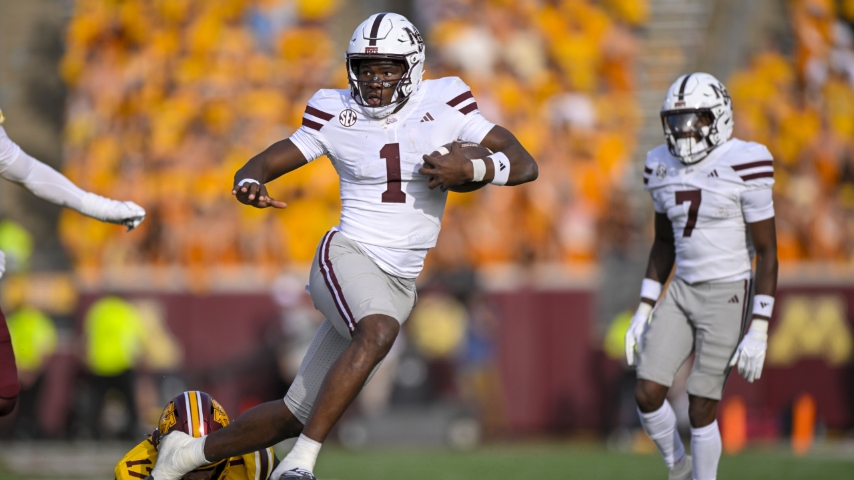
3. Kamario Taylor and Austin Simmons have perfect NFL QB ratings (158.3) on intermediate throws (10-19 yards)
There are five qualified (min. 10 such attempts) Power Conference quarterbacks who can say they have a perfect NFL QB rating in those spots. That list is Taylor, Simmons, Rocco Becht, Darian Mensah and Malik Washington. That’s pretty darn impressive for Simmons and Taylor, both of whom are first-time starters who have passed the eye test and made life much easier on their offensive play-callers.
Simmons and Taylor have both thrown into big windows while being decisive with the football in those spots. They’ve shown that they can step up in the pocket and play on schedule. Will that continue against SEC competition? Likely not at that rate. Last year’s SEC leader in NFL quarterback rating on intermediate throws was Gunner Stockton at 127.7. It’s been five years since an SEC quarterback finished above the 140.0 mark in those spots — 2021 Hendon Hooker had a 146.3 NFL QB rating on 10-19 yard throws — but maybe Taylor and Simmons can change that.
IMAGN IMAGES via Reuters Connect
Kamario Taylor has accounted for eight total touchdowns in leading Mississippi State to a 2-0 start.
2. The highest pressure-to-sack ratio in the SEC is Byrum Brown’s 42.9%
I loved Brown coming into the season, in part because of his familiarity with Alex Golesh’s offense and the surroundings that followed them from USF to Auburn. But the one thing I was worried about was Brown’s effectiveness under pressure. Even amidst a historic 3,000-yard passing, 1,000-yard rushing season at USF in 2025, he struggled with accuracy under pressure.
Through two games at Auburn, Brown has been sacked nine times on 21 pressured drop-backs. And sure, seven of those sacks (compared to just one scramble) came in the opener against Baylor, but he still took multiple sacks against an inferior Southern Miss squad in Week 2.
That’s a troubling trend ahead of SEC play for all the obvious reasons. In that offense, taking negative plays kills tempo, and suddenly, it puts a ton of pressure on the Auburn defense. We know that Brown can scramble against lesser competition. Can he do so against Power Conference defenses? Or if he can’t, can he improve his accuracy under pressure? Saturday’s matchup against Florida in Golesh’s SEC debut will give us some good insight on that front.
1. Faizon Brandon has yet to complete a pass under pressure, and Tennessee is still averaging 50.5 points per game
To be clear, I’m saying that this is a positive for the Tennessee surroundings. That’s ideal for a true freshman quarterback, who only had to complete 10 passes in a three-touchdown win at Georgia Tech. It certainly beats the alternative. Tennessee’s elite offensive line has given Brandon plenty of time to throw in a pair of blowout victories. Having just three pass attempts on only nine pressured drop-backs speaks to how successful that unit has been running that up-tempo style.
Dare I say, Kennesaw State probably won’t be the foe who’ll test that number. But a week later against Colin Simmons and that Texas defense? Well, that could be a different experience for the true freshman signal-caller.
Never miss the latest news from TexAgs!
Join our free email list