
Arch is not very good. Lol swap him and Leavitt.
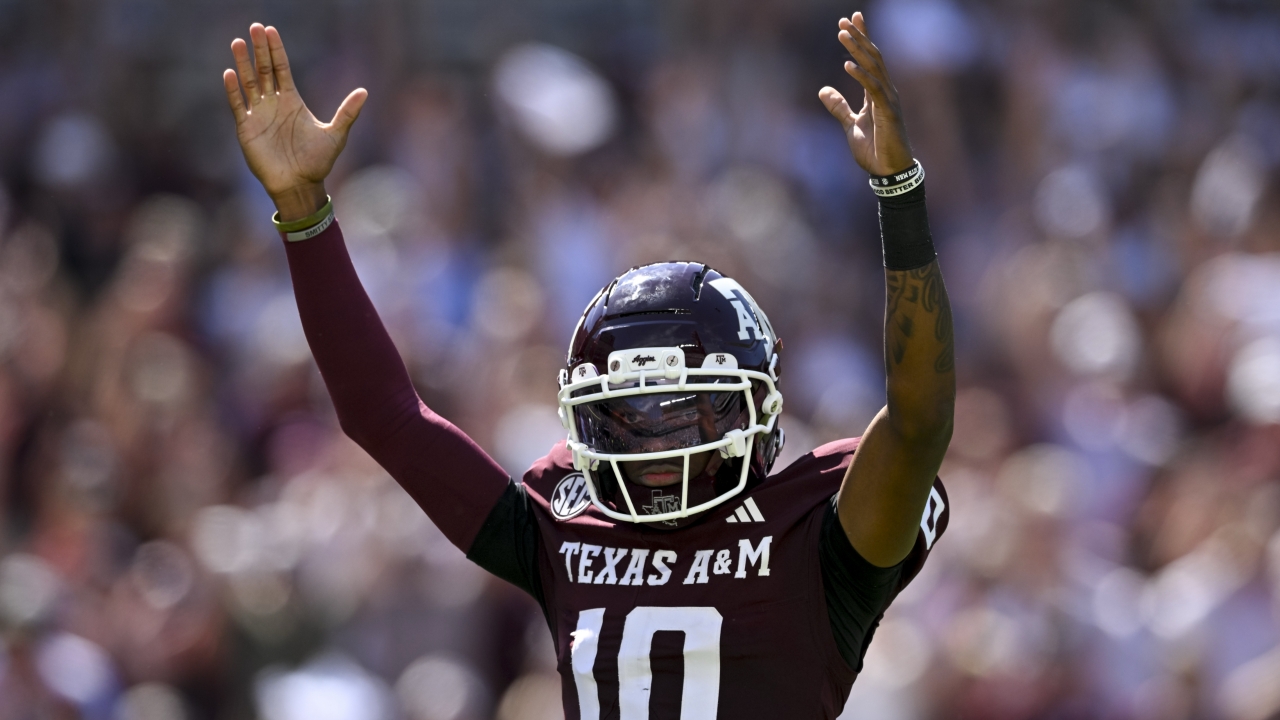
Photo by Maria Lysaker-Imagn Images
As difficult as it is, I try to treat quarterback rankings like a schoolyard draft. As in, this is what I’d do if I had to pick a team to go win a game in Week 1.
Sure, that gets complicated when you start to weigh past accomplishments vs. future potential. There’s plenty of room for interpretation within that, but what I like about the schoolyard draft perspective is that it attempts to pretend that all things are equal. For the sake of today’s rankings, I’m not necessarily drafting a quarterback based on who has the best situation, though obviously one can’t completely eliminate how surroundings have shaped perception of these signal-callers.
This year in the SEC, ranking quarterbacks is no small task. We’ve got multiple guys returning who finished in the top 10 in the Heisman voting, we’ve got five guys who have started in a College Football Playoff game, and we’ve got seven projected QB1s who arrived by way of the transfer portal.
That’s a lot. It’s something worth circling back to at multiple points in the regular season, and not just because quarterbacks are always worth talking about. Intrigue isn’t lacking at the game’s most important position in 2026, especially not in the SEC.
Let’s rank SEC quarterbacks heading into 2026 (with schoolyard draft logic in mind):
16. Jared Curtis, Vanderbilt
One thing I like — Like, besides the fact that he’s a five-star quarterback who turned down Georgia for Vanderbilt? I like the fact that by the time he takes the field as QB1, he’ll have had an entire offseason working with Tim Beck, who needs to get more credit as one of the best offensive minds in the sport for helping maximize Diego Pavia’s ability the last four years.
One thing I don’t like — He’s the only guy on this list who doesn’t have a single college rep. To recap, he’s got more reps in a feature film (shoutout “The Breadwinner”) than he has playing quarterback at the college level. We can talk about him having an ideal 230-pound frame for playing (and surviving) as a true freshman, but as we know, you’re defined by what you look like when the bullets start flying. That’s a massive “TBD” for Curtis.
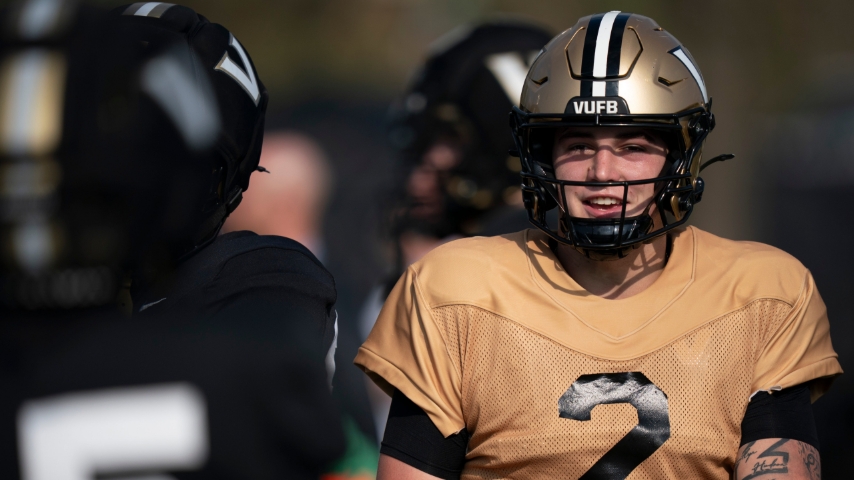
Denny Simmons / The Tennessean / USA TODAY NETWORK
A product of Nashville Christian School, Jared Curtis is listed at 6-foot-3 and 230 pounds.
15. KJ Jackson, Arkansas
One thing I like — Unlike some of the other guys at the back end of this list, he’s at least gotten real reps against an actual defense. We saw him get the last 22 minutes against Texas, which included him leading three scoring drives and competing like a guy who knew that he had an opportunity. He did hit paydirt with both his arm and his legs. He’s not quite Taylen Green from a physical standpoint, but the southpaw flashed promise both against Texas and Mizzou, both of whom had respected SEC defenses.
One thing I don’t like — It’s a new offense with a staff that hasn’t invested into Jackson. It’s possible that’ll be a moot point. It’s also possible that it’ll hinder his Year 3 development and they’ll have a short leash on a signal-caller that they don’t view as the future. Perhaps that’s too speculative for someone with 58 career pass attempts, only two of which were completed 20 yards downfield. But Jackson won’t rise much on this list until he shows that he can maintain QB1 status for Ryan Silverfield’s first team in Fayetteville.
14. George MacIntyre, Tennessee
One thing I like — A year and a half of learning under Josh Heupel should bode well for MacIntyre, who played in two games as a true freshman behind Joey Aguilar. Heupel’s ability to have his guys ready — no matter how experienced they are — is perhaps his greatest asset. Then again, Nico Iamaleava was his only underclassman starter to date.
One thing I don’t like — If Tennessee loved what they had in MacIntyre with those limited reps, would they have been so aggressive both in trying to get Aguilar eligible for another year and recruiting the likes of Ty Simpson and Sam Leavitt? That doesn’t mean MacIntyre is set up for failure. It does mean that he’s got plenty of people to win over, and doing so with five-star freshman Faizon Brandon lurking will only amplify that.
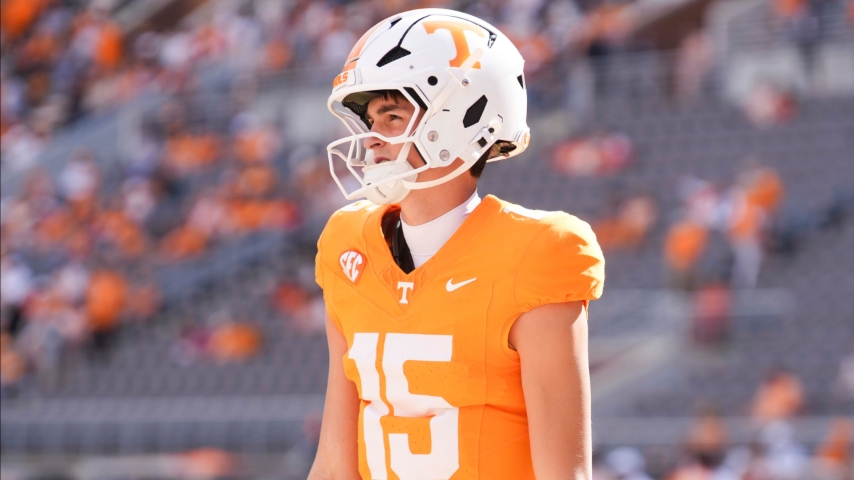
Caitie McMekin/News Sentinel / USA TODAY NETWORK
George MacIntyre appeared in just two regular-season games for Tennessee as a true freshman last fall.
13. Kenny Minchey, Kentucky
One thing I like — Will Stein recruited three consecutive elite quarterback transfers while he was the Oregon OC, and for his first one at Kentucky, he got the Notre Dame backup to flip from Nebraska. Minchey lost a down-to-the-wire battle with CJ Carr, who turned out to be a top-10 quarterback in America while Steve Angeli left post-spring and started at Syracuse. Talk to people about Minchey, and they’ll tell you that he would’ve started at plenty of places in 2025. He’s got everything on the table, and his presence was why Notre Dame didn’t take its foot off the gas in blowouts last year.
One thing I don’t like — Zero career starts. Zero career touchdown passes. Minchey hasn’t handled QB1 duties, and there’s not a stat that you can spin in Minchey’s favor. When all of your reps have come in garbage time, you’re still a massive unknown. The last quarterback who was considered a massive unknown in Lexington was Brock Vandagriff. Granted, he didn’t have Stein in his ear. That’s the best asset for Minchey as he works through those typical first-time starter woes.
12. Aaron Philo, Florida
One thing I like — It’s Year 3 with Buster Faulkner. That’s the best argument for why Philo will get first crack at QB1, though I wouldn’t dismiss Tramell Jones Jr.’s chances. It’s hard not to be bullish on Philo, who came to Georgia Tech as the Georgia high school record-holder in passing yards after breaking Trevor Lawrence’s mark. He’s not Haynes King. Philo wants to push the ball downfield and get into a rhythm as a passer. Unlike some of the guys that he’s ranked ahead of, Philo already had big-time college moments both with his heroics against Miami in 2024 and a couple weeks later against NC State with a game-winning touchdown run.
One thing I don’t like — He didn’t look like a finished product as a true freshman (obviously), and then because of King’s durability, he didn’t attempt a pass against FBS competition in 2025. Philo still hasn’t had to have his mechanics get picked apart for costly in-game mistakes. That could come at Florida, albeit with the familiarity of Faulkner. Philo is probably a bit more raw than what his Georgia Tech background and prolific high school career would suggest.
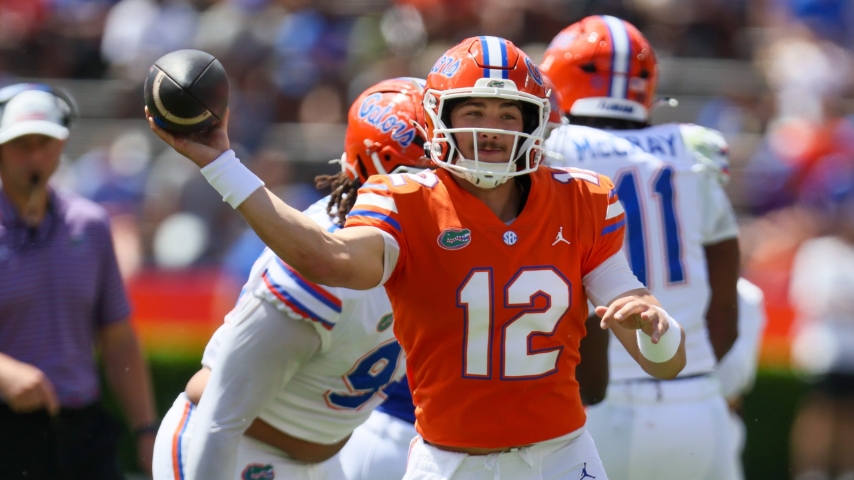
Alan Youngblood/Gainesville Sun/USA TODAY NETWORK
Aaron Philo has eight games of college experience to his credit. He started one game for Georgia Tech in 2025.
11. Austin Simmons, Mizzou
One thing I like — At this time last year, Simmons was my favorite dark horse Heisman Trophy candidate. Then he had two turnover-heavy starts at Ole Miss, got hurt and watched Trinidad Chambliss turn him into Wally Pipp. He spent three years with Lane Kiffin and Charlie Weis Jr., and we watched him lead that all-important touchdown drive in relief of Jaxson Dart against Georgia in 2024. This is someone who reclassified by two years, learned how to drive at Ole Miss and had a college degree before he took the field as QB1 in 2025. Maturity isn’t an issue for the new Mizzou starter.
One thing I don’t like — It’s pretty rare for Kiffin to bail on a starting quarterback. Think of the struggles that Matt Corral and Dart had in Year 1 in his offense, and he stuck with both guys. Simmons will now learn a new offense, albeit one with Eli Drinkwitz, Chip Lindsey and Garrett Riley at the controls. Simmons hasn’t really had a chance to work through his mistakes yet, though he’s still only 20 years old. There could be some decision-making issues that Mizzou has to stomach with the talented, but still relatively inexperienced southpaw.
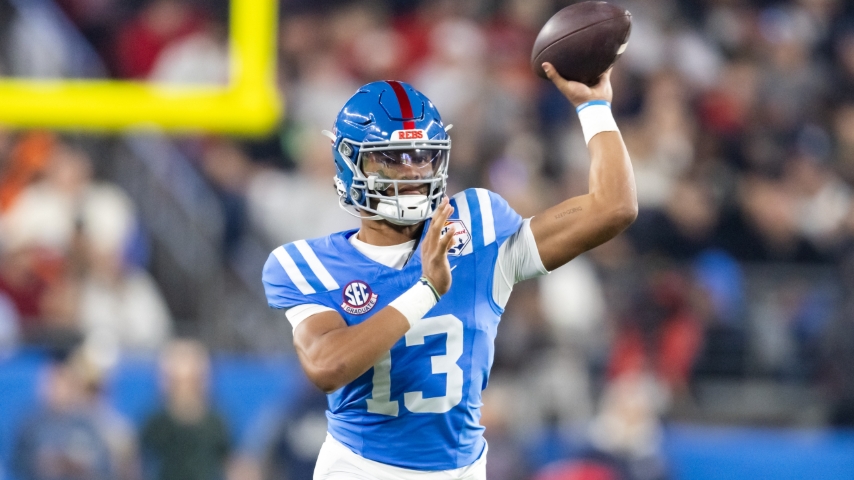
Mark J. Rebilas-Imagn Images
Despite signing with Mizzou on Jan. 6, Austin Simmons stayed with Ole Miss through the remainder of the CFP run, which ended on Jan. 8.
10. Kamario Taylor, Mississippi State
One thing I like — He’s electric. Need I say more? I’m a Taylor believer, and I think Jeff Lebby has an ideal player to execute his offense. That’s not a shot at the ageless Blake Shapen, but the mobility of Taylor changes what the Bulldogs can do with their up-tempo scheme. Not enough people are talking about the 6-foot-4, 230-pound quarterback because his two starts came in losing efforts for a 5-8 team, but he hit 300 total yards in both games and flashed the potential that made him a top-100 recruit in the 2025 class.
One thing I don’t like — The pocket presence isn’t at a high level yet. It’s hard to knock a guy who saw pressure on 47 percent of his drop-backs, but Taylor needs to develop that sixth sense so that Mississippi State doesn’t take negative plays and derail drives. As electric as Taylor is, getting into third-and-long won’t play into his skill set. On third down, he was 9-for-20 as a passer with a 94.7 QB rating (No. 23 among 26 qualified SEC quarterbacks), and he only had one passing conversion on third-and-10 or longer.
9. Sam Leavitt, LSU
One thing I like — The last time that Leavitt was healthy for a full season, he was a fourth-and-13 stop away against Texas from earning a Playoff semifinal berth. You can sell yourself on Leavitt being one of the best quarterbacks in college football because of how he can keep plays alive. His last win as a starting quarterback was against Texas Tech, who rolled through the rest of the Big 12. This is someone who could step on the field in Week 1 and look as good as any dual-threat quarterback in the sport.
One thing I don’t like — I’m lower on Leavitt than most in part because of the Lisfranc injury, which derailed the aforementioned Corral's pro career. That’s an extensive recovery that makes me wonder if he’s going to be playing at less than 100 percent. Leavitt needs his full mobility to be the best version of himself. It’s possible that limited mobility could allow Leavitt to develop and get some of the recklessness out of his game. There’s still too much volatility to make me confident that you know what you’re getting with him from drive to drive, especially without a spring to learn the offense.
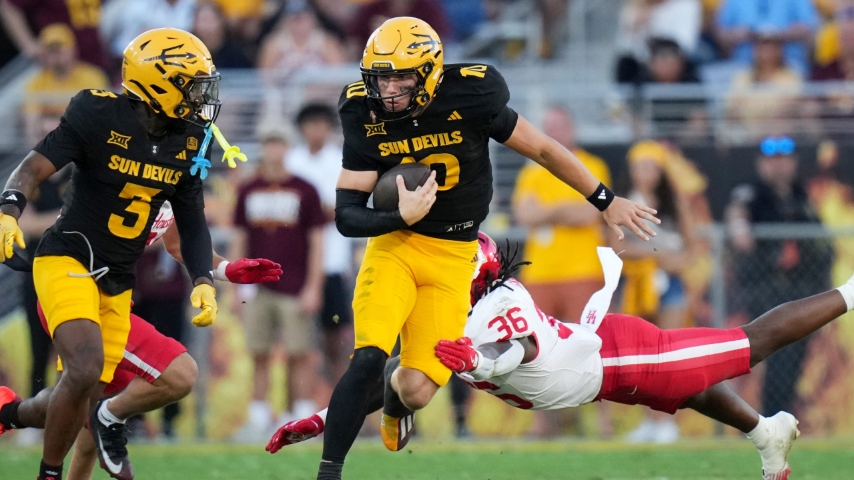
Joe Rondone/The Republic / USA TODAY NETWORK
A native Oregonian, Sam Leavitt was the 2024 Big 12 Offensive Freshman of the Year while at Arizona State.
8. John Mateer, Oklahoma
One thing I like — The last time that Mateer was unquestionably healthy, he was the leader in the Heisman Trophy odds, and he was confirming all of the offseason buzz about his packaged arrival with OC Ben Arbuckle. With a full offseason to get healthy and work on those mechanical issues, we could see the first-half version of Mateer take the field and become one of the best quarterbacks in the sport. You can’t teach Mateer’s feet, either. Mateer in the plus-one run game elevated the Sooners’ floor en route to a Playoff berth.
One thing I don’t like — It’s the same thing I wondered about when he came over from Washington State. Mateer had flaws in his game that he overcame against lesser competition. At Oklahoma, those flaws were exposed down the stretch. How much of that was the thumb injury? That’s in the eye of the beholder. Unnecessary jump throws and pre-determining reads doomed the OU offense at times. He had 20 turnover-worthy plays last year (third-most in SEC), including 15 when kept clean (most in SEC). Even if his health was largely responsible for that, one can’t help but worry about his durability with the type of contact he takes on as a high-volume runner.
7. Keelon Russell, Alabama
One thing I like — Everything that I’ve watched, heard and read tells me that Russell is going to be Kalen DeBoer’s right-handed Michael Penix Jr. That’s not just because he rose up the recruiting ranks and became a five-star quarterback who won National Gatorade Player of the Year, though it doesn’t hurt. Russell’s ability to consistently distribute at a 2023 Penix-like level is probably unrealistic, but I’m convinced that he’ll have plenty of moments wherein those flashbacks are real. In an offense that’s loaded with questions, Russell is going to answer an essential question in Year 3 under DeBoer.
One thing I don’t like — It’s the lack of reps for a guy who has only been a third-string quarterback at this level. While I don’t think that keeps him behind Austin Mack in the pecking order to replace Ty Simpson, I do think there could be some trial and error with him. His biggest asset as a recruit was moving to throw, much like Bryce Young did at a high level in his two years as a starter in Tuscaloosa. Can Russell move the pocket consistently from the jump? In an offense that has an unproven offensive line and questions with the route-runners in the passing game, Russell checking that often challenging box is the only way that we’ll see the best version of him.
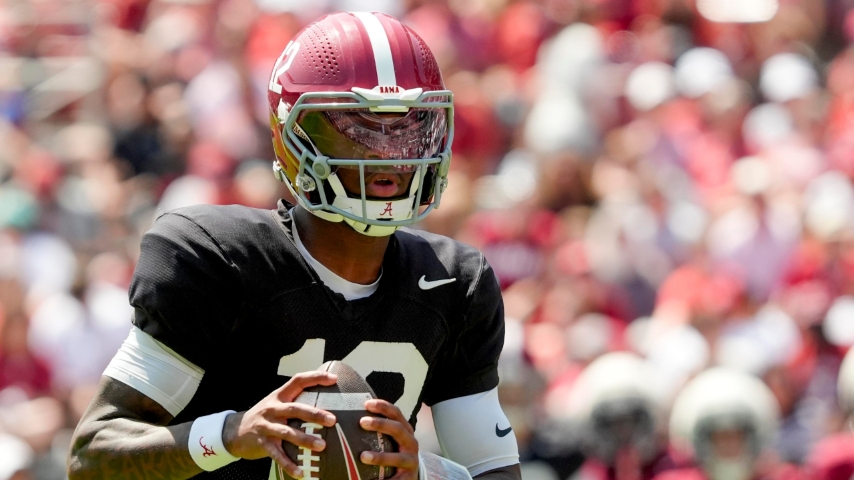
Gary Cosby Jr. / USA TODAY NETWORK
Duncanville’s Keelon Russell played in just two games as a true freshman in 2025.
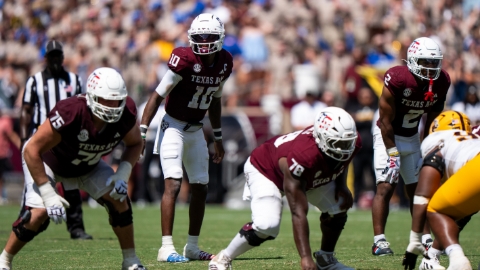
6. Marcel Reed, Texas A&M
One thing I like — I’ve already watched Reed fuel victories against four top-25 teams, three of which were true road games last year when he led A&M to its best regular-season win total of the 21st century. In those three starts, A&M averaged 43 points, and he accounted for an average of 319 total yards. Let’s not forget that when Reed made his first career start at Florida in 2024, A&M was just trying to end its 10-game road losing streak dating back to Oct. 2021. It’s because of Reed’s ability to show up in those moments that he and A&M are now worthy of being nitpicked in a different way.
One thing I don’t like — The consistency. To piggyback off what Mike Elko has said this offseason about his QB1, Reed needs to improve that area of his game. The late-season South Carolina game was an extreme encapsulation of that. Reed was tied with Taylen Green for the most turnover-worthy plays among SEC quarterbacks (via PFF), and he threw 11 interceptions when he wasn’t blitzed compared to just one when he was. If Reed develops consistency with navigating the intermediate range (10-19 yards), where he had a Power Conference-high 11 turnover-worthy plays, he’s got All-SEC upside.
5. Byrum Brown, Auburn
One thing I like — He’s essentially got three years' worth of starts in Alex Golesh’s offense (he’s No. 5 among active FBS quarterbacks with 32 career starts), and he’s coming off his best season to date. In 2025, Brown did more than lead USF to a stunning victory at Florida. He became the 12th quarterback in FBS history to hit 3,000 passing yards and 1,000 rushing yards in the same season. The competition is new (more on that in a second), but no quarterback in the SEC has more on-field reps running their offense than what Brown has in Golesh’s system.
One thing I don’t like — In his best season, he had a 52.9 percent adjusted completion percentage under pressure. Mind you, that was against mostly Group of 5 competition. That number would’ve ranked dead last among qualified SEC quarterbacks in 2025. Brown has the size to break tackles — he was No. 3 among FBS quarterbacks with 60 missed tackles forced — but against more sure-handed tacklers, will that potential weakness be exposed more often than it was at USF? That’ll have a significant say in Auburn’s Year 1 offense under Golesh.
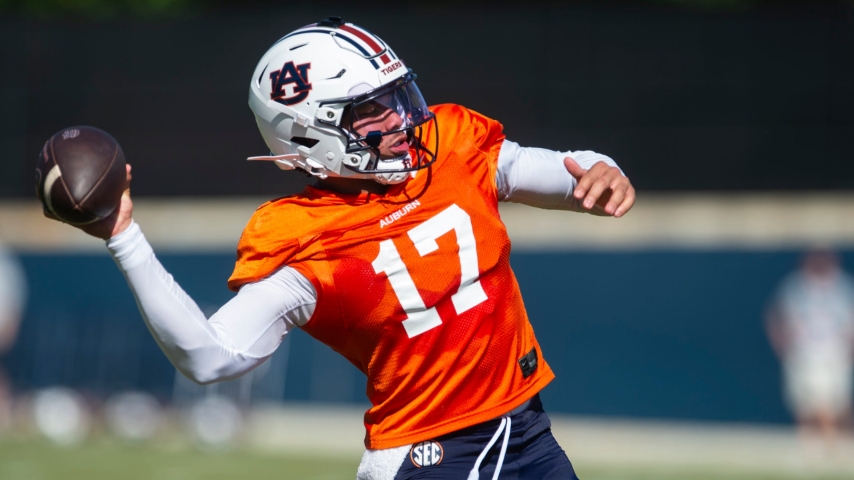
Jake Crandall/ Advertiser / USA TODAY NETWORK
Byrum Brown will be a fifth-year senior in 2026.
4. LaNorris Sellers, South Carolina
One thing I liked — At this time a year ago, it was fair to wonder if Sellers was about to become the top quarterback in the country. We know what happened after that in what ended up being a nightmare season. But there were still moments in which you got reminders of Sellers’ skill set. He finished No. 2 among Power Conference quarterbacks with 41 missed tackles forced, and he was No. 4 in that group with 515 yards after first contact. And even though Sellers faced constant pressure, he had the lowest turnover-worthy play percentage on pressured drop-backs (2.3%) among qualified SEC quarterbacks. We can all agree that 2025 was rough, but with an upgrade at offensive line and offensive coordinator, Sellers can still be an All-SEC guy.
One thing I don’t like — We don’t know what kind of toll it took on Sellers to take a Power Conference-high 40 sacks in what was a maddeningly dysfunctional offense. While I don’t think he’s a broken player — this No. 4 ranking confirms that — I do wonder about the physical and mental impact of that. PFF had Sellers for 13 sacks taken on pressured drop-backs wherein he was responsible, which was the fourth-highest in FBS. Can the more up-tempo, quick-release Kendal Briles offense take care of some of that? And if it doesn’t, will Sellers lose faith in his third OC in as many seasons? Those questions are worth asking heading into a pivotal year in Columbia.
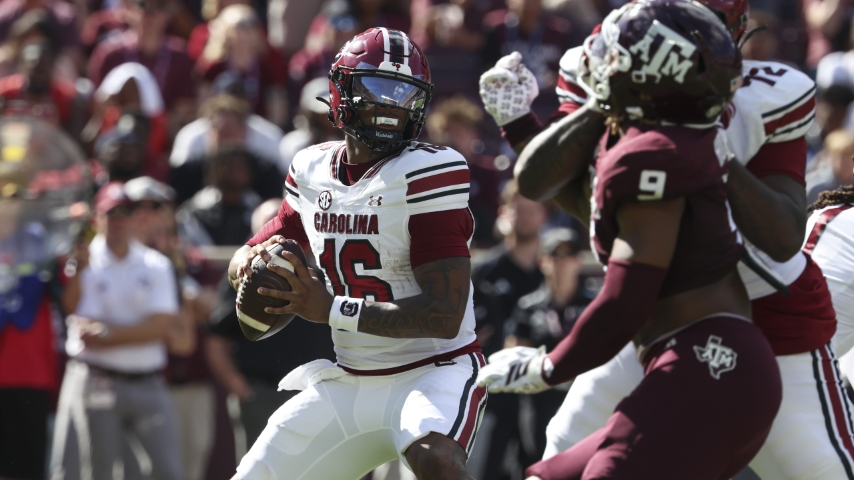
Troy Taormina-Imagn Images
Entering his redshirt junior season, LaNorris Sellers was the 2024 SEC Freshman of the Year.
3. Arch Manning, Texas
One thing I liked — In what was universally viewed as a disappointing season because of his inability to live up to some unprecedented expectations, Manning still had over 3,500 scrimmage yards and 37 touchdowns (26 passing, 10 rushing, 1 receiving) while starting every game as a dual-threat quarterback. It felt like we watched Manning’s floor, and he still checked more boxes than the casual fan probably realized after he was written off as a bust. In his last five games, Manning looked much more comfortable. The numbers reflected that, too. He averaged 314 scrimmage yards and three touchdowns, and he had just three turnover-worthy plays in a five-game stretch that featured four ranked foes.
One thing I didn’t like — The short-yardage passing was inexplicably bad. Manning ranked No. 14 among 16 qualified SEC quarterbacks with a 76.9 percent adjusted completion percentage on throws of 0-9 yards past the line of scrimmage. He was dead-last in the SEC with 5.1 yards/attempt on those throws, which spoke to his accuracy issues on plays that are supposed to be layups in the Steve Sarkisian offense. It was inexplicable because, as a backup in 2024, Manning completed 92 percent (adjusted) of those 25 short-yardage attempts. He needs to figure out what mechanical/mental issues led to that drop-off in order for him to live up to all the hype this time around.
2. Gunner Stockton, Georgia
One thing I liked — When the bullets were flying, you could count on Stockton. What do I mean? Among FBS QBs with 100 pressured dropbacks, Gunner Stockton was No. 2 in FBS with a 102.5 NFL QB rating, behind only Fernando Mendoza at 102.7, and he was easily No. 1 in FBS in those spots with a 79.6 percent adjusted completion percentage. That doesn’t even factor in what he did in tight spots with his legs. Stockton was one of eight Power Conference quarterbacks who had at least 300 yards after contact, 20 missed tackles forced and double-digit rushing scores. That’s darn impressive for a first-time starter.
One thing I didn’t like — The deep ball has to become a bigger part of the Georgia offense. I’m not breaking any news there. Stockton has acknowledged that. While no SEC quarterback was on the wrong end of more deep-ball drops than Stockton (6), he still only completed 17 passes on throws 20 yards downfield in 14 games. He averaged just 9.2 yards/attempt on those throws, which was No. 15 among 16 qualified SEC quarterbacks. Stockton does enough other things well to keep Georgia in the hunt, but checking that last box might be the difference in the Dawgs getting their first Playoff victory since 2022.
1. Trinidad Chambliss, Ole Miss
One thing I liked — All Chambliss did last year was go from Division II to the SEC post-spring, out-play the aforementioned Simmons enough to take his job, finish 8th in the Heisman voting and have Ole Miss within 20 seconds of a national championship berth. Oh, and that was without Lane Kiffin for the entirety of a Playoff run that saw him ball out against elite defensive minds like Jon Sumrall, Kirby Smart and Corey Hetherman. Chambliss took everything in stride about as well as any player in recent memory. This was a guy on a Division II roster 14 months ago, and he played six games against AP top-25 finishers, but still managed to throw for 353 more yards than anybody in those spots. If you’re not a Chambliss believer because Kiffin and Weis are gone, that’s on you.
One thing I didn’t like — If there’s one area of Chambliss’ game that could use some improvement, it’s accuracy in the intermediate era. He was No. 13 in the SEC with a 58.8 percent adjusted completion percentage on throws 10-19 yards downfield, and while he didn’t have an interception on those 102 such attempts, PFF charted him with six turnover-worthy plays. That’s a nitpick for a guy who became an Ole Miss legend. Lord knows he’ll have plenty of folks picking apart every element of his game as one of the nation’s most decorated returning quarterbacks. But for my money, I’ll take Chambliss (and his flaws) over the field.
Never miss the latest news from TexAgs!
Join our free email list
SPONSORED BY