

Thank you for a very informative and beautifully written article. Gig'em Mark!
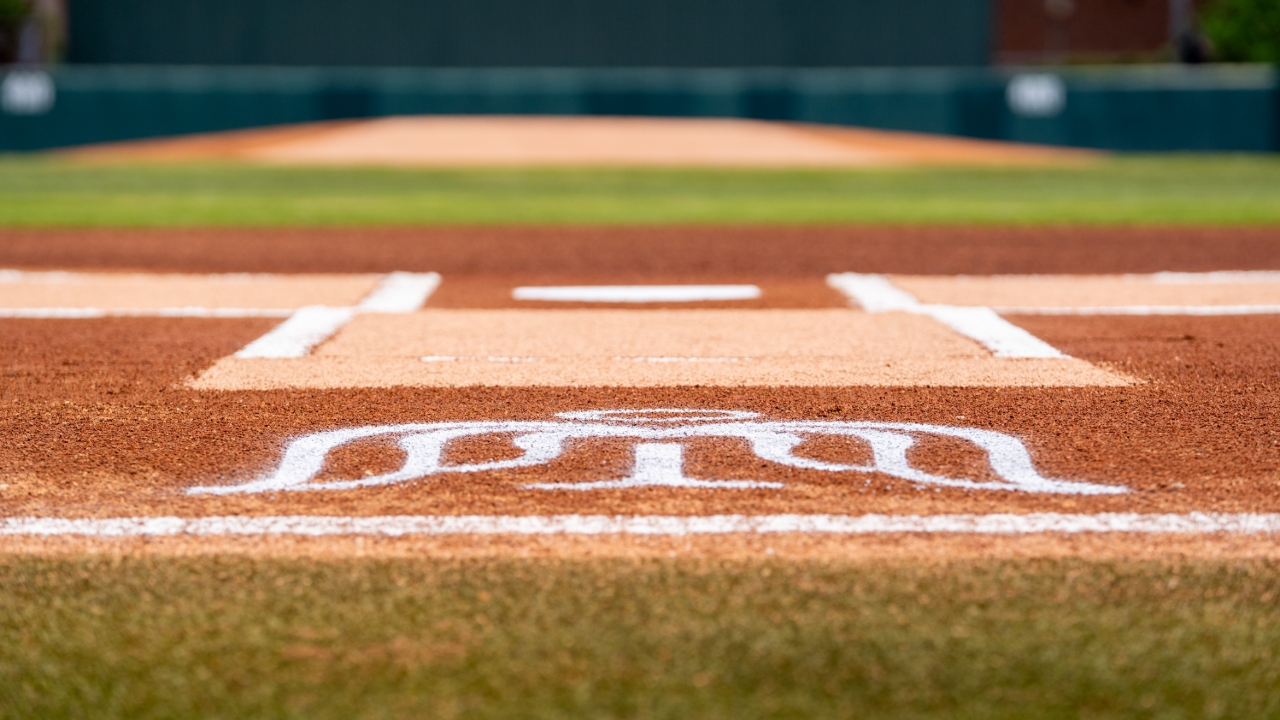
Photo by Belle Chapa, TexAgs
Written by Anastasia Acosta
Gavin Grahovac did not know the full story when he signed the baseball.
At the Men’s College World Series, a young fan approached him with a simple request.
His little brother was sick and would love a baseball signed by the SEC Freshman of the Year.
Without hesitation, Grahovac signed it, not realizing the ball would soon become something heavier than a souvenir.
Only later did the All-American learn the name behind the request: Mark Massey.
A 10-year-old Aggie fan from College Station who loved Legos, Michigan State University, mocha frappuccinos and making people laugh so hard they could barely breathe.
A little boy who carried a blue stuffed animal everywhere he went.
A youngster who quietly fought one of the deadliest pediatric brain cancers doctors know of.
Now, nearly two years after that moment in Omaha, Grahovac — along with the rest of Texas A&M baseball — took the field again on May 2, this time in Mark’s honor.
“It’s bigger than baseball,” Grahovac said. “It’s not about how we play. It’s the fact that there’s meaning behind what’s happening on the field.”
“It’s bigger than baseball. It’s not about how we play. It’s the fact that there’s meaning behind what’s happening on the field.”
That’s the heartbeat of Strike Out DMG, an event at Blue Bell Park honoring children affected by Diffuse Midline Glioma and Diffuse Intrinsic Pontine Glioma (DIPG), two aggressive pediatric brain cancers with almost no survival rate.
However, long before there was a foundation, blue wristbands or awareness nights at the ballpark, there was simply Mark.
To understand why all of this matters, his parents wanted others to know who Mark was before cancer ever entered the picture.
“Mark was just amazing,” his father, Bryan, said. “From the time he was born, we called him our angel baby because he never fussed. He was just very sweet, very loving, very kind.”
“He was hilarious,” his mother, Ali, added with a laugh. “We thought he was going to be the class clown one day.”
When Mark was little, he would push his glasses up his face and make ridiculous noises just to get a reaction out of people. He loved making others laugh, especially if it meant laughing at himself first. At school, classmates voted him for kindness awards. At church camp, counselors gave him the top camper award because he was always helping others.
“He was kind but blunt,” Bryan said. “Caring but also stubborn. He had a lot of opposite traits.”
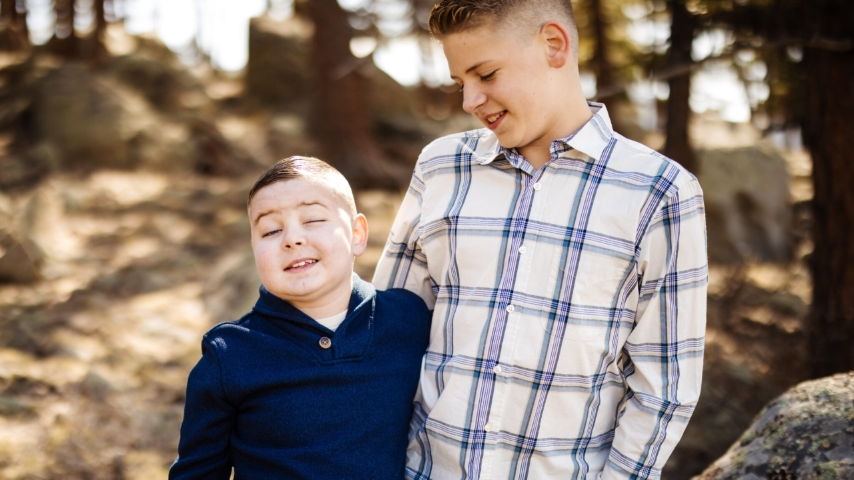
Mark Massey Legacy Foundation
Mark was also deeply attached to the people he loved.
He adored his older brother Jameson. He loved his Uncle Chris so much that he once wrote in a school assignment that he wanted to live in Grand Rapids, Mich., when he grew up. He loved babies, his cousins and children younger than him. While other kids his age talked about careers or sports, Mark talked about wanting six kids of his own one day.
And then there was Max — a small blue stuffed elephant.
From birth, Max went everywhere with Mark — through every hospital visit, every scan, every radiation appointment. When the family temporarily lost Max shortly before Mark’s diagnosis, his parents initially thought his sadness was tied to that loss.
Weeks later, doctors discovered the real reason: a brain tumor.
That news came in January 2024 after weeks of severe headaches.
“The first thing he asked us was, ‘Am I going to die?” Bryan said quietly.
DMG is a rare and terminal pediatric brain cancer with virtually no cure.
Until that moment, the Masseys had never ever heard of it.
But Mark never fully knew the prognosis. His parents wanted him to keep hope.
Maybe there would be a miracle. Maybe a clinical trial. Maybe something no one had found yet.
“We never wanted him to lose hope,” Bryan said. “Mark never knew he had terminal cancer. He just knew he had brain cancer.”
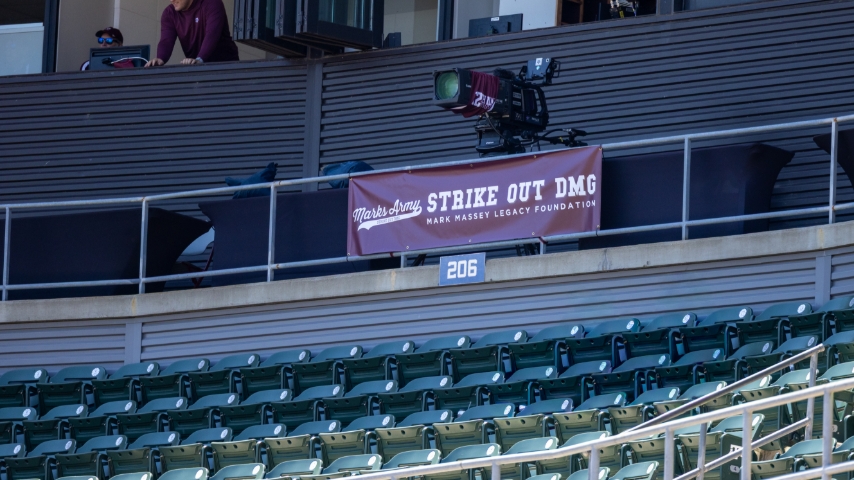
Danny Grant, TexAgs
What followed were months of radiation treatments at Houston’s MD Anderson, often leaving home before sunrise for appointments that lasted only minutes but exhausted everyone involved. Mark lost his vision temporarily due to swelling in his brain. He could no longer build Legos or play Fortnite.
Eventually, he could barely move.
Still, his parents say he almost never complained.
“One thing that was so remarkable,” Bryan said, “was he never once said, ‘Why me?’"
The father remembered watching his son walk through the sterile hospital hallways toward radiation treatments with Max tucked under one arm, his Air Jordans squeaking against the floor.
“He was fearless,” Bryan said. “Not because he wasn’t scared. But because he was.”
That fearlessness eventually reached far beyond the Massey family.
In fourth grade, Mark became friends with Marshall Earley, son of Texas A&M baseball coach Michael Earley.
At the time, the Masseys barely followed Aggie baseball, but once Mark became sick, the Earleys showed up constantly — bringing meals, frappuccinos and support during their hardest months.
“He was fearless. Not because he wasn’t scared. But because he was.”
Then, A&M baseball started wearing bracelets for Mark.
Players like Grahovac and Jace LaViolette wore them throughout the 2024 season and along a memorable run to Omaha.
For the Masseys, that support became one of the few bright spots in an unimaginably painful year.
“That’s why we had to be there in Omaha,” Ali said. “This team had been supporting Mark the whole season.”
Now that support has evolved into something larger.
The Mark Massey Legacy Foundation was created to help fund research for children diagnosed with DMG and DIPG. The foundation’s mission became deeply personal after the family realized how little funding exists for rare pediatric cancers.
“All the research for this is privately funded,” Bryan said. “There’s not enough money in it for pharmaceutical companies. That’s the cold, hard reality.
“What we’re trying to do is go from a zero percent survival rate to hope, to where it’s not a death sentence anymore.”
Ali nodded beside him. She hopes the foundation can help push treatments further — from terminal to treatable.
“I think Mark’s legacy is still being defined,” she said. “But one day, I think there’s going to be a cure, and Mark will be part of that.”
By the time the gates opened at Blue Bell Park on a sunny May Saturday, Mark was everywhere.
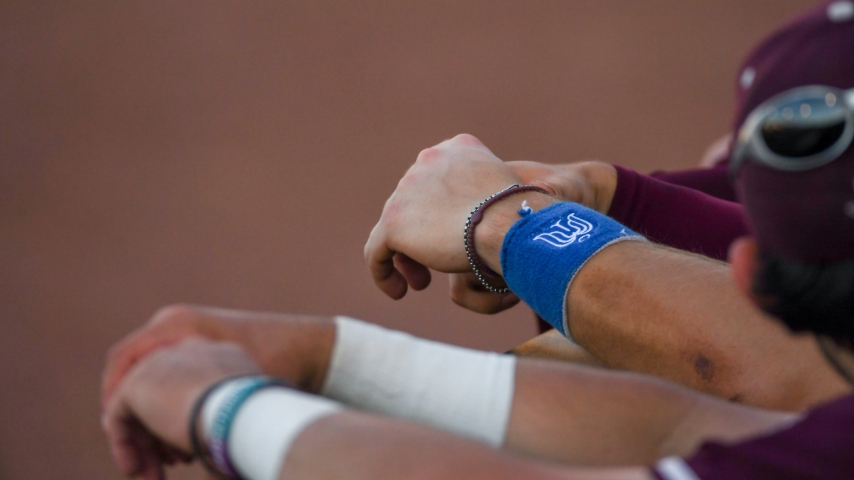
Belle Chapa, TexAgs
He was on the blue sweatbands, on an angel logo painted behind home plate, on batting helmets, warmup shirts and temporary tattoos handed to kids walking through the concourse.
A&M took batting practice in Maroon “Strike Out DMG” t-shirts while Auburn wore matching blue and orange versions. Before the game, both teams gathered together for a unity photo, reminding everyone in attendance that for one day, the scoreboard mattered a little less.
For a few hours, a little boy who once sat in the stands became part of the field itself.
That ripple effect eventually reached people beyond the Massey family.
Sophomore finance major Will Keller — who lost his younger sister, Mary Katherine, to DIPG when she was four years old — threw out the ceremonial first pitch.
Like Mark, Mary Katherine had been energetic, joyful and constantly trying to make others feel okay, even while she was sick.
“One of my favorite things about her was just energy,” Keller said. “No matter what kind of day you had, it was hard to be upset around her because she was always so happy.
“I think once people realize this affects families right here in our community, it becomes personal, and once it becomes part of the Aggie family, then it’s a family issue.”
Maybe that was the ripple effect Mark left behind.
Not just grief.
Not just awareness.
But connection.
A signed baseball in Omaha. A friendship between classmates. A college baseball team wearing bracelets for a little boy they barely knew. Families finding each other through loss. Thousands of people learning the name of a cancer they had never heard of before.
And somewhere in all of it, the legacy of a little boy with a stuffed blue elephant continues to grow far beyond himself.
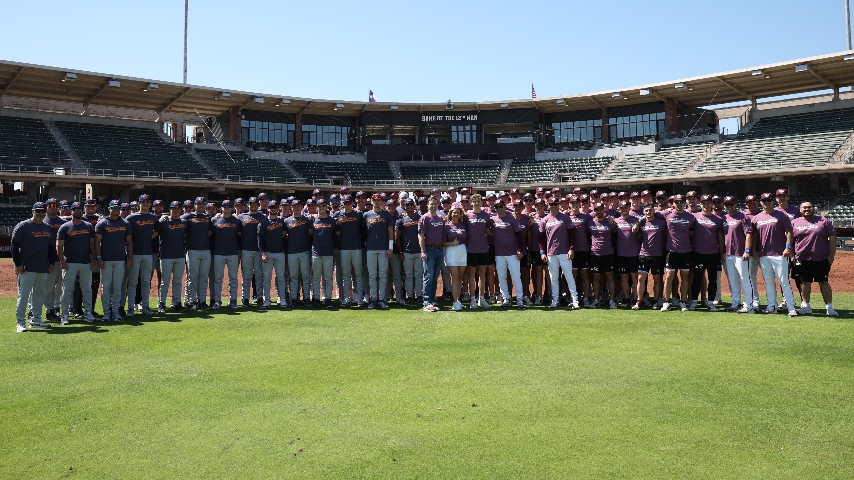
Ethan Mito, Texas A&M Athletics
Click here to learn more about the Mark Massey Legacy Foundation and to get involved.
Never miss the latest news from TexAgs!
Join our free email list