
EVs at the end of life

5,282 Views | 83 Replies | Last: 4 yr ago by Complete Idiot
jebeka
How long do you want to ignore this user?
Just read an article on EV batteries at end of useful life. Sounds like they are being stored for recycling and recycling cost way more than a new battery. Currently their aren't that many because EVs are relatively new but in 10 years they will be everywhere.

My guess is people that buy these vehicles are fairly high net worth people and once the battery starts to wear out and range goes from 200-300 miles to 50-100 miles they will look to off load them. Because disposal of the battery is going to be very high battery replacement will likely be uneconomical thus a bunch of used EVs will be on the market at rock bottom prices. Then low income people will pick these up because it's all they can afford. Eventually they will die and abandoned because of the cost to dispose of the battery is more than the value of the vehicle.

So who pays for disposal of these abandoned used EV's?
n_touch
How long do you want to ignore this user?
jebeka said:

So who pays for disposal of these abandoned used EV's?
The same people that cover the cost of all the idiotic government programs.....The TaxPayer
Martin Q. Blank
How long do you want to ignore this user?
jebeka said:

Just read an article on EV batteries at end of useful life. Sounds like they are being stored for recycling and recycling cost way more than a new battery. Currently their aren't that many because EVs are relatively new but in 10 years they will be everywhere.

My guess is people that buy these vehicles are fairly high net worth people and once the battery starts to wear out and range goes from 200-300 miles to 50-100 miles they will look to off load them. Because disposal of the battery is going to be very high battery replacement will likely be uneconomical thus a bunch of used EVs will be on the market at rock bottom prices. Then low income people will pick these up because it's all they can afford. Eventually they will die and abandoned because of the cost to dispose of the battery is more than the value of the vehicle.

So who pays for disposal of these abandoned used EV's?


One solution I heard was when you buy an EV, a battery does not come with it and instead you enter into an agreement with a network of charging stations. When you need a charge, drop off the battery and get a new one. No need to abandon an entire vehicle just because the battery life is bad.

I also think most EV folk are hoping battery recycling technology will be solved by the time it is truly needed.
akaggie05
How long do you want to ignore this user?
Yep. I'm surprised it hasn't happened already, but I would imagine very soon we'll see some kind of legislation similar to what's already in place for traditional car batteries, motor oil, etc. An "if you sell it then you have to take it back for free recycling" rule. Then the automakers will be compelled to either implement or contract for a recycling capability... and the costs will be passed on in the form of higher new vehicle prices.
drumboy
How long do you want to ignore this user?
I read an article about the battery recycling opportunities from dead EV batteries, but I'd say let's let Europe solve this problem since they're going head first into this bold, new, clean world.

Here's the article, btw:

Article
[url=https://ts.la/erik936611]https://ts.la/erik936611[/url]
Use my referral link to buy a Tesla and get awards like 3 months of Full Self-Driving Capability.

Schedule a Tesla Demo Drive using my referral link.
BEaggie08
How long do you want to ignore this user?
Martin Q. Blank said:

jebeka said:

Just read an article on EV batteries at end of useful life. Sounds like they are being stored for recycling and recycling cost way more than a new battery. Currently their aren't that many because EVs are relatively new but in 10 years they will be everywhere.

My guess is people that buy these vehicles are fairly high net worth people and once the battery starts to wear out and range goes from 200-300 miles to 50-100 miles they will look to off load them. Because disposal of the battery is going to be very high battery replacement will likely be uneconomical thus a bunch of used EVs will be on the market at rock bottom prices. Then low income people will pick these up because it's all they can afford. Eventually they will die and abandoned because of the cost to dispose of the battery is more than the value of the vehicle.

So who pays for disposal of these abandoned used EV's?


One solution I heard was when you buy an EV, a battery does not come with it and instead you enter into an agreement with a network of charging stations. When you need a charge, drop off the battery and get a new one. No need to abandon an entire vehicle just because the battery life is bad.

I also think most EV folk are hoping battery recycling technology will be solved by the time it is truly needed.
What? It's not like an ICE battery. You don't just swap batteries. EVs are typically built on a sled of batteries. You're not going to "swap those out when you need a charge".
BEaggie08
How long do you want to ignore this user?
Here are some examples of what manufacturers are doing, for those actually interested:

Tesla

Rivian and Nissan

Ford
drumboy
How long do you want to ignore this user?
BEaggie08 said:

Martin Q. Blank said:

jebeka said:

Just read an article on EV batteries at end of useful life. Sounds like they are being stored for recycling and recycling cost way more than a new battery. Currently their aren't that many because EVs are relatively new but in 10 years they will be everywhere.

My guess is people that buy these vehicles are fairly high net worth people and once the battery starts to wear out and range goes from 200-300 miles to 50-100 miles they will look to off load them. Because disposal of the battery is going to be very high battery replacement will likely be uneconomical thus a bunch of used EVs will be on the market at rock bottom prices. Then low income people will pick these up because it's all they can afford. Eventually they will die and abandoned because of the cost to dispose of the battery is more than the value of the vehicle.

So who pays for disposal of these abandoned used EV's?


One solution I heard was when you buy an EV, a battery does not come with it and instead you enter into an agreement with a network of charging stations. When you need a charge, drop off the battery and get a new one. No need to abandon an entire vehicle just because the battery life is bad.

I also think most EV folk are hoping battery recycling technology will be solved by the time it is truly needed.
What? It's not like an ICE battery. You don't just swap batteries. EVs are typically built on a sled of batteries. You're not going to "swap those out when you need a charge".
I think most EV batteries have individual cells that can be replaced, rather than the whole skateboard battery dying.
[url=https://ts.la/erik936611]https://ts.la/erik936611[/url]
Use my referral link to buy a Tesla and get awards like 3 months of Full Self-Driving Capability.

Schedule a Tesla Demo Drive using my referral link.
maroon barchetta
How long do you want to ignore this user?
Martin Q. Blank said:

jebeka said:

Just read an article on EV batteries at end of useful life. Sounds like they are being stored for recycling and recycling cost way more than a new battery. Currently their aren't that many because EVs are relatively new but in 10 years they will be everywhere.

My guess is people that buy these vehicles are fairly high net worth people and once the battery starts to wear out and range goes from 200-300 miles to 50-100 miles they will look to off load them. Because disposal of the battery is going to be very high battery replacement will likely be uneconomical thus a bunch of used EVs will be on the market at rock bottom prices. Then low income people will pick these up because it's all they can afford. Eventually they will die and abandoned because of the cost to dispose of the battery is more than the value of the vehicle.

So who pays for disposal of these abandoned used EV's?


One solution I heard was when you buy an EV, a battery does not come with it and instead you enter into an agreement with a network of charging stations. When you need a charge, drop off the battery and get a new one. No need to abandon an entire vehicle just because the battery life is bad.

I also think most EV folk are hoping battery recycling technology will be solved by the time it is truly needed.


A bit like hoping we "solve gravity" by the time the astronauts return from their quest to find a habitable planet in "Interstellar".

How did that work out?
jebeka
How long do you want to ignore this user?
BEaggie08 said:

Martin Q. Blank said:

jebeka said:

Just read an article on EV batteries at end of useful life. Sounds like they are being stored for recycling and recycling cost way more than a new battery. Currently their aren't that many because EVs are relatively new but in 10 years they will be everywhere.

My guess is people that buy these vehicles are fairly high net worth people and once the battery starts to wear out and range goes from 200-300 miles to 50-100 miles they will look to off load them. Because disposal of the battery is going to be very high battery replacement will likely be uneconomical thus a bunch of used EVs will be on the market at rock bottom prices. Then low income people will pick these up because it's all they can afford. Eventually they will die and abandoned because of the cost to dispose of the battery is more than the value of the vehicle.

So who pays for disposal of these abandoned used EV's?


One solution I heard was when you buy an EV, a battery does not come with it and instead you enter into an agreement with a network of charging stations. When you need a charge, drop off the battery and get a new one. No need to abandon an entire vehicle just because the battery life is bad.

I also think most EV folk are hoping battery recycling technology will be solved by the time it is truly needed.
What? It's not like an ICE battery. You don't just swap batteries. EVs are typically built on a sled of batteries. You're not going to "swap those out when you need a charge".
Yes, that was the problem. Everyone's batteries are different. Also, they have high voltage unlike regular car batteries making recycle more dangerous and complicated. Then the storage location needs fire protection.

I like the idea of standardize batteries and just plug and play but battery technology is the key to increased market share. First to 500 miles wins. I suspect charging stations will win out over battery replacement stations because range is king.
Picard
How long do you want to ignore this user?
I suspect I will continue to drive a gasoline powered vehicle for the rest of my life!

FriskyGardenGnome
How long do you want to ignore this user?
BEaggie08 said:

Martin Q. Blank said:

jebeka said:

Just read an article on EV batteries at end of useful life. Sounds like they are being stored for recycling and recycling cost way more than a new battery. Currently their aren't that many because EVs are relatively new but in 10 years they will be everywhere.

My guess is people that buy these vehicles are fairly high net worth people and once the battery starts to wear out and range goes from 200-300 miles to 50-100 miles they will look to off load them. Because disposal of the battery is going to be very high battery replacement will likely be uneconomical thus a bunch of used EVs will be on the market at rock bottom prices. Then low income people will pick these up because it's all they can afford. Eventually they will die and abandoned because of the cost to dispose of the battery is more than the value of the vehicle.

So who pays for disposal of these abandoned used EV's?


One solution I heard was when you buy an EV, a battery does not come with it and instead you enter into an agreement with a network of charging stations. When you need a charge, drop off the battery and get a new one. No need to abandon an entire vehicle just because the battery life is bad.

I also think most EV folk are hoping battery recycling technology will be solved by the time it is truly needed.
What? It's not like an ICE battery. You don't just swap batteries. EVs are typically built on a sled of batteries. You're not going to "swap those out when you need a charge".
Rapid battery swaps appear to be a reality in China:
https://twitter.com/DSORennie/status/1473591277589463040?ref_src=twsrc%5Etfw

Admittedly, I know nothing of the overall scale of this capability expect for the fact that it appears to be feasible for this particular auto.
DeadCiv
How long do you want to ignore this user?
n_touch said:

jebeka said:

So who pays for disposal of these abandoned used EV's?
The same people that cover the cost of all the idiotic government programs and unfunded tax cuts .....The TaxPayer
FIFY
A.G.S.94
How long do you want to ignore this user?

The money being spent on "net zero" initiatives are mind boggling to say the least. It would seem the most immediate and impactful way to move this direction is to start a marketing campaign focused on getting Americans to change our mass consumption mentality (like they did with smoking, seat belts, "Don't Mess With Texas", etc.).

Of course, this would take money out of their pockets. The folks pushing these initiatives always end up benefiting in some way and there is no chance whatsoever they care enough to try and get American's to change their purchasing habits. Of course, they will keep shouting net zero from the roof tops while marketing ad nauseum for us to keep buying new cars every 2-3 years or so. Same goes for everything from computers, to clothing. You name it. Not to mention the vast majority of items Americans purchase are manufactured on the other side of the world or at the very least we source the raw materials and/or components from there. Don't see much discussion on how that impacts the environment.

Folks may take this as I am for or against improving the environment. I don't have a strong feeling either way as I feel things will go the way they are going to go regardless. Lip service is the main frustration. If you say you are championing a cause, prove it.
Macarthur
How long do you want to ignore this user?
n_touch said:

jebeka said:

So who pays for disposal of these abandoned used EV's?
The same people that cover the cost of all the idiotic government programs.....The TaxPayer

Or like many here like to say, the market will figure out a solution. I'm sure a market will emerge that will deal with this.

P.H. Dexippus
How long do you want to ignore this user?
DeadCiv said:

n_touch said:

jebeka said:

So who pays for disposal of these abandoned used EV's?
The same people that cover the cost of all the idiotic government programs and unfunded tax cuts .....The TaxPayer
FIFY

That makes no sense, Bernie.
agdoc2001
How long do you want to ignore this user?
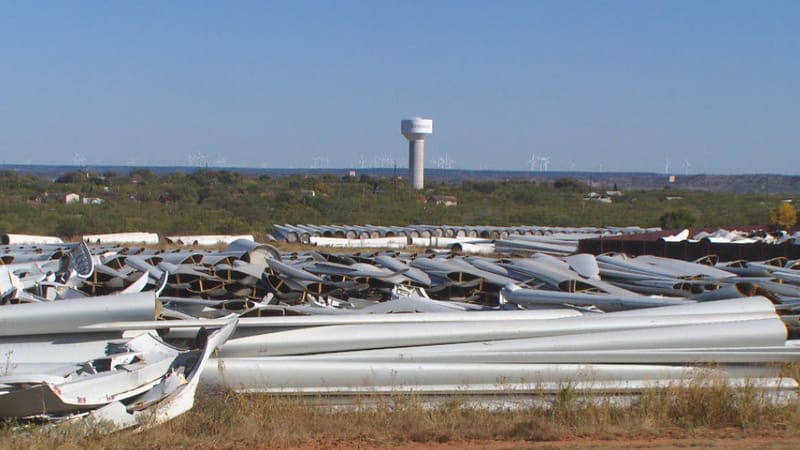
We'll just stack them in giant piles in Sweetwater - just like all the windmill blades

dodger02
How long do you want to ignore this user?
This model has a significant number of problems when considered as a mainstream option to charging stations.

First is storage. Where are you going to keep the number of batteries in stock to service every EV on the road? You'll at least need N+1 batteries to run a swap system even with almost instantaneous charge. Are we going to dig giant pits in the ground for battery storage like we do gasoline? How many moving parts are there in a pump in an underground gasoline tank that are subject to wear & tear and replacement? Now figure the same for a robot that changes EV batteries from 20' in the ground.

Second is whether you can get every manufacturer (or at least a critical mass) to commit to battery interoperability. Do you think Tesla, Toyota, Nissan, Ford, Honda, Porsche, etc. all want to share the same battery design (i.e. size, shape, etc.)?

Third is do you really want to swap into your six-month old Model S or Taycan a battery that just came out of a ten year old Mitsubishi that's been used by DoorDash driver? Do we start pricing battery swaps like we do premium and regular gas?

Fourth, and to the OP's point, is what do we do with the old batteries? I'm not supposed to throw the old Duracells from my TV remote in the trash. What do I do with an EV battery weighing 1,000# once it's dead?
Tim Weaver
How long do you want to ignore this user?
A). Hot swapping batteries is something that has been going on for 30-40 years for electric forklifts. It's not hard.

B). Lithium chemistry battery recycling is understood, and the facilities are currently being built. There will be no need to store these batteries anywhere, since the elemental make up of the batteries are worth money. Just like Catylitic converters.

https://www.globenewswire.com/news-release/2022/01/04/2360800/0/en/American-Battery-Technology-Company-Issues-Shareholder-Letter.html
Emotional Support Cobra
How long do you want to ignore this user?
NIMBYs will start shipping them to third-world countries or dropping them in the ocean at some point so they become someone else's problem.
FriskyGardenGnome
How long do you want to ignore this user?
dodger02 said:

This model has a significant number of problems when considered as a mainstream option to charging stations.

First is storage. Where are you going to keep the number of batteries in stock to service every EV on the road? You'll at least need N+1 batteries to run a swap system even with almost instantaneous charge. Are we going to dig giant pits in the ground for battery storage like we do gasoline? How many moving parts are there in a pump in an underground gasoline tank that are subject to wear & tear and replacement? Now figure the same for a robot that changes EV batteries from 20' in the ground.

Second is whether you can get every manufacturer (or at least a critical mass) to commit to battery interoperability. Do you think Tesla, Toyota, Nissan, Ford, Honda, Porsche, etc. all want to share the same battery design (i.e. size, shape, etc.)?

Third is do you really want to swap into your six-month old Model S or Taycan a battery that just came out of a ten year old Mitsubishi that's been used by DoorDash driver? Do we start pricing battery swaps like we do premium and regular gas?

Fourth, and to the OP's point, is what do we do with the old batteries? I'm not supposed to throw the old Duracells from my TV remote in the trash. What do I do with an EV battery weighing 1,000# once it's dead?
Take it up with the Chinese who are currently expanding battery swap facilities, some cooperatively.

Nothing you pointed out represents an insurmountable problem. ETA: I'll grant they aren't small (or cheap) problems either, which is partially why Tesla abandoned the idea.
Kenneth_2003
How long do you want to ignore this user?
There's a lot of R&D going on to develop a recycling method for individual Li Ion cells. Of course there's now a myriad of Li Ion cells.
DeadCiv
How long do you want to ignore this user?
Mr. AGSPRT04 said:

DeadCiv said:

n_touch said:

jebeka said:

So who pays for disposal of these abandoned used EV's?
The same people that cover the cost of all the idiotic government programs and unfunded tax cuts .....The TaxPayer
FIFY

That makes no sense, Bernie.
My point is: how 'bout we keep this type of gratuitous political commentary on F16, rather than the Automotive Board?
Jack Cheese
How long do you want to ignore this user?
Tim Weaver said:

A). Hot swapping batteries is something that has been going on for 30-40 years for electric forklifts. It's not hard.

B). Lithium chemistry battery recycling is understood, and the facilities are currently being built. There will be no need to store these batteries anywhere, since the elemental make up of the batteries are worth money. Just like Catylitic converters.

https://www.globenewswire.com/news-release/2022/01/04/2360800/0/en/American-Battery-Technology-Company-Issues-Shareholder-Letter.html

My biggest question is whether having OEMs pursue swappable batteries is worth the opportunity cost of NOT pursuing radical/disruptive new battery tech, which by necessity would make them less interoperable. I don't consider automotive battery tech to be mature enough at this point to focus on standardization over innovation.
kb2001
How long do you want to ignore this user?
BEaggie08 said:

Here are some examples of what manufacturers are doing, for those actually interested:

Tesla

Rivian and Nissan

Ford
Looks like they're not actually doing much right now. They have ideas to reuse them, or plans to develop recycling for them.

I will also point out that despite Tesla saying they can replace bad cells and keep the pack going, they do not do that for customers. They will replace the entire pack for $20,000, they will not repair the pack by replacing bad cells or even modules.

Those statements more confirm that recycling these battery packs is not yet part of the lifecycle than anything else. They have ideas to "reuse", but nothing yet for the "recycle" phase when they are no longer suitable for reuse.
MouthBQ98
How long do you want to ignore this user?
Consumer EV as a package are still an inefficient and immature technology that is more about status and virtue signaling than actually contributing towards the solution of any problem.

You want to really help the environment long term? Help develop poor agricultural nations into developed technological ones with much higher standards of living ASAP. They actually are far less environmentally destructive in a per person basis and wealthier people actually have spare time and resources to even consider their environment, and they universally begin to have fewer children that they focus more resources on.
Cromagnum
How long do you want to ignore this user?
You know what doesn't see a 200% drop in fuel economy over its lifetime? Internal combustion engines.
AggieFrog
How long do you want to ignore this user?
Cromagnum said:

You know what doesn't see a 200% drop in fuel economy over its lifetime? Internal combustion engines.
Current EV batteries should last the life span of the average car (13-17 years and 200k+ miles) before needing to be replaced and with very little of the maintenance required by ICE.
MouthBQ98
How long do you want to ignore this user?
I wouldn't mind an INEXPENSIVE extremely low maintenance simple EV as a commuter car or short range errand car. That would be fine, but it isn't ever going to be all purpose vehicle for me. They just don't have the range for my needs. A hybrid drive would be fine, however. The problem remains: cost. I'm in no way spending a premium just to feel sanctimonious about my vehicle choice.

The battery packs could be swapped and also recycled if that were a part of the design parameters from the start, but EV designers know their premium customers don't really give a crap about that. Those customers want a status symbol that looks appealing and drives well under warranty, and will replace it with a newer one in 3-5 years reliably. There is little consideration for product life cycle at this stage of product development because they are still laser focused on adoption and cost.
AggieFrog
How long do you want to ignore this user?
MouthBQ98 said:

I wouldn't mind an INEXPENSIVE extremely low maintenance simple EV as a commuter car or short range errand car. That would be fine, but it isn't ever going to be all purpose vehicle for me. They just don't have the range for my needs. A hybrid drive would be fine, however. The problem remains: cost. I'm in no way spending a premium just to feel sanctimonious about my vehicle choice.
Same. Would be perfect for one of multiple family vehicles. Personally, I'd love a hybrid that gets around 50 miles on battery alone (that would take care of most daily driving) with the option of using the engine for road trips/towing.
Cromagnum
How long do you want to ignore this user?
AggieFrog said:

Cromagnum said:

You know what doesn't see a 200% drop in fuel economy over its lifetime? Internal combustion engines.
Current EV batteries should last the life span of the average car (13-17 years and 200k+ miles) before needing to be replaced and with very little of the maintenance required by ICE.


I've seen where they are "designed" to last several hundred thousand miles. However, warranties are for similar mileage that ICE vehicles get. You are correct on maintenance differences, but if I have to replace my engine in any of my vehicles it is still cheaper than replacing a Tesla battery.
Tim Weaver
How long do you want to ignore this user?
Jack Cheese said:

Tim Weaver said:

A). Hot swapping batteries is something that has been going on for 30-40 years for electric forklifts. It's not hard.

B). Lithium chemistry battery recycling is understood, and the facilities are currently being built. There will be no need to store these batteries anywhere, since the elemental make up of the batteries are worth money. Just like Catylitic converters.

https://www.globenewswire.com/news-release/2022/01/04/2360800/0/en/American-Battery-Technology-Company-Issues-Shareholder-Letter.html

My biggest question is whether having OEMs pursue swappable batteries is worth the opportunity cost of NOT pursuing radical/disruptive new battery tech, which by necessity would make them less interoperable. I don't consider automotive battery tech to be mature enough at this point to focus on standardization over innovation.
It will be in the future, but right now the actual car companies are developing and making money on their own battery designs. So there's no incentive.

It's exactly like Keurig and Nespresso right now. They sell coffee makers that ONLY brew their own coffee pods. They control both ends of the revenue. Sure some third party folks are trying to break that cycle and undercut them, but Keurig and Nespresso are suing them if they can, and/or making it harder for them to counterfeit with every new coffee maker they put out.


I feel like there will be no choice but to convert gas stations into battery stations if we are going to be forced into an EV fleet of vehicles. It will take (global) governmental pressure to make this happen, but until that day each car manufacturer will have their own battery and make money on replacements as long as they possibly can.

Which is why I'm staying gas powered as long as I can as well. I want all this crap to settle out before I buy in to EV. The upside is that the cars should be much cheaper when you divorce the proprietary batteries from the vehicles. The common battery will have the economy of scale on it's side to lower the price.
Tim Weaver
How long do you want to ignore this user?
Also, swappable battery packs does not stifle battery innovation. Since a pack will just have to output XX amount of kWh at XXX volts it can be made of any chemistry. The thing that will happen is that third party developers will start inventing newer, lighter, more power dense battery packs.

At the swap station you'll be able to buy the kWh's from low end packs (for commuting shorter distances) or bigger kWh packs (for travelling longer distances) and just pay for the pack rental and the kWh's used. Nothing says you can't take it home and charge it yourself. It's similar to how we have diesel, lo, mid, and hi test gasoline and even natural gas and propane at some gas stations.
maroon barchetta
How long do you want to ignore this user?
Tim Weaver said:

Jack Cheese said:

Tim Weaver said:

A). Hot swapping batteries is something that has been going on for 30-40 years for electric forklifts. It's not hard.

B). Lithium chemistry battery recycling is understood, and the facilities are currently being built. There will be no need to store these batteries anywhere, since the elemental make up of the batteries are worth money. Just like Catylitic converters.

https://www.globenewswire.com/news-release/2022/01/04/2360800/0/en/American-Battery-Technology-Company-Issues-Shareholder-Letter.html

My biggest question is whether having OEMs pursue swappable batteries is worth the opportunity cost of NOT pursuing radical/disruptive new battery tech, which by necessity would make them less interoperable. I don't consider automotive battery tech to be mature enough at this point to focus on standardization over innovation.
It will be in the future, but right now the actual car companies are developing and making money on their own battery designs. So there's no incentive.

It's exactly like Keurig and Nespresso right now. They sell coffee makers that ONLY brew their own coffee pods. They control both ends of the revenue. Sure some third party folks are trying to break that cycle and undercut them, but Keurig and Nespresso are suing them if they can, and/or making it harder for them to counterfeit with every new coffee maker they put out.


I feel like there will be no choice but to convert gas stations into battery stations if we are going to be forced into an EV fleet of vehicles. It will take (global) governmental pressure to make this happen, but until that day each car manufacturer will have their own battery and make money on replacements as long as they possibly can.

Which is why I'm staying gas powered as long as I can as well. I want all this crap to settle out before I buy in to EV. The upside is that the cars should be much cheaper when you divorce the proprietary batteries from the vehicles. The common battery will have the economy of scale on it's side to lower the price.


Sort of a VHS vs. Betamax scenario, but with more players?
kb2001
How long do you want to ignore this user?
Tim Weaver said:

Also, swappable battery packs does not stifle battery innovation. Since a pack will just have to output XX amount of kWh at XXX volts it can be made of any chemistry. The thing that will happen is that third party developers will start inventing newer, lighter, more power dense battery packs.

At the swap station you'll be able to buy the kWh's from low end packs (for commuting shorter distances) or bigger kWh packs (for travelling longer distances) and just pay for the pack rental and the kWh's used. Nothing says you can't take it home and charge it yourself. It's similar to how we have diesel, lo, mid, and hi test gasoline and even natural gas and propane at some gas stations.
In theory, this should be true. However, different battery chemistry can require different charging profiles. Lithium batteries can't be charged using a NiMH charging profile without serious fire risk, as an example.

The swap could work for improvements to the same chemistry. As an example, if your battery module is 18650 cells, and the new one is upgraded to use 26650 cells, the same charging profile would apply. If it were to change to a chemistry that requires a different charge profile, the car may need a different charge controller to use the new pack.


On another note, Tesla had created a system to swap battery packs on the fly. The demo had a car drive in and get the pack swapped, followed by a second car in the time it took to fuel up an ICE car. It never rolled out, too many problems with that model. This was to meet the goal of "filling up" as quickly as can be done with an ICE car.
Last Page
Page 1 of 3
 
×
subscribe Verify your student status
See Subscription Benefits
Trial only available to users who have never subscribed or participated in a previous trial.