
I took a two day class this weekend and wanted to share my experience and encourage yall to take this class (or any other class he offers) if you ever have the opportunity.
Here is the course description:
The instructor was Joe Dawson. Joe spent 14 years in Naval Special Warfare, spending the last three years in charge of the NSW Sniper schoolhouse. He spent a couple years after getting out doing the corporate thing before deciding to start Veles and teach full time.
For those of you who are AR-phobic, he also teaches precision rifle classes aimed towards bolt action shooting, and is a huge bolt action dork himself so if "tacticool" isn't your thing, don't tune out just yet.
On that note, I know some classes with former "spec opcs guys" are light on learning and heavy on war stories/photos for the 'gram, along with lots of drills shooting targets at 50y if not closer. This is not that kind of class, and Joe isn't that kind of guy. Even if he'd wanted to BS about his time in the service, he had no time to do so because he was busy force feeding knowledge into our heads at an alarming pace both days and even before class started.
We got an email with some homework before we showed up to class: 13 full printed pages of info on subjects like quick wind and speed drop, preshooter checklist, fundamentals of support for shooting off barricades, etc along with 11 youtube links to over six and a half hours of information on a variety of topics from rifle/optic selection, setting up a precision rifle properly (specifically on scope positioning), properly mounting a gun, internal ballistics, explanations of speed drop and quick wind, using the ab quantum ballistics app, setting up a kestrel, ballistic calibration, etc.
Like I said, not your typical 50y and in, line up and all dump rounds down range a B27 sized target class at all.
Day 1 was mostly classroom and started at 8am with occasional short breaks. We started going over all the things we can choose that effect what the bullet does downrange before it leaves the barrel: optic choice, gun choice, caliber, moa vs mil, internal ballistics, barrel length, gas system suppressors, etc. Then moved onto external ballistics, learning about Ballistic Coefficient, the origins of the G1 and G7 BC models, Custom Drag Models, effects of velocity and twist rates on BC down range, why some bullets handle transonic better than others, which bullet manufactures tend to be optimistic or pessimistic about their advertised BCs, what kind of Standard Deviation and Extreme Spread we should look for in an accurate load, what effect each of those will have on a group at distance, what distance to work on truing ballistic data to adjust for muzzle velocity or ballistic coefficient, density altitude.....
Then we moved on to the hard stuff....wind. Heavy emphasis on why and when it matters, based on time of flight and exposure to surface area. Using cosign and wind angle to recalculate a wind call from full value to more accurately reflect what the bullet is experiencing downrange, learning how to attempt to make an initial wind call based on terrain, observed movement of objects/mirage/using known data(wind at your location measured by kestrel), how to properly make a wind call in mils, and then how to adjust the wind call based on observed trace/impact down range for a center impact by measuring target size instead of making wind calls to only adjust to edge of target how most people tend to call it.
We talked briefly about terminal ballistics, including an interesting anecdote from the lead ballistician at the FBI about choosing a Glock 17 or an AR-10 for a police response call to a trailer park (anyone who has seen my rants here before will know what the correct answer is).
We also spoke about Spin Drift, Aerodynamic Jump, Coriolis Effect, Angle of Fire, and Rifle Cant and their effect on down range impact. And here is why I think Joe is such an outstanding instructor and his classes are worth your time and money. This is a scoped carbine class. Most of us were shooting 5.56, and we shot primarily from 300-700 yards. Any of yall who know much about long range shooting will be rolling your eyes at worrying about Coriolis at those distances. And you're right.
But Joe explained it this way: "Don't tell me that it doesn't matter. Show me the effect it has, and let me decide whether or not it matters for what I am doing." It was a great way to get to know the AB Quantum app for those of us who haven't used it much, so we played around with Spin Drift, AJ, and Coriolis at 500 yards and in using 5.56 in the app. Yes, spin drift is only a tenth of a mil at 500y. No, that doesn't really matter for what we are doing. But now we understood what it was, how to calculate it, and had the knowledge and tools to apply it to a different caliber at a different range if we needed to some other time.
We never once were told "don't worry about that". Everything was explained so we could learn if it mattered for whatever we were doing at the moment. 1 degree of cant on the rifle isn't going to do much at 50 yards. But its 10 inch difference between poa and poi at 1,000 yards. As he said a couple of times, Tenths add up fast at distance. If he told us "not to worry" about all the stuff that doesn't matter at 200y, we would be lost trying to stretch things out past 800y, and its a rare instructor who is passionate about making sure the students understand as much as possible even if it doesn't directly apply that day.
We ended the classroom portion by quickly going over Quick Wind, building up a shooting position and his preshooter check list, then headed to the range late in the day, I think after 5pm.
Everyone confirmed zero at 100y, then we put up this target:
target
6 circles, 1/2" inch black dot center, 1" white dot, 2" black dot. 5 shot group on first dot, then we started build and break drills. For the second dot, we were on our knees behind the gun, then had to get behind the gun, get on target and break a shot on the timer in decreasing time intervals 5 times. For the third dot, we repeated the same drill from standing. Working to build a solid shooting position on a timer was great. We then used the bottom three dots for controlled and then rapid pairs, learning to diagnose any flaws in our position based on reticle behavior during and after the shot. Its kind of crazy how quickly you can throw 2 accurate shots at a 2" circle with good fundamentals behind the gun.
That took us to around 7:30, so we ended out first 11.5 hour day of learning, and met back up at 8 am Saturday at the range to continue shooting.
If yall remember, Saturday was kind of a wild weather day. It actually worked out perfectly for us, because its hard to work on wind calling when its 65 degrees and beautiful. But Saturday we got the front blow through, and man did it give us some learning opportunities.
We started the day truing our ballistic app data using two targets at 595 yards: a large rectangle to get the wind call right and a rough elevation, and a short, horizontally wide rectangle to confirm our elevation hold. We dialed what the app told us "should" be our elevation hold at that range, then shot until we were reliably hitting the narrow target. IIRC, my app initially claimed I would need 4.7 mils at that distance and my final actual hold was 5.3 mils. This allowed us to true our data in the app. We had to stop halfway through truing because it rained so hard we could no longer see the truing target, so we did a quick lesson under the tarp on speed drop, mean point blank range, and using speed drop to convert a scope into a BDC reticle for your gun/ammo by dialing elevation. We also reviewed the 5 fundamentals of support for shooting off barricades, how to use bags on terrain features for stable shooting positions, then broke into small groups to work a variety of barricades in any position we wanted, practicing spotting for each other, making wind calls, and our positional shooting. Spotting for someone else was completely new to me, and learning how to use trace and impacts to make and adjust calls for a shooter was a blast. Especially with the wind gusting and blowing hard as the front rolled through, wind calling was a huge challenge and we all learned a lot. There were multiple times we would be working on making a wind call and missing and Joe would roll up behind us, take a look through the spotting scope, make a wind call and the shooter would get a hit first shot using his wind calls. Really highlighted how experience is really the only thing that can teach you to be good at that. The nearest target during the positional work was 200y, and everything else was 300y and beyond, with most targets being between 400y and 550y, with one target at 700y. I don't know all of the target sizes, but they were not big 30"x30" plates. I know one was a 8" circle at 400, we had a pig and fox sized steel targets at 440 and 500 yards, but they were all A/C sized steel or smaller, including one KYL target that was a real fun one.
We then stopped to talk about tripod use, quick deployment, and use of a tripod as rear support, which was crazy to see but worked really well once you worked the technique. We finished the class shooting the drill Joe is most known for, the Ladder drill. Winner of the shoot off (not me) went home with a Garmin chronograph donated by Revival Defense (one of their guys was in the class and was a great dude), which was a great prize. The day ended around 6 pm, so we put in a solid 22 hours of work over the course of two days, and it was worth every second.
For me personally, I was excited about this class because I am primarily a pistol shooter. I have taken two other rifle specific classes, but one was all shot inside of a 100y tac bay and while we did push out to 600 in the other class it was much heavier on learning the positional stuff at targets 300y and in than the how and why of ballistics or wind calling, which I was excited to learn in this class. When I shoot run and gun matches or two gun, I don't struggle with pistol or short range rifle stages much, but shooting unknown size targets at unknown distances past 400 yards has always been harder for me to do successfully, because I don't really have a background in precision or long distance shooting.
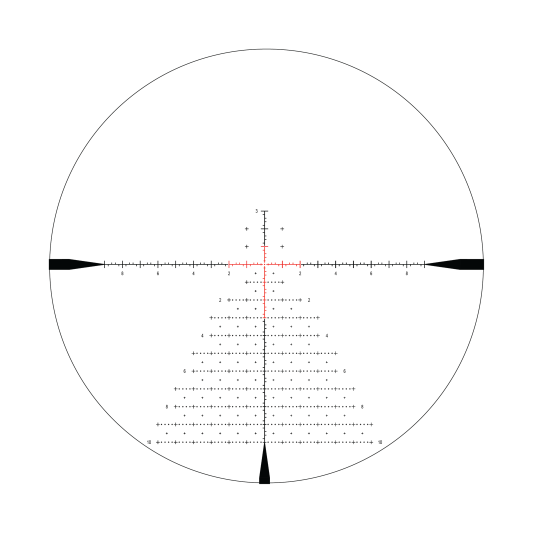
I shot my 16" LMT for this class, using a 1-8 Primary Arms PLx LPVO with a mil tree reticle, a holosun top dot, atlas bipod, cgs helios qd suppressor, and 77gr bonefrog ammo utilizing a 77gr barnes match burner otm bt round. Gun ran great. I will say that while the glass of the PA scope was just fine, my Christmas tree of mil dots were in a 1 mil grid pattern, which made corrections like "hold .3 mils" a bit challenging. I had no difficulties keeping up in class, but I am considering upgrading the glass to something with a more refined reticle. I also will likely eventually replace the factory chrome lined LMT barrel. I was getting just under 1.5 MOA groups with the 77 bonefrog, but a little more precision from the barrel would absolutely make my job as the shooter a little easier.
A few pictures:
My LMT:

The barricades we worked from...tank trap:

Angled barricade

Concrete pipes:

Tree Branch:

Helicopter:

Two different ladders (ladder shoot off was done with the one on the right)

Little rainy:

Top shooter and his garmin:

Couple randoms of the class doing some positional work:


And a group shot of those of us who wore mechanical watches (Joe is a watch guy along with a bolt gun guy)

I'm the guy wearing the cheap Seiko at the 10 o clock position. Gotta respect the mad lad shooting a class like this in his Rolex Daytona.
All in all, was an outstanding class, I learned a ton, and I highly recommend Joe and Veles. I have taken a lot of classes from all kind of people, from other former spec ops cool dudes to world champion pistol shooters and this was my favorite class so far by a long shot.
Veles Industries
His course schedule is on the website, he's a great dude to follow on instragram if you're into that kind of thing and he will randomly talk about all kinds of topics on there as well.
Don't just be a collector, get out there and do some learning from the outstanding resources we have available in this amazing country!
Here is the course description:
Quote:
Scoped Carbine is a follow up course designed for the student who has had an intermediate level formalized rifle training looking to expand their understanding of magnified optics. This course focuses on the use of semi-automatic carbines with Low Power Variable Optics (LPVO's) or other variable power optics. We will continue to add to your skills foundation which will enable you to continue improving your skills with advanced training or self guided practice.
The instructor was Joe Dawson. Joe spent 14 years in Naval Special Warfare, spending the last three years in charge of the NSW Sniper schoolhouse. He spent a couple years after getting out doing the corporate thing before deciding to start Veles and teach full time.
For those of you who are AR-phobic, he also teaches precision rifle classes aimed towards bolt action shooting, and is a huge bolt action dork himself so if "tacticool" isn't your thing, don't tune out just yet.
On that note, I know some classes with former "spec opcs guys" are light on learning and heavy on war stories/photos for the 'gram, along with lots of drills shooting targets at 50y if not closer. This is not that kind of class, and Joe isn't that kind of guy. Even if he'd wanted to BS about his time in the service, he had no time to do so because he was busy force feeding knowledge into our heads at an alarming pace both days and even before class started.
We got an email with some homework before we showed up to class: 13 full printed pages of info on subjects like quick wind and speed drop, preshooter checklist, fundamentals of support for shooting off barricades, etc along with 11 youtube links to over six and a half hours of information on a variety of topics from rifle/optic selection, setting up a precision rifle properly (specifically on scope positioning), properly mounting a gun, internal ballistics, explanations of speed drop and quick wind, using the ab quantum ballistics app, setting up a kestrel, ballistic calibration, etc.
Like I said, not your typical 50y and in, line up and all dump rounds down range a B27 sized target class at all.
Day 1 was mostly classroom and started at 8am with occasional short breaks. We started going over all the things we can choose that effect what the bullet does downrange before it leaves the barrel: optic choice, gun choice, caliber, moa vs mil, internal ballistics, barrel length, gas system suppressors, etc. Then moved onto external ballistics, learning about Ballistic Coefficient, the origins of the G1 and G7 BC models, Custom Drag Models, effects of velocity and twist rates on BC down range, why some bullets handle transonic better than others, which bullet manufactures tend to be optimistic or pessimistic about their advertised BCs, what kind of Standard Deviation and Extreme Spread we should look for in an accurate load, what effect each of those will have on a group at distance, what distance to work on truing ballistic data to adjust for muzzle velocity or ballistic coefficient, density altitude.....
Then we moved on to the hard stuff....wind. Heavy emphasis on why and when it matters, based on time of flight and exposure to surface area. Using cosign and wind angle to recalculate a wind call from full value to more accurately reflect what the bullet is experiencing downrange, learning how to attempt to make an initial wind call based on terrain, observed movement of objects/mirage/using known data(wind at your location measured by kestrel), how to properly make a wind call in mils, and then how to adjust the wind call based on observed trace/impact down range for a center impact by measuring target size instead of making wind calls to only adjust to edge of target how most people tend to call it.
We talked briefly about terminal ballistics, including an interesting anecdote from the lead ballistician at the FBI about choosing a Glock 17 or an AR-10 for a police response call to a trailer park (anyone who has seen my rants here before will know what the correct answer is).
We also spoke about Spin Drift, Aerodynamic Jump, Coriolis Effect, Angle of Fire, and Rifle Cant and their effect on down range impact. And here is why I think Joe is such an outstanding instructor and his classes are worth your time and money. This is a scoped carbine class. Most of us were shooting 5.56, and we shot primarily from 300-700 yards. Any of yall who know much about long range shooting will be rolling your eyes at worrying about Coriolis at those distances. And you're right.
But Joe explained it this way: "Don't tell me that it doesn't matter. Show me the effect it has, and let me decide whether or not it matters for what I am doing." It was a great way to get to know the AB Quantum app for those of us who haven't used it much, so we played around with Spin Drift, AJ, and Coriolis at 500 yards and in using 5.56 in the app. Yes, spin drift is only a tenth of a mil at 500y. No, that doesn't really matter for what we are doing. But now we understood what it was, how to calculate it, and had the knowledge and tools to apply it to a different caliber at a different range if we needed to some other time.
We never once were told "don't worry about that". Everything was explained so we could learn if it mattered for whatever we were doing at the moment. 1 degree of cant on the rifle isn't going to do much at 50 yards. But its 10 inch difference between poa and poi at 1,000 yards. As he said a couple of times, Tenths add up fast at distance. If he told us "not to worry" about all the stuff that doesn't matter at 200y, we would be lost trying to stretch things out past 800y, and its a rare instructor who is passionate about making sure the students understand as much as possible even if it doesn't directly apply that day.
We ended the classroom portion by quickly going over Quick Wind, building up a shooting position and his preshooter check list, then headed to the range late in the day, I think after 5pm.
Everyone confirmed zero at 100y, then we put up this target:
target
6 circles, 1/2" inch black dot center, 1" white dot, 2" black dot. 5 shot group on first dot, then we started build and break drills. For the second dot, we were on our knees behind the gun, then had to get behind the gun, get on target and break a shot on the timer in decreasing time intervals 5 times. For the third dot, we repeated the same drill from standing. Working to build a solid shooting position on a timer was great. We then used the bottom three dots for controlled and then rapid pairs, learning to diagnose any flaws in our position based on reticle behavior during and after the shot. Its kind of crazy how quickly you can throw 2 accurate shots at a 2" circle with good fundamentals behind the gun.
That took us to around 7:30, so we ended out first 11.5 hour day of learning, and met back up at 8 am Saturday at the range to continue shooting.
If yall remember, Saturday was kind of a wild weather day. It actually worked out perfectly for us, because its hard to work on wind calling when its 65 degrees and beautiful. But Saturday we got the front blow through, and man did it give us some learning opportunities.
We started the day truing our ballistic app data using two targets at 595 yards: a large rectangle to get the wind call right and a rough elevation, and a short, horizontally wide rectangle to confirm our elevation hold. We dialed what the app told us "should" be our elevation hold at that range, then shot until we were reliably hitting the narrow target. IIRC, my app initially claimed I would need 4.7 mils at that distance and my final actual hold was 5.3 mils. This allowed us to true our data in the app. We had to stop halfway through truing because it rained so hard we could no longer see the truing target, so we did a quick lesson under the tarp on speed drop, mean point blank range, and using speed drop to convert a scope into a BDC reticle for your gun/ammo by dialing elevation. We also reviewed the 5 fundamentals of support for shooting off barricades, how to use bags on terrain features for stable shooting positions, then broke into small groups to work a variety of barricades in any position we wanted, practicing spotting for each other, making wind calls, and our positional shooting. Spotting for someone else was completely new to me, and learning how to use trace and impacts to make and adjust calls for a shooter was a blast. Especially with the wind gusting and blowing hard as the front rolled through, wind calling was a huge challenge and we all learned a lot. There were multiple times we would be working on making a wind call and missing and Joe would roll up behind us, take a look through the spotting scope, make a wind call and the shooter would get a hit first shot using his wind calls. Really highlighted how experience is really the only thing that can teach you to be good at that. The nearest target during the positional work was 200y, and everything else was 300y and beyond, with most targets being between 400y and 550y, with one target at 700y. I don't know all of the target sizes, but they were not big 30"x30" plates. I know one was a 8" circle at 400, we had a pig and fox sized steel targets at 440 and 500 yards, but they were all A/C sized steel or smaller, including one KYL target that was a real fun one.
We then stopped to talk about tripod use, quick deployment, and use of a tripod as rear support, which was crazy to see but worked really well once you worked the technique. We finished the class shooting the drill Joe is most known for, the Ladder drill. Winner of the shoot off (not me) went home with a Garmin chronograph donated by Revival Defense (one of their guys was in the class and was a great dude), which was a great prize. The day ended around 6 pm, so we put in a solid 22 hours of work over the course of two days, and it was worth every second.
For me personally, I was excited about this class because I am primarily a pistol shooter. I have taken two other rifle specific classes, but one was all shot inside of a 100y tac bay and while we did push out to 600 in the other class it was much heavier on learning the positional stuff at targets 300y and in than the how and why of ballistics or wind calling, which I was excited to learn in this class. When I shoot run and gun matches or two gun, I don't struggle with pistol or short range rifle stages much, but shooting unknown size targets at unknown distances past 400 yards has always been harder for me to do successfully, because I don't really have a background in precision or long distance shooting.
I shot my 16" LMT for this class, using a 1-8 Primary Arms PLx LPVO with a mil tree reticle, a holosun top dot, atlas bipod, cgs helios qd suppressor, and 77gr bonefrog ammo utilizing a 77gr barnes match burner otm bt round. Gun ran great. I will say that while the glass of the PA scope was just fine, my Christmas tree of mil dots were in a 1 mil grid pattern, which made corrections like "hold .3 mils" a bit challenging. I had no difficulties keeping up in class, but I am considering upgrading the glass to something with a more refined reticle. I also will likely eventually replace the factory chrome lined LMT barrel. I was getting just under 1.5 MOA groups with the 77 bonefrog, but a little more precision from the barrel would absolutely make my job as the shooter a little easier.
A few pictures:
My LMT:
The barricades we worked from...tank trap:
Angled barricade
Concrete pipes:
Tree Branch:
Helicopter:
Two different ladders (ladder shoot off was done with the one on the right)
Little rainy:
Top shooter and his garmin:
Couple randoms of the class doing some positional work:
And a group shot of those of us who wore mechanical watches (Joe is a watch guy along with a bolt gun guy)
I'm the guy wearing the cheap Seiko at the 10 o clock position. Gotta respect the mad lad shooting a class like this in his Rolex Daytona.
All in all, was an outstanding class, I learned a ton, and I highly recommend Joe and Veles. I have taken a lot of classes from all kind of people, from other former spec ops cool dudes to world champion pistol shooters and this was my favorite class so far by a long shot.
Veles Industries
His course schedule is on the website, he's a great dude to follow on instragram if you're into that kind of thing and he will randomly talk about all kinds of topics on there as well.
Don't just be a collector, get out there and do some learning from the outstanding resources we have available in this amazing country!