

Outdoors
Sponsored by

Hexazinone Pellet Injection for Yaupon

2,957 Views | 8 Replies | Last: 2 yr ago by fburgtx
Ryan the Temp
How long do you want to ignore this user?
In my long saga of fighting a yaupon invasion in Milam County, I've come across some peer-reviewed research that says hexazinone 75% is as effective on yaupon as triclopyr 61% (Remedy), so I'm considering a novel approach using hexazinone tablets.

A tablet form of hexazinone 75% is sold as Pronone Power Pellets and is not specifically labeled for yaupon, although some marketing materials include yaupon on the list of species it controls. The label also provides directions only for ground application.

The method I want to use is to drill a hole in the base of the yaupon, insert a hexazinone tablet, then plug the hole with a dowel pin. My thought process here is that it will allow for narrow targeting of yaupon without the risk of collateral damage to surrounding desirable plants and trees from overspray when using the Remedy/diesel basal spray method. A lot of the yaupon we have is around the base of trees we want to keep.

This method was inspired by other injection systems I've seen, but those systems only use glyphosate capsules. All of our tests with varying strengths of glyphosate showed no effect on yaupon. The Remedy and diesel basal spray method has worked very well, but we burn through it quickly and it's not cheap. For $20 more than one gallon of Remedy, we get enough tablets to treat up to 950 2-inch yaupon stems.

Anyone have experience with hexazinone tablets or have thoughts to share?
fburgtx
How long do you want to ignore this user?
I've used hexazinone (Velpar) in liquid form, as a "soil spot" treatment, and also used the hexazinone "Power Pellets" on the ground as they direct.

Hexazinone is pretty potent, and you may want to read up on the possibility of the herbicide being "transposed" through the roots to other trees, if the yaupon you are targeting is indeed next to desirable trees.

I've sprayed LOTS of triclopyr(Remedy)/diesel, using the basal bark method, on Mesquite, with hackberry trees growing right next to them, with no ill effect to the hackberry. Triclopyr has little to none of the root "transposition" (spread to nearby trees) issues that picloram (Tordon), and likely hexazinone has.

You MIGHT consider using a "hack and squirt" technique with the Remedy/diesel. If they're just 2 inches, two "whacks" with a hatchet, and a quick "squirt" directed into each "hack", would likely do the job. Probably quicker than trying to drill a hole/place a tablet/place a plug, as well.

I've seen a 5-6 foot "zone of death" occur, just from a small rain shower washing a little residue off the outside of a jug of Velpar I accidentally left outside.

My guess is that the Power Pellets will kill the yaupon stone dead, but I'd just be worried about nearby trees (This can happen with same/similar species when "root grafting" has occurred. Not sure how common in unrelated nearby trees). Other than pine (some folks use soil-spot hexazinone in a grid pattern to kill out invasive species in pine plantations), Velpar/hexazinone/Power Pellets seem to kill just about everything else.

What spray tip are you using to spray triclopyr/diesel?? I don't like the 5500-x1 that Brush Busters recommends (clogs constantly), but I DO use a 5500-x3. The tips that usually come on sprayers is equivalent to a 5500-x18, which wastes LOTS of herbicide.
CS78
How long do you want to ignore this user?
Seems really labor intensive. Easier to just pole saw the yaupon and carefully paint cut stumps?

I know we've discussed before but i continue to very carefully apply the triclopyr mix to yaupon that are basically growing out of the base of my water oaks and haven't had any oaks die yet. Been ramping it up over a few years now. I use very little pressure in the sprayer and am extremely careful with it.

Another thing to consider. Im not familiar with your new chemical but id advise to proceed with caution. Just remember the chemical can travel down the roots. And those roots are in contact with your oak roots. If you try it, id just do around a couple trees and then observe over a year. Any goofs won't risk killing a bunch of mature oaks. That was my method on treating around the water oaks with the triclopyr.
CS78
How long do you want to ignore this user?
fburgtx said:


I've sprayed LOTS of triclopyr(Remedy)/diesel, using the basal bark method, on Mesquite, with hackberry trees growing right next to them, with no ill effect to the hackberry.


Lots of good thoughts.

Just a data point for you. I have two 10-12" hackberrys growing out of the base of a massive hickory. I hacked the entire circumference of them and treated with triclopyr mix. It took 6 months and 3 treatments to kill the smaller one. I just hit the larger one a 4th time and it's been a year. It's almost done. But mature hackberry looks to have some resistance.
cryption
How long do you want to ignore this user?
I've basal sprayed hundreds of gallons of remedy / diesel on them in my life and I've never lost a desired tree. Youpon will grow right up into oaks and it's been fine. Give them a while to die and push them over with a tractor or something. What you propose sounds like a lot of work
Ryan the Temp
How long do you want to ignore this user?
CS78 said:

Seems really labor intensive. Easier to just pole saw the yaupon and carefully paint cut stumps?

I know we've discussed before but i continue to very carefully apply the triclopyr mix to yaupon that are basically growing out of the base of my water oaks and haven't had any oaks die yet. Been ramping it up over a few years now. I use very little pressure in the sprayer and am extremely careful with it.

Another thing to consider. Im not familiar with your new chemical but id advise to proceed with caution. Just remember the chemical can travel down the roots. And those roots are in contact with your oak roots. If you try it, id just do around a couple trees and then observe over a year. Any goofs won't risk killing a bunch of mature oaks. That was my method on treating around the water oaks with the triclopyr.
The cut stump method is one of the options I've put forth for consideration. It's personally my preferred method because we get the benefit of the yaupon being gone immediately and likely not coming back. The stuff I basal sprayed a year ago is all dead and still there because no one wants to dedicate labor to go cut it down (we rely on volunteer labor).

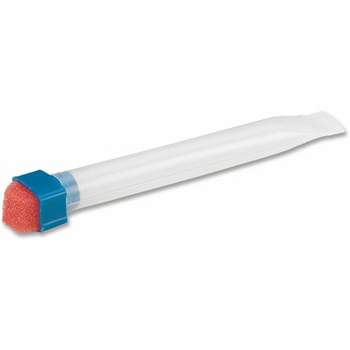
I was thinking about using something like this to apply triclopyr to cut stumps:
Ryan the Temp
How long do you want to ignore this user?
fburgtx said:

Hexazinone is pretty potent, and you may want to read up on the possibility of the herbicide being "transposed" through the roots to other trees, if the yaupon you are targeting is indeed next to desirable trees.

[snip]

My guess is that the Power Pellets will kill the yaupon stone dead, but I'd just be worried about nearby trees (This can happen with same/similar species when "root grafting" has occurred. Not sure how common in unrelated nearby trees). Other than pine (some folks use soil-spot hexazinone in a grid pattern to kill out invasive species in pine plantations), Velpar/hexazinone/Power Pellets seem to kill just about everything else.
I haven't been able to find anything that discusses an application that is not a ground application and transfer through roots isn't addressed even in ground application discussions. Most of what we have on property are post oaks, white oaks, cedar, and mesquite. We don't care about the mesquite, but we want to retain oaks and cedar.
Quote:

What spray tip are you using to spray triclopyr/diesel?? I don't like the 5500-x1 that Brush Busters recommends (clogs constantly), but I DO use a 5500-x3. The tips that usually come on sprayers is equivalent to a 5500-x18, which wastes LOTS of herbicide.
Whatever came with the sprayers. I've never gotten into the weeds on that stuff, so I can't speak to it.

Another question - we have hiking trails that are prone to overgrowth. I know the power pellets are recommended for fence lines, so do you think placing pellets along the centerline of the trails could be effective at keeping them clear?
fburgtx
How long do you want to ignore this user?
If those pellets hit the ground, and water activates them, they'll kill just about anything within a few feet of where they fell.

Yes, you could technically "clear trails" by putting them every few feet on a trail, but the stuff is expensive. Imazapyr isn't really "cheap", but it will effectively "sterilize" the trails you spray it on, for 3-6 months (imazapyr, NOT triclopyr). You can buy it in maroon bottles (mixed with glyphosate) at Tractor Supply as "RM43".

Scroll about halfway down this page:

https://www.mkrittenhouse.com/us/adjustable-conejet-nozzle-1

It will show you how much the nozzles spray. By using "the nozzle your sprayer came with", rather than buying a "low-flow" nozzle, you're probably spraying 4-5 TIMES (.045 gallons per minute, vs. .26 gpm)as much material as you should be (you're probably using the equivalent of an x-18 or x-22, rather than the x- 1 or x-3 you SHOULD be using). Not trying to pick on you, just letting you know you're spraying out 4-5x as much material as you need to be, which is why it seems like you're using so much diesel/remedy mix, and why it seems like you're possibly "overspraying" so many surrounding trees. Spend a few bucks on the right nozzle, and you'll save LOTS of money on herbicide.

If you have stands of strictly yaupon, the power pellets will do a good job, by tossing a handful here and there. For yaupon NEXT to other trees, I'd either get some of thr low-flow nozzles above, for basal bark spraying with triclopyr/diesel, or prune the small yaupon and paint the stem/stump with it or use a "hack and squirt".

Just trying to save you a LOT of labor, and some $$ on herbicides.

Also, the generic Triclopyr 4 you can get online (delivered for $70 a gallon), works just as well
as the "name brand" Remedy, that sells for $100-$110 a gallon at the store.
fburgtx
How long do you want to ignore this user?
Ryan the Temp said:

CS78 said:

Seems really labor intensive. Easier to just pole saw the yaupon and carefully paint cut stumps?

I know we've discussed before but i continue to very carefully apply the triclopyr mix to yaupon that are basically growing out of the base of my water oaks and haven't had any oaks die yet. Been ramping it up over a few years now. I use very little pressure in the sprayer and am extremely careful with it.

Another thing to consider. Im not familiar with your new chemical but id advise to proceed with caution. Just remember the chemical can travel down the roots. And those roots are in contact with your oak roots. If you try it, id just do around a couple trees and then observe over a year. Any goofs won't risk killing a bunch of mature oaks. That was my method on treating around the water oaks with the triclopyr.
The cut stump method is one of the options I've put forth for consideration. It's personally my preferred method because we get the benefit of the yaupon being gone immediately and likely not coming back. The stuff I basal sprayed a year ago is all dead and still there because no one wants to dedicate labor to go cut it down (we rely on volunteer labor).

I was thinking about using something like this to apply triclopyr to cut stumps:


Yes, that would work. Might require multiple swipes and take a little extra time (vs. spraying). The "low-flow" nozzles I mentioned would also work (unless the cut yaupon stems are literally right next to exposed roots of a "good" tree).

Either way, do it within a few minutes to an hour of cutting, for best results.
Refresh
Page 1 of 1
 
×
subscribe Verify your student status
See Subscription Benefits
Trial only available to users who have never subscribed or participated in a previous trial.