
My 50" Samsung plasma is sweet!
New TV: LCD, LED, or DLP
1,551 Views |
52 Replies |
Last: 15 yr ago by Redstone
quote:
To get burn in on a new set one would almost have to do it intentionally.
It still happens. it's not a risk on LCDs.
quote:
According to the energy star ratings the Samsung LN55C650 will use 191.19 kWh/year.
The Samsung PN58C590 will use 291.56 kWh/year for a difference of 100kWh/year.
Well that's certainly a conservative estimate of those models. I've seen where other sites show the actual power consumption difference is more like 250 W for other models. Also depends on how much electricity is and how much you watch your new TV.
Let's not forget the heat off that plasma as well. Gotta cool your house down more.
Your paying more for it. For equal prices, why pay more per month to power it and cool your house?
What do you guys think about my TV?
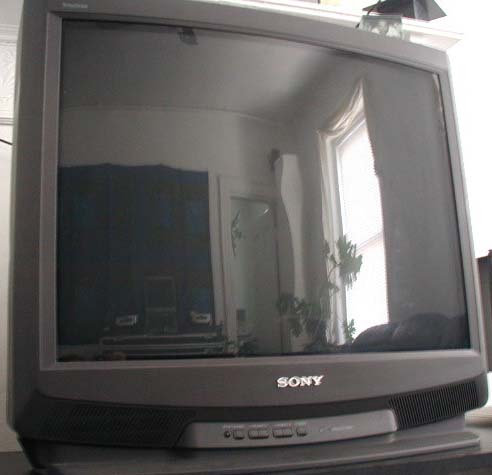
quote:
It still happens. it's not a risk on LCDs.
Temporary image retention, yes. Permanent burn in? No.
http://reviews.cnet.com/green-tech/tv-consumption-chart/
Here's a good non-biased source.
Comparing 50"+ TVs, the closest comparison is about $10 difference per year. The widest is $87 per year.
[This message has been edited by Ronnie (edited 8/3/2010 1:34p).]
Here's a good non-biased source.
Comparing 50"+ TVs, the closest comparison is about $10 difference per year. The widest is $87 per year.
[This message has been edited by Ronnie (edited 8/3/2010 1:34p).]
quote:
Well that's certainly a conservative estimate of those models. I've seen where other sites show the actual power consumption difference is more like 250 W for other models. Also depends on how much electricity is and how much you watch your new TV.
Just admit you were wrong. The difference of a penny or 2 in rates and a few hours a day is not significant.
Hell the PN58C8000 doesn't even use 50 dollars a year in electricity much less costing 50 more in one month.
Across of 52 LCD models in sizes 52-55 in the average use is 220 kWh/year
Across of 30 Plasma 50, 54 and 58 in models that average use is 280 kWh/year
http://downloads.energystar.gov/bi/qplist/tv_prod_list.xls
quote:
Let's not forget the heat off that plasma as well. Gotta cool your house down more.
Your paying more for it. For equal prices, why pay more per month to power it and cool your house?
If you cannot afford ~2 dollars a months extra on your electricity bill for a better product you really do not need to be looking at televisions in the first place.
quote:
Here's a good non-biased source.
Look at the model numbers of the sets tested. the newest plasmas are well over a year old. You cannot even find those models in stores anymore.
quote:
The widest is $87 per year.
Still less that the low end on your first estimate.
quote:
Across of 52 LCD models in sizes 52-55 in the average use is 220 kWh/year
Across of 30 Plasma 50, 54 and 58 in models that average use is 280 kWh/year
It's interesting. In the source I quoted above, the average consumption was lower among LCDs than your "newer" report. So the plasmas are getting more efficient but the LCDs arent?
I'll look at that spreadsheet but I have a feeling somebody's hiding something to make their argument stronger...
Whatever the difference is, $80, $50 a year. I ain't paying it.
quote:
Still less that the low end on your first estimate

quote:
I'll look at that spreadsheet but I have a feeling somebody's hiding something to make their argument stronger...
Look at it all you want.
besides the article for the chart you posted even states:
quote:
No discussion of TV power use would be complete without a bit of perspective. For households that pay somewhere near the average retail cost for energy--11.55 cents per kilowatt per hour in 2009--and that watch near the average amount per TV--about 5.2 hours per day--the cost to watch a 50-inch 1080p plasma TV is about $64 per year in the calibrated light output mode (see How We Test). The average 52- to 55-inch LCD TV costs about $29 per year for the same light output, and, of course, smaller TVs use less energy. Sure, both electricity costs and average daily TV use are increasing steadily every year; however, those amounts still don't take a major chunk out of most household budgets. According to the Department of Energy, for example, the average refrigerator uses nearly $90 worth of energy per year.
It's worth noting that plasma TV has many picture quality advantages over LCD TVs, so people who really prize video quality may be willing to sacrifice some efficiency to get those advantages. On the other hand, today's high-quality LCDs can balance extreme efficiency with great picture quality. As with all technologies, improvements in HDTV performance are being made with every generation of products, and we expect power consumption to continue to fall in newer models.
So even on the older models the 35 dollar difference they list is still much less than the 600 estimate you provided and with a plasma you get the "many picture quality advantages over LCD TVs."
quote:
So the plasmas are getting more efficient but the LCDs arent?
They both are plasma televisions are just improving at a faster rate in recent years and especially this years models.
[This message has been edited by AgDev01 (edited 8/3/2010 3:12p).]
Well I guess he just needs to make sure he buys an energy star 4.0 compliant tv. Course that's only been out for 3 months so most of the good deals are on the older, less efficient plasmas...
Enjoy your plasma viewing and generally higher electric bills AgDev!
Enjoy your plasma viewing and generally higher electric bills AgDev!
Are you serious? This has to be a troll... then again, this is the Internet, so maybe not?
quote:
Enjoy your plasma viewing and generally higher electric bills AgDev!
I have 2 plasmas. The only time I have a huge electric bill is in the summer when I have the AC running.
I don't belong to a church in you guys various religions (that's what these plasma/lcd or Apple/Android arguments are - religion) however, I will say that heat load can be much more of a factor than a couple bucks per month.
Also, in a family situation, I'd go with more like 12 hours per day of time rather than 5.
It's still not serious money, but it's not negligible, either.
Also, in a family situation, I'd go with more like 12 hours per day of time rather than 5.
It's still not serious money, but it's not negligible, either.
geez didn't realize this would turn into a electric bill discussion...
it's like the argument of driving a hybrid versus a traditional (gasoline) car... sure you will save some gas money driving a hybrid, but the cost of a hybrid car is still too high to justify buying a hybrid if you do a cost analysis.
it's like the argument of driving a hybrid versus a traditional (gasoline) car... sure you will save some gas money driving a hybrid, but the cost of a hybrid car is still too high to justify buying a hybrid if you do a cost analysis.
I would vote for the Panny plasma. Your electricity bill will be fine!
A friend just got this tv and wanted an opinion on it.
http://www.vizio.com/flat-panel-hdtvs/vf552xvt.html
http://www.vizio.com/flat-panel-hdtvs/vf552xvt.html
Panasonic plasmas
I believe they have the only THX certified tv.
I believe they have the only THX certified tv.
As an owner of a DLP let me put in my vote against DLPs. Too many things to break.
The bulbs break, and they are expensive. The color wheels can go, and that isn't cheap or easy to replace (a moving part). And you know those million mirrors? Each one of those can (and do) break. I had to have mine replaced (luckily Samsung did it for free).
Because of the fan and the bad color wheel, I have a very loud and annoying TV that I am not willing to put anymore money into.
The bulbs break, and they are expensive. The color wheels can go, and that isn't cheap or easy to replace (a moving part). And you know those million mirrors? Each one of those can (and do) break. I had to have mine replaced (luckily Samsung did it for free).
Because of the fan and the bad color wheel, I have a very loud and annoying TV that I am not willing to put anymore money into.
I am pro LCD and anti DLP as a purchaser of two expensive tvs. Having to deal with my girlfriend's Samsung "white dots" DLP issue right now.
Featured Stories
See All
3:58
32m ago
567
Bubble threatens to burst if Bucky Ball can't beat Ole Miss
by Olin Buchanan
11:51
12h ago
4.3k
Three freshmen homer in come-from-behind effort
by Richard Zane
5:13
23m ago
314
4:39
7m ago
205
DaAggies
Devin Price back in the program to start coaching career
in Billy Liucci's TexAgs Premium
66
ReturnOfTheAg
Devin Price back in the program to start coaching career
in Billy Liucci's TexAgs Premium
35
RAB87
FINAL from Blue Bell: No. 24 Texas A&M 8, Texas A&M-Corpus Christi 3
in Billy Liucci's TexAgs Premium
26
coach mike
Devin Price back in the program to start coaching career
in Billy Liucci's TexAgs Premium
23
Bulldog73
Devin Price back in the program to start coaching career
in Billy Liucci's TexAgs Premium
22
AggiePoot
Devin Price back in the program to start coaching career
in Billy Liucci's TexAgs Premium
22