
one step closer to idiocracy.
Interesting article on wind/solar power
5,928 Views |
70 Replies |
Last: 2 yr ago by ts5641
one step closer to idiocracy.
I looked into solar and couldn't make the numbers work at all. I spent a fraction of the money on a backup propane generator instead.
If we were talking about WalMart or your local Wendy's, I get the sentiment.Jack Boyett said:
I've worked in the chemical industry my whole life. The quality of the operators is declining, the quality of the equipment that is manufactured is declining. It's shocking how much new equipment fails right out of the box. While I agree that nuclear is safe. It was safe with the people of 1985 running it. I don't trust that we as a population can manage something like it anymore so I'm against it.
But I have a feeling the vetting process will be a bit more stringent at a Nuclear plant. There are many in operation all over the world, every day, so we have evidence of safety.
I work in aviation, in a very safety-sensitive function. It's getting harder to find good employees, but if you want to continue to exist as a company...you'll find em.
bmks270 said:
Actually….
If you do add wind and solar to the grid, and add a ton of electric vehicles with batteries…. Then the charged electric vehicles can actually supply grid power.
Imagine where EVs will power the grid instead of being charged.
I'd actually propose that EV charging tech be designed to discharge during grid peak demands, and charge during low demand. I guess there is some balance there as a large enough group of EVs initiating charging together will increase grid demand, so how do you balance it?
Anyway, distributed grid tech has a lot of potential.
EVs can be charged at work using excess wind and solar. Then discharge some when people get home during peak demand.
This could be designed so EVs won't discharge when below 70% battery so EV owners won't be stranded.
Projections of EV adoption predict the EV storage capacity will be greater than the entire US grid output.
That seems like a gigantic cluster F of a mess that is unpredictable and unsustainable. How do you keep a grid reliable when you have no control of when these EVs are plugged in?
DeSantis 2024
FJB, FJB, FJB, etc
FJB, FJB, FJB, etc
This is the pipe dream OP referenced. And nothing is free. Just wow!!!DallasAg 94 said:Do this.AgGrad99 said:Quote:
These plans have a single, fatal flaw: they are reliant on the pipe-dream that there is some affordable way to store surplus electricity at scale.I know we've realized a lot of this already, but it's interesting to see all the math/percentages laid out plainly.Quote:
Wind and solar are, in fact, completely pointless.
Yet, our elected representatives continue to push 'clean energy', ignoring the most efficient, most clean energy in existence.
Go to Tesla's website and look at the PowerWall.
TXU offers a plan for free electricity between 8pm & 5am in their "Free Nights & Solar Days 12" plan.
You can get a plan from TXU that charges your PowerWall for free from 8pm to 5am. Let's assume that charging time is enough to fully charge your PowerWall(s) and that you have enough PowerWall capacity that you can draw off the PowerWalls(s) during the daytime without hitting the grid for electricity.
Do math.
Your costs: PowerWall(s) + Installation
Everything else is free. Free charging, free maintenance. Free Electricity use.
How long will it take you to pay for the PowerWalls to break even?!
That's where I start.
I hate tu. It's in my blood.
They certainly do not charge at night from solar.Martin Q. Blank said:There are fields of batteries that do this every day. They charge at night when electricity is cheap and discharge during the day when it is expensive. Google BESS.texagbeliever said:DallasAg 94 said:Do this.AgGrad99 said:Quote:
These plans have a single, fatal flaw: they are reliant on the pipe-dream that there is some affordable way to store surplus electricity at scale.I know we've realized a lot of this already, but it's interesting to see all the math/percentages laid out plainly.Quote:
Wind and solar are, in fact, completely pointless.
Yet, our elected representatives continue to push 'clean energy', ignoring the most efficient, most clean energy in existence.
Go to Tesla's website and look at the PowerWall.
TXU offers a plan for free electricity between 8pm & 5am in their "Free Nights & Solar Days 12" plan.
You can get a plan from TXU that charges your PowerWall for free from 8pm to 5am. Let's assume that charging time is enough to fully charge your PowerWall(s) and that you have enough PowerWall capacity that you can draw off the PowerWalls(s) during the daytime without hitting the grid for electricity.
Do math.
Your costs: PowerWall(s) + Installation
Everything else is free. Free charging, free maintenance. Free Electricity use.
How long will it take you to pay for the PowerWalls to break even?!
That's where I start.
Doesn't work that well. Power walls are not meant to be charged and discharged every day. No batteries are. It is why industrial battery technology has very little market penetration.
I hate tu. It's in my blood.
Maybe because I am forced into a utility cooperative I am paying more
Perpetual motion/delusion.bmks270 said:
Actually….
If you do add wind and solar to the grid, and add a ton of electric vehicles with batteries…. Then the charged electric vehicles can actually supply grid power.
Imagine where EVs will power the grid instead of being charged.
I'd actually propose that EV charging tech be designed to discharge during grid peak demands, and charge during low demand. I guess there is some balance there as a large enough group of EVs initiating charging together will increase grid demand, so how do you balance it?
Anyway, distributed grid tech has a lot of potential.
EVs can be charged at work using excess wind and solar. Then discharge some when people get home during peak demand.
This could be designed so EVs won't discharge when below 70% battery so EV owners won't be stranded.
Projections of EV adoption predict the EV storage capacity will be greater than the entire US grid output.
I hate tu. It's in my blood.
"Projections of EV adoption predict the EV storage capacity will be greater than the entire US grid output."
Indeed. Think about that objectively for just a moment.
Indeed. Think about that objectively for just a moment.
I hate tu. It's in my blood.
We need more nuclear power.
Anyone who chooses to ride a bicycle in the street is a threat to themselves, and others. If a vehicle strikes you accidentally, YOU are at fault; and the laws of physics supercede all else when you're in the path of a 2 ton killing machine. Know your place, stay off the road.
A couple of zingers of REALITY that need repeating!
In fact it's already common to see efficient combined-cycle gas turbines replaced by open-cycle ones because they can be throttled up and down easily to back up the rapidly changing output of wind and solar farms. But open-cycle gas turbines burn about twice as much gas as combined cycle gas turbines. Switching to high-emissions machinery as part of an effort to reduce emissions is, frankly, madness!
The conclusion is simple. Barring some sort of miracle, there is no possibility that a suitable storage technology will be developed in the needed time frame. The present policies of just forcing wind and solar into the market and hoping for a miracle have been memorably and correctly likened to "jumping out of an aeroplane without a parachute and hoping that the parachute will be invented, delivered and strapped on in mid air in time to save you before you hit the ground."
Wind and solar need to be backed up, close to 100 per cent, by some other means of power generation. If that backup is provided by open-cycle gas or worse, coal, net zero will never be achieved: nor anything very close to it.
The other big item not mentioned in this article is the growing demand for energy both as the population grows and with underdeveloped countries coming online. I cannot find the article but it basically stated we need to start constructing new fossil fuel and or better nuclear power plants NOW.
In fact it's already common to see efficient combined-cycle gas turbines replaced by open-cycle ones because they can be throttled up and down easily to back up the rapidly changing output of wind and solar farms. But open-cycle gas turbines burn about twice as much gas as combined cycle gas turbines. Switching to high-emissions machinery as part of an effort to reduce emissions is, frankly, madness!
The conclusion is simple. Barring some sort of miracle, there is no possibility that a suitable storage technology will be developed in the needed time frame. The present policies of just forcing wind and solar into the market and hoping for a miracle have been memorably and correctly likened to "jumping out of an aeroplane without a parachute and hoping that the parachute will be invented, delivered and strapped on in mid air in time to save you before you hit the ground."
Wind and solar need to be backed up, close to 100 per cent, by some other means of power generation. If that backup is provided by open-cycle gas or worse, coal, net zero will never be achieved: nor anything very close to it.
The other big item not mentioned in this article is the growing demand for energy both as the population grows and with underdeveloped countries coming online. I cannot find the article but it basically stated we need to start constructing new fossil fuel and or better nuclear power plants NOW.
There's a row of giant internal combustion engine driven generators outside Abernathy that can jump into the market in like 30 seconds when the wind stops blowing. Again, high emissions solution to bridge the gap on the zero emissions fairy tales.

Tony Franklins Other Shoe said:
Rarely in life are solutions to problems so easily deduced. Yet here we have nuclear power as a simple and effective answer and our idiot leadership wants to look in any other direction except at the answer. It's almost as if they want to make it harder on the people.
Not surprising that nuclear can't get any traction, cheap, reliable, abundant electricity greatly benefit society, but the benefit is widely spread and no lobbying interest that really matters is going to get rich by a nuclear power plant building boom
Sq 17 said:UninformedInternetBlogger said:
Power wall $14k
Installation $2k
Monthly Power Bill $200
Payback 6.67 years
Assumes you have access to "free nights" plan, no meter fee, no regulatory fee, no maintenance, that the batteries last that long with daily charge/discharge
Monthly power bill $200
I must be doing something horribly wrong because my bill is nowhere near $200
Meant to be a conservative example giving the battery the benefit of the doubt. We vary a lot depending on time of year.
Heard they are blaming the wind farms in the ocean for the increased whale deaths that have occurred in 2023.
Do the math and your free energy will end up costing you about ~$0.20 per kWh. If the grid is available, that is always the cheapest option. But some people find value in having backup systems for storm reliability issues or prepper purposes. In that case money is not the object.DallasAg 94 said:Do this.AgGrad99 said:Quote:
These plans have a single, fatal flaw: they are reliant on the pipe-dream that there is some affordable way to store surplus electricity at scale.I know we've realized a lot of this already, but it's interesting to see all the math/percentages laid out plainly.Quote:
Wind and solar are, in fact, completely pointless.
Yet, our elected representatives continue to push 'clean energy', ignoring the most efficient, most clean energy in existence.
Go to Tesla's website and look at the PowerWall.
TXU offers a plan for free electricity between 8pm & 5am in their "Free Nights & Solar Days 12" plan.
You can get a plan from TXU that charges your PowerWall for free from 8pm to 5am. Let's assume that charging time is enough to fully charge your PowerWall(s) and that you have enough PowerWall capacity that you can draw off the PowerWalls(s) during the daytime without hitting the grid for electricity.
Do math.
Your costs: PowerWall(s) + Installation
Everything else is free. Free charging, free maintenance. Free Electricity use.
How long will it take you to pay for the PowerWalls to break even?!
That's where I start.
Tony Franklins Other Shoe said:
Rarely in life are solutions to problems so easily deduced. Yet here we have nuclear power as a simple and effective answer and our idiot leadership wants to look in any other direction except at the answer. It's almost as if they want to make it harder on the people.
Where you went wrong is your assumption on what is the problem. So of course the 'solution' seems stupid or insane. The problem isn't providing cheap, reliable, widespread, safe electricity. The problem is too many people with free access to energy. The problem is controlling energy production and access so they can control you. That's why you see the 'solutions' you see.
Yeah, very true. I should say our leadership has their goals and solutions are not required, just the destruction of paths to narrow the choices down to one that ends at the goal.American Hardwood said:Tony Franklins Other Shoe said:
Rarely in life are solutions to problems so easily deduced. Yet here we have nuclear power as a simple and effective answer and our idiot leadership wants to look in any other direction except at the answer. It's almost as if they want to make it harder on the people.
Where you went wrong is your assumption on what is the problem. So of course the 'solution' seems stupid or insane. The problem isn't providing cheap, reliable, widespread, safe electricity. The problem is too many people with free access to energy. The problem is controlling energy production and access so they can control you. That's why you see the 'solutions' you see.
No gas stoves, dishwashers that don't clean, EVs for everyone, interest rates that penalize the bill payers, etc, etc, etc.
Person Not Capable of Pregnancy
Central station nuclear powered electric generating stations are the only answer. Green energy is very costly and not reliable. It the true cost of green energy including subsidies and long term operating cost were modeled correctly by the media it would be clear to the American people that green energy and zero emissions is not possible nor needed. Capacity factor is the key.
The OP article posted is excellent.
The OP article posted is excellent.
But they make many people happy that our government is doing something to combat our "greatest existential threat".Quote:
Wind and solar are, in fact, completely pointless.
There are exceptions:lb3 said:
If the grid is available, that is always the cheapest option.
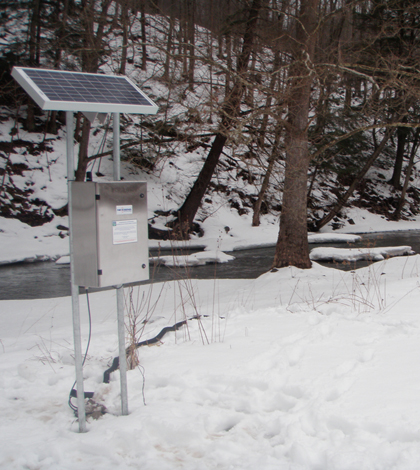
Also, when I was a kid, one local family always generated their own electricity. I think that they used wellhead gas which was free to them as part of their gas lease.
AgGrad99 said:
(Author): Bryan Leyland MSc, DistFEngNZ, FIMechE, FIEE(rtd) is a power systems engineer with more than 60 years experience on projects around the world
https://12ft.io/proxy?q=https%3A%2F%2Fwww.telegraph.co.uk%2Fnews%2F2023%2F05%2F10%2Fwind-solar-renewables-pointless-waste%2FQuote:
Many governments in the Western world have committed to "net zero" emissions of carbon in the near future. The US and UK both say they will deliver by 2050. It's widely believed that wind and solar power can achieve this. This belief has led the US and British governments, among others, to promote and heavily subsidise wind and solar.
These plans have a single, fatal flaw: they are reliant on the pipe-dream that there is some affordable way to store surplus electricity at scale.I know we've realized a lot of this already, but it's interesting to see all the math/percentages laid out plainly.Quote:
The conclusion is simple. Barring some sort of miracle, there is no possibility that a suitable storage technology will be developed in the needed time frame. The present policies of just forcing wind and solar into the market and hoping for a miracle have been memorably and correctly likened to "jumping out of an aeroplane without a parachute and hoping that the parachute will be invented, delivered and strapped on in mid air in time to save you before you hit the ground."
Wind and solar need to be backed up, close to 100 per cent, by some other means of power generation. If that backup is provided by open-cycle gas or worse, coal, net zero will never be achieved: nor anything very close to it.
There is one technology that can provide a cheap and reliable supply of low-emissions electricity: nuclear power. Interest in nuclear power is increasing as more and more people realise that it is safe and reliable. If regulators and the public could be persuaded that modern stations are inherently safe and that low levels of nuclear radiation are not dangerous, nuclear power could provide all the low cost, low emissions electricity the world needs for hundreds or thousands of years.
But if we had 100 per cent nuclear backup for solar and wind, we wouldn't need the wind and solar plants at all.
Wind and solar are, in fact, completely pointless.
Yet, our elected representatives continue to push 'clean energy', ignoring the most efficient, most clean energy in existence.
TLDR - solar/wind power generation doesn't work
HTH
UninformedInternetBlogger said:
Power wall $14k
Installation $2k
Monthly Power Bill $200
Payback 6.67 years
Assumes you have access to "free nights" plan, no meter fee, no regulatory fee, no maintenance, that the batteries last that long with daily charge/discharge
And if everyone started doing this, the plan would stop in 6 months.
What the left needs to be told is this: you screwed up by telling everyone in the 70s that nuke power wasn't safe and we abandoned that. You're the last thing we need to listen to about anything power related now.
Nuclear Base plus Solar Load with a few backup gas facilities. Wind is a failure. Coal needs to go away, permanently
I am familiar with several BESS projects installed in California right now on their SGIP program. They run exactly the opposite of what you are saying. That is, they charge during the day and discharge at night. The reason they do that is because a greater % of power during the day is renewable (wind and solar), while a greater % of power at night is not. So, to be more "green", the program incentivizes consuming more power during the day and discharging at night, all the while taking about an 8% cut in inefficiencies both ways, due to power losses in the electronics and battery heating.Martin Q. Blank said:There are fields of batteries that do this every day. They charge at night when electricity is cheap and discharge during the day when it is expensive. Google BESS.texagbeliever said:DallasAg 94 said:Do this.AgGrad99 said:Quote:
These plans have a single, fatal flaw: they are reliant on the pipe-dream that there is some affordable way to store surplus electricity at scale.I know we've realized a lot of this already, but it's interesting to see all the math/percentages laid out plainly.Quote:
Wind and solar are, in fact, completely pointless.
Yet, our elected representatives continue to push 'clean energy', ignoring the most efficient, most clean energy in existence.
Go to Tesla's website and look at the PowerWall.
TXU offers a plan for free electricity between 8pm & 5am in their "Free Nights & Solar Days 12" plan.
You can get a plan from TXU that charges your PowerWall for free from 8pm to 5am. Let's assume that charging time is enough to fully charge your PowerWall(s) and that you have enough PowerWall capacity that you can draw off the PowerWalls(s) during the daytime without hitting the grid for electricity.
Do math.
Your costs: PowerWall(s) + Installation
Everything else is free. Free charging, free maintenance. Free Electricity use.
How long will it take you to pay for the PowerWalls to break even?!
That's where I start.
Doesn't work that well. Power walls are not meant to be charged and discharged every day. No batteries are. It is why industrial battery technology has very little market penetration.
Almost 80 years later and we're still paying for the first public usage of "atomic" and "nuclear" being associated with a bomb.
MagnumLoad said:Perpetual motion/delusion.bmks270 said:
Actually….
If you do add wind and solar to the grid, and add a ton of electric vehicles with batteries…. Then the charged electric vehicles can actually supply grid power.
Imagine where EVs will power the grid instead of being charged.
I'd actually propose that EV charging tech be designed to discharge during grid peak demands, and charge during low demand. I guess there is some balance there as a large enough group of EVs initiating charging together will increase grid demand, so how do you balance it?
Anyway, distributed grid tech has a lot of potential.
EVs can be charged at work using excess wind and solar. Then discharge some when people get home during peak demand.
This could be designed so EVs won't discharge when below 70% battery so EV owners won't be stranded.
Projections of EV adoption predict the EV storage capacity will be greater than the entire US grid output.
It's not perpetual motion.
Switching EVs from charging to discharging is just a matter of intelligent control software.
At a minimum, EV charging for vehicles above a specified charge level could be disabled during peak demand if required to reduce load on the grid.
The EV storage capacity is going to be huge if adoption keeps track with projections. The grid needs to managed efficiently and managing EV charging grid interaction is one way to help.
I do not want more govt management of my life. Particularly freedom of movement.
I hate tu. It's in my blood.
This is so unrealistic and absurdly out of touch with the pending collapse of our grid as to be worthy of derision and mockery both. Renewable subsidies (of all kinds) are crushing coal, but that is the problem, not a solution.AggieFlyboy said:
Nuclear Base plus Solar Load with a few backup gas facilities. Wind is a failure. Coal needs to go away, permanently
EV fans should be demanding we maintain/grow coal power production, so that their addition to the grid can be done at minimal costs. Without coal power, BEV's are wholly unsustainable both to produce (China refining all the metals), and as well to charge. More: FERC warns Senate of catastrophic reliability failures to come.Quote:The principal cause is the premature retirement of coal plants, which is driven entirely by anti-consumer regulation:Quote:
FERC Commissioner Mark Christie echoed Phillips' warning, saying the U.S. electric grid is "heading for a very catastrophic situation in terms of reliability."Quote:
[FERC Commissioner James] Danly told the senators, "FERC has allowed the markets to fall prey to the price distorting and warping effects of subsidies and public policies that have driven the advancement of large quantities of intermittent renewable resources onto the electric system." In his written testimony, Danly went further, saying "Most of these market-distorting forces originate with subsidies both state and federal and from public policies that are otherwise designed to promote the deployment of non-dispatchable wind and solar assets or to drive fossil-fuel generators out of business as quickly as possible."
Danly continued: "The subsidies available to renewable generators are so lucrative that, when participating in procurement auctions, they are able to offer at a price of zero instead of their actual cost.
The market signal thereby created is that these new resources can be built for free, and thus the cost of power is also free. This, of course, is untrue, and the inevitable consequence is market-wide price suppression. The price suppression deprives other market participants of much-needed revenue, leading to the premature retirement of the dispatchable generators which have to offer into the market at their true costs in order to remain viable."
During questioning of the FERC commissioners, the chairman of Senate ENR, Joe Manchin, the Democrat from West Virginia, asked all of the commissioners a simple question: can the electric grid as it exists today, be reliable without coal-fired generation? All of the commissioners said no, with Christie saying "We need to keep coal for the foreseeable future."
I'm not seeing how this is at all workable. It ignores practical use and human nature.Quote:
If you do add wind and solar to the grid, and add a ton of electric vehicles with batteries…. Then the charged electric vehicles can actually supply grid power.
If I had an EV, I'd be plugging it in to get a full charge, not to benefit society as a whole. If I know you'll be pulling power off my car, I'm topping it off to 100%, then I'm going out to the garage and pulling the plug.
Imagine if my gasoline car had a home filler hose. I'm filling up and then unhooking the hose. I'm not leaving it hooked up, so that Exxon can suck up to 30% back into their tanks for others to use. I need that gas to get to work.
This scheme also seems to ignore the fact that these are not stationary batteries, they are cars. Exactly how is this supposed to work during peak demand (daytime) when everyone is, you know, driving?
It's actually much worse than that example. Imagine if when filling up your 12 gallon tank you actually had to use 14 gallons. Further, you had to keep the pump connected or it would drain anyway, because the battery has to keep itself warm/cool so as not to just be depleted.
Then, the utility won't allow you to charge fully unless they have 'enough' for what they think they need (smart thermostat programs prove this almost never happens in the summer anyway).
Then, factor in that each time you fill your tank and deplete it you are also wearing the tank out, as is the case with battery charges where the battery is decaying from usage each time it is cycled (even partially).
It really is all about power, in many more ways than joules/watts etc.
Then, the utility won't allow you to charge fully unless they have 'enough' for what they think they need (smart thermostat programs prove this almost never happens in the summer anyway).
Then, factor in that each time you fill your tank and deplete it you are also wearing the tank out, as is the case with battery charges where the battery is decaying from usage each time it is cycled (even partially).
It really is all about power, in many more ways than joules/watts etc.
Featured Stories
See All
Jones aspires to join A&M's lineage of great defensive ends
by Olin Buchanan
14:22
2d ago
8.0k
Doubleheader sweep clinches second straight SEC series victory
by Richard Zane
Spring Football Snippets: Practice No. 8
by Olin Buchanan
13:35
2d ago
3.4k
Ford & Co. wins top-15 SEC series with UGA
by Kayla Gaither
47:54
1d ago
2.7k
Rosenthalmeatz12thman
Five-star OL Ismael Camara returns to A&M to see a spring practice
in Billy Liucci's TexAgs Premium
2
MLC88
Five-star OL Ismael Camara returns to A&M to see a spring practice
in Billy Liucci's TexAgs Premium
2