
I came across this information and wanted to see if you guys could find any factual errors in it. Thanks.
A 'trinity' is, again, a freak. It originated in Sumeria, but, overwhelming historiography shows that this idea was PREVALENT throughout the world! I do contend that its original was with Nimrod and the tower of "Bavel", the tower of "Confusion". This doctrine has probably done more to 'confuse' the people of the world than any other doctrine, and it has served to divide those who claim to follow the Messiah. More people have died over this doctrine than any other. And again, this was the first excuse the 'church' used to KILL PEOPLE in the name of "Jesus". Can it really, then, be 'divine revelation to the "fathers", as its defenders claim?
Further reading:
http://my.telegraph.co.uk/abdulmuhd/amuhd/1208/the-dievine-trinity-and-religious-myths/
Babylonian Trinity

Egyptian Trinity

Syrian Trinity
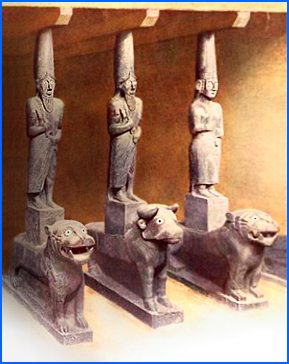
Hindu Trinity

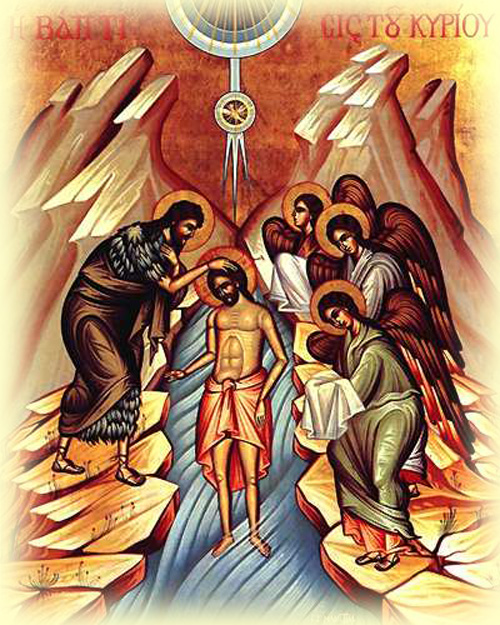
Greek Othodox Trinity

Deuteronomy 12:
29 When Yahweh, your Elohim, shall cut off the nations from before you , whither thou go in to dispossess them, and you dispossess them, and dwell in their land;
30 take heed to yourself that you be not ensnared to follow them, after that they are destroyed from before you; and that you inquire not after their gods, saying: 'How used these nations to serve their gods? even so will I do likewise.'
31 You shall not do so unto Yahweh, your Elohim; for every abomination to Yahweh, which He hates, have they done unto their gods; for even their sons and their daughters do they burn in the fire to their gods.
Mental gymnastics are necessary in order to perpetuate this idea of 'trinity'; spiritual compromise over the Word has to be the mantra of defense, because it simply is NOT in the Word!
The Ruakh HaKodesh, [Holy Spirit] is not a 'person'. NEVER ONCE is it called so in scripture. In Hebrew and Greek, the word "he" and "it" are exactly the same! So, just because it reads "he will lead you and guide you into all truth" in English, this is not ground for calling the Ruakh a 'separate' 'person'.
In Aramaic that verse [John 16:13] reads, And when the Ruakh Ha'Emet [the Spirit of Truth] comes, it will lead you into all truth".
Ruakh is a femenine noun. And the way it reads is, "V'kha'asher tavo Ruakh Ha'Emet, hee tadrikh et'khem b'khal emet, ki LO t'daber mimakhashavtah shelah, elah et kal asher tishma t'daber, v'et ha'atidot todia lakhem".
Lest you doubt what I am about to write, just note that it is the same in the Tanak [the "old testament"].
The Ruakh is FEMININE. Every Hebrew noun, verb, adjective, etc, is either masculine or feminine. One 'could' interpret that verse above, from Yeshua, more accurately linguistically by saying "SHE will lead you into all truth; for 'she will not speak her own thoughts, but what she hears she will speak, and that which is to come she will tell to you".
Now, hold your horses. NO JEW WOULD EVER translate it that way into English. It is "IT".
In English, it would be better, more accurately rendered "And when the Ruakh HaKodesh comes, IT will lead you into all truth, for it will not speak its own thoughts, but everything it hears it will speak, and will show to you things to come".
To personify this accurately, one would have to call the Ruakh "she". We know that is not the case with Elohim, though within Him he possesses all qualities of goodness.
More importantly, Our Master, Yeshua, supported the Great Command of Yisrael: [Mark 12]
Hear, O Yisrael: Yahweh is our Elohim, Yahweh is one.
And you shall love Yahweh your Elohim with all your heart, and with all your soul, and with all your might.
Some people use the fact that Elohim ends in 'im', and it's plural, so that means god is three in one. No. Because if that were the case, you'd have to find the doer of the action to match the number of the noun.
Not once does any verse show 'Elohim' to be 'acting' as more than one being. His actions are always SINGULAR; every adjective to describe him, "compassionate, gracious, merciful..." is SINGULAR. Just like every word has gender in Hebrew, every word also has 'number', and the number must match the noun and the verb and the adjective, etc.
The mystery of 'bavel' is that the harlot 'blends' other religion with the worship of Yah. This is what happened throughout the ages, and Yah warns us not to do so, over and over and over; it was this sin that drove Israel out of the land, and this will be the sin that brings judgment on the earth: Mixing truth with lies, and calling it divine truth, 'revealed' truth.
The historical record is rife with evidence that the trinity is just exactly that; the blending of scripture with the lies of paganism. Below is just a sample of that phenomenon:
"The universe was divided into three regions each of which became the domain of a god. Anu's share was the sky. The earth was given to Enlil. Ea became the ruler of the waters. Together they constituted the triad of the Great Gods" ( The Larousse Encyclopedia of Mythology, 1994, pp. 54-55)
"In the Fourth Century B.C. Aristotle wrote: 'All things are three, and thrice is all: and let us use this number in the worship of the gods; for, as the Pythagoreans say, everything and all things are bounded by threes, for the end, the middle and the beginning have this number in everything, and these compose the number of the Trinity'" (Arthur Weigall, Paganism in Our Christianity, 1928, pp. 197-198).
"The Hymn to Amun decreed that 'No god came into being before him (Amun)' and that 'All gods are three: Amun, Re and Ptah, and there is no second to them. Hidden is his name as Amon, he is Re in face, and his body is Ptah.' . . . This is a statement of trinity, the three chief gods of Egypt subsumed into one of them, Amon. Clearly, the concept of organic unity within plurality got an extraordinary boost with this formulation. Theologically, in a crude form it came strikingly close to the later Christian form of plural Trinitarian monotheism" (Simson Najovits, Egypt, Trunk of the Tree, Vol. 2, 2004, pp. 83-84).
"The ancient Babylonians recognized the doctrine of a trinity, or three persons in one god— as appears from a composite god with three heads forming part of their mythology, and the use of the equilateral triangle, also, as an emblem of such trinity in unity" (Thomas Dennis Rock, The Mystical Woman and the Cities of the Nations, 1867, pp. 22-23).
"The Puranas, one of the Hindoo Bibles of more than 3,000 years ago, contain the following passage: 'O ye three Lords! know that I recognize only one God. Inform me, therefore, which of you is the true divinity, that I may address to him alone my adorations.' The three gods, Brahma, Vishnu, and Siva [or Shiva], becoming manifest to him, replied, 'Learn, O devotee, that there is no real distinction between us. What to you appears such is only the semblance. The single being appears under three forms by the acts of creation, preservation, and destruction, but he is one.'
"Hence the triangle was adopted by all the ancient nations as a symbol of the Deity . . . Three was considered among all the pagan nations as the chief of the mystical numbers, because, as Aristotle remarks, it contains within itself a beginning, a middle, and an end. Hence we find it designating some of the attributes of almost all the pagan gods" (Sinclair, pp. 382-383).
Egyptologist Arthur Weigall, summed up the influence of ancient beliefs on the adoption of the Trinity doctrine by the Catholic Church in the following excerpt from his previously cited book:
"It must not be forgotten that Jesus Christ never mentioned such a phenomenon [the Trinity], and nowhere in the New Testament does the word 'Trinity' appear. The idea was only adopted by the Church three hundred years after the death of our Lord; and the origin of the conception is entirely pagan . . .
"The ancient Egyptians, whose influence on early religious thought was profound, usually arranged their gods or goddesses in trinities: there was the trinity of Osiris, Isis, and Horus, the trinity of Amen, Mut, and Khonsu, the trinity of Khnum, Satis, and Anukis, and so forth . . .
"The early Christians, however, did not at first think of applying the idea to their own faith. They paid their devotions to God the Father and to Jesus Christ, the Son of God, and they recognized the mysterious and undefined existence of the Holy Spirit; but there was no thought of these three being an actual Trinity, co-equal and united in One . . .
"The application of this old pagan conception of a Trinity to Christian theology was made possible by the recognition of the Holy Spirit as the required third 'Person,' co-equal with the other 'Persons' . . .
"The idea of the Spirit being co-equal with God was not generally recognised until the second half of the Fourth Century A.D. . . . In the year 381 the Council of Constantinople added to the earlier Nicene Creed a description of the Holy Spirit as 'the Lord, and giver of life, who proceedeth from the Father, who with the Father and Son together is worshipped and glorified.' . . .
"Thus, the Athanasian creed, which is a later composition but reflects the general conceptions of Athanasius [the 4th-century Trinitarian whose view eventually became official doctrine] and his school, formulated the conception of a co-equal Trinity wherein the Holy Spirit was the third 'Person'; and so it was made a dogma of the faith, and belief in the Three in One and One in Three became a paramount doctrine of Christianity, though not without terrible riots and bloodshed . . .
"Today a Christian thinker . . . has no wish to be precise about it, more especially since the definition is obviously pagan in origin and was not adopted by the Church until nearly three hundred years after Christ" (pp. 197-203)
Yeshua is the vessel where divinity and humanity merge. He is divine. He was in Elohim in the beginning; He had no earthly father, no beginning of days, no end. But, the Ruakh 'birthed' His flesh...the Word became 'flesh'. The Word was no more separate from Elohim than your own word is from you: your will, your desire, your passion, your love. It is part of you. Elohim 'sent' His Word, Yeshua, into this world. The 'official' trinity doctrine teaches that "god came into the world and died"; no, Elohim SENT His Son into the world, who died, and Elohim RAISED HIM FROM THE DEAD.
"Come out from among them and be distinct". This doctrine merges words from the scriptures with words from the pagans, and promotes it as revealed truth.
Whoever it is that is struggling with this, I challenge you: FIND IT IN SCRIPTURE: the word 'trinity'. In any form. [triad, triune, etc].
A 'trinity' is, again, a freak. It originated in Sumeria, but, overwhelming historiography shows that this idea was PREVALENT throughout the world! I do contend that its original was with Nimrod and the tower of "Bavel", the tower of "Confusion". This doctrine has probably done more to 'confuse' the people of the world than any other doctrine, and it has served to divide those who claim to follow the Messiah. More people have died over this doctrine than any other. And again, this was the first excuse the 'church' used to KILL PEOPLE in the name of "Jesus". Can it really, then, be 'divine revelation to the "fathers", as its defenders claim?
Further reading:
http://my.telegraph.co.uk/abdulmuhd/amuhd/1208/the-dievine-trinity-and-religious-myths/
Babylonian Trinity
Egyptian Trinity
Syrian Trinity
Hindu Trinity
Greek Othodox Trinity
Deuteronomy 12:
29 When Yahweh, your Elohim, shall cut off the nations from before you , whither thou go in to dispossess them, and you dispossess them, and dwell in their land;
30 take heed to yourself that you be not ensnared to follow them, after that they are destroyed from before you; and that you inquire not after their gods, saying: 'How used these nations to serve their gods? even so will I do likewise.'
31 You shall not do so unto Yahweh, your Elohim; for every abomination to Yahweh, which He hates, have they done unto their gods; for even their sons and their daughters do they burn in the fire to their gods.
Mental gymnastics are necessary in order to perpetuate this idea of 'trinity'; spiritual compromise over the Word has to be the mantra of defense, because it simply is NOT in the Word!
The Ruakh HaKodesh, [Holy Spirit] is not a 'person'. NEVER ONCE is it called so in scripture. In Hebrew and Greek, the word "he" and "it" are exactly the same! So, just because it reads "he will lead you and guide you into all truth" in English, this is not ground for calling the Ruakh a 'separate' 'person'.
In Aramaic that verse [John 16:13] reads, And when the Ruakh Ha'Emet [the Spirit of Truth] comes, it will lead you into all truth".
Ruakh is a femenine noun. And the way it reads is, "V'kha'asher tavo Ruakh Ha'Emet, hee tadrikh et'khem b'khal emet, ki LO t'daber mimakhashavtah shelah, elah et kal asher tishma t'daber, v'et ha'atidot todia lakhem".
Lest you doubt what I am about to write, just note that it is the same in the Tanak [the "old testament"].
The Ruakh is FEMININE. Every Hebrew noun, verb, adjective, etc, is either masculine or feminine. One 'could' interpret that verse above, from Yeshua, more accurately linguistically by saying "SHE will lead you into all truth; for 'she will not speak her own thoughts, but what she hears she will speak, and that which is to come she will tell to you".
Now, hold your horses. NO JEW WOULD EVER translate it that way into English. It is "IT".
In English, it would be better, more accurately rendered "And when the Ruakh HaKodesh comes, IT will lead you into all truth, for it will not speak its own thoughts, but everything it hears it will speak, and will show to you things to come".
To personify this accurately, one would have to call the Ruakh "she". We know that is not the case with Elohim, though within Him he possesses all qualities of goodness.
More importantly, Our Master, Yeshua, supported the Great Command of Yisrael: [Mark 12]
Hear, O Yisrael: Yahweh is our Elohim, Yahweh is one.
And you shall love Yahweh your Elohim with all your heart, and with all your soul, and with all your might.
Some people use the fact that Elohim ends in 'im', and it's plural, so that means god is three in one. No. Because if that were the case, you'd have to find the doer of the action to match the number of the noun.
Not once does any verse show 'Elohim' to be 'acting' as more than one being. His actions are always SINGULAR; every adjective to describe him, "compassionate, gracious, merciful..." is SINGULAR. Just like every word has gender in Hebrew, every word also has 'number', and the number must match the noun and the verb and the adjective, etc.
The mystery of 'bavel' is that the harlot 'blends' other religion with the worship of Yah. This is what happened throughout the ages, and Yah warns us not to do so, over and over and over; it was this sin that drove Israel out of the land, and this will be the sin that brings judgment on the earth: Mixing truth with lies, and calling it divine truth, 'revealed' truth.
The historical record is rife with evidence that the trinity is just exactly that; the blending of scripture with the lies of paganism. Below is just a sample of that phenomenon:
"The universe was divided into three regions each of which became the domain of a god. Anu's share was the sky. The earth was given to Enlil. Ea became the ruler of the waters. Together they constituted the triad of the Great Gods" ( The Larousse Encyclopedia of Mythology, 1994, pp. 54-55)
"In the Fourth Century B.C. Aristotle wrote: 'All things are three, and thrice is all: and let us use this number in the worship of the gods; for, as the Pythagoreans say, everything and all things are bounded by threes, for the end, the middle and the beginning have this number in everything, and these compose the number of the Trinity'" (Arthur Weigall, Paganism in Our Christianity, 1928, pp. 197-198).
"The Hymn to Amun decreed that 'No god came into being before him (Amun)' and that 'All gods are three: Amun, Re and Ptah, and there is no second to them. Hidden is his name as Amon, he is Re in face, and his body is Ptah.' . . . This is a statement of trinity, the three chief gods of Egypt subsumed into one of them, Amon. Clearly, the concept of organic unity within plurality got an extraordinary boost with this formulation. Theologically, in a crude form it came strikingly close to the later Christian form of plural Trinitarian monotheism" (Simson Najovits, Egypt, Trunk of the Tree, Vol. 2, 2004, pp. 83-84).
"The ancient Babylonians recognized the doctrine of a trinity, or three persons in one god— as appears from a composite god with three heads forming part of their mythology, and the use of the equilateral triangle, also, as an emblem of such trinity in unity" (Thomas Dennis Rock, The Mystical Woman and the Cities of the Nations, 1867, pp. 22-23).
"The Puranas, one of the Hindoo Bibles of more than 3,000 years ago, contain the following passage: 'O ye three Lords! know that I recognize only one God. Inform me, therefore, which of you is the true divinity, that I may address to him alone my adorations.' The three gods, Brahma, Vishnu, and Siva [or Shiva], becoming manifest to him, replied, 'Learn, O devotee, that there is no real distinction between us. What to you appears such is only the semblance. The single being appears under three forms by the acts of creation, preservation, and destruction, but he is one.'
"Hence the triangle was adopted by all the ancient nations as a symbol of the Deity . . . Three was considered among all the pagan nations as the chief of the mystical numbers, because, as Aristotle remarks, it contains within itself a beginning, a middle, and an end. Hence we find it designating some of the attributes of almost all the pagan gods" (Sinclair, pp. 382-383).
Egyptologist Arthur Weigall, summed up the influence of ancient beliefs on the adoption of the Trinity doctrine by the Catholic Church in the following excerpt from his previously cited book:
"It must not be forgotten that Jesus Christ never mentioned such a phenomenon [the Trinity], and nowhere in the New Testament does the word 'Trinity' appear. The idea was only adopted by the Church three hundred years after the death of our Lord; and the origin of the conception is entirely pagan . . .
"The ancient Egyptians, whose influence on early religious thought was profound, usually arranged their gods or goddesses in trinities: there was the trinity of Osiris, Isis, and Horus, the trinity of Amen, Mut, and Khonsu, the trinity of Khnum, Satis, and Anukis, and so forth . . .
"The early Christians, however, did not at first think of applying the idea to their own faith. They paid their devotions to God the Father and to Jesus Christ, the Son of God, and they recognized the mysterious and undefined existence of the Holy Spirit; but there was no thought of these three being an actual Trinity, co-equal and united in One . . .
"The application of this old pagan conception of a Trinity to Christian theology was made possible by the recognition of the Holy Spirit as the required third 'Person,' co-equal with the other 'Persons' . . .
"The idea of the Spirit being co-equal with God was not generally recognised until the second half of the Fourth Century A.D. . . . In the year 381 the Council of Constantinople added to the earlier Nicene Creed a description of the Holy Spirit as 'the Lord, and giver of life, who proceedeth from the Father, who with the Father and Son together is worshipped and glorified.' . . .
"Thus, the Athanasian creed, which is a later composition but reflects the general conceptions of Athanasius [the 4th-century Trinitarian whose view eventually became official doctrine] and his school, formulated the conception of a co-equal Trinity wherein the Holy Spirit was the third 'Person'; and so it was made a dogma of the faith, and belief in the Three in One and One in Three became a paramount doctrine of Christianity, though not without terrible riots and bloodshed . . .
"Today a Christian thinker . . . has no wish to be precise about it, more especially since the definition is obviously pagan in origin and was not adopted by the Church until nearly three hundred years after Christ" (pp. 197-203)
Yeshua is the vessel where divinity and humanity merge. He is divine. He was in Elohim in the beginning; He had no earthly father, no beginning of days, no end. But, the Ruakh 'birthed' His flesh...the Word became 'flesh'. The Word was no more separate from Elohim than your own word is from you: your will, your desire, your passion, your love. It is part of you. Elohim 'sent' His Word, Yeshua, into this world. The 'official' trinity doctrine teaches that "god came into the world and died"; no, Elohim SENT His Son into the world, who died, and Elohim RAISED HIM FROM THE DEAD.
"Come out from among them and be distinct". This doctrine merges words from the scriptures with words from the pagans, and promotes it as revealed truth.
Whoever it is that is struggling with this, I challenge you: FIND IT IN SCRIPTURE: the word 'trinity'. In any form. [triad, triune, etc].



.jpg)
