
None of those guys caught more touchdowns than Isaiah Horton did last year. He belongs in the top 10.
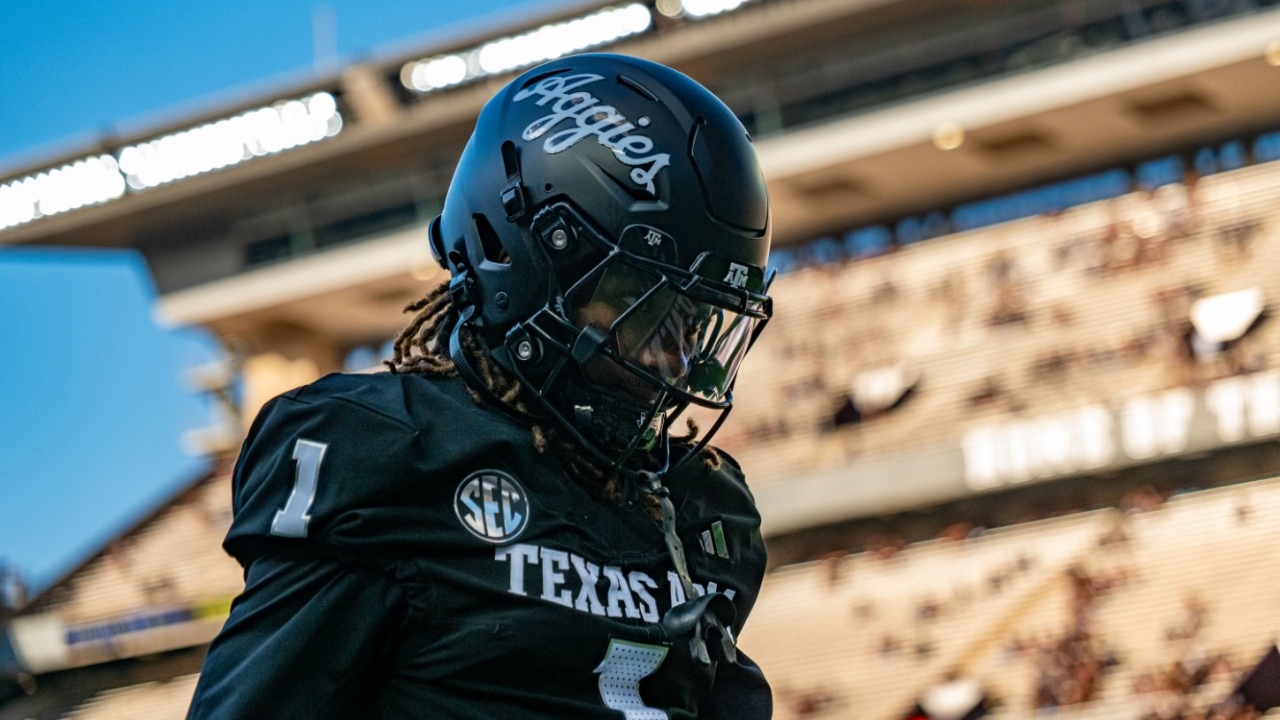
Photo by Brian Jones
It’s a new world when it comes to catching passes in the SEC.
You know all the cliché reasons why that’s the case — NIL, transfer portal, spread offenses, etc. What you might not realize is what’s been happening in that new world.
Last year, the seven leading receivers in the SEC were former transfers. In 2024, the eight leading receivers in the SEC were — you guessed it — former transfers.
That tells us that we have to be willing to accept that guys without SEC experience can step into the conference and become one of the top receivers. We should also probably have a certain level of appreciation for a guy entering Year 3 at the same school, and it’s possible that he’ll benefit from continuity with a quarterback and/or scheme.
For today’s discussion, I wanted to dig into the top pass-catchers in the SEC for 2026. That means I can include tight ends. Will I include multiple tight ends? Eh, you’ll see, but one is definitely on the short list.
I base these rankings in large part on what I’ve already seen from them, but more than ever, it’s how I think they’ll look in Week 1 when they step on the field. Some guys have the past production to back that up, and some guys will be more of a projection based on certain things I’ve seen them do.
Here are my top 10 SEC pass-catchers for 2026:
Honorable mention: Jayce Brown (LSU WR), Lotzeir Brooks (Alabama WR), Eric Singleton Jr. (Florida WR), Donovan Olugbode (Mizzou WR), Deuce Alexander (Ole Miss), Trell Harris (Oklahoma WR), Isaiah Horton (Texas A&M WR), Dallas Wilson (Florida WR), Junior Sherrill (Vanderbilt WR), Jackson Harris (LSU WR).
10. Mike Matthews, Tennessee WR
IMAGN IMAGES via Reuters Connect
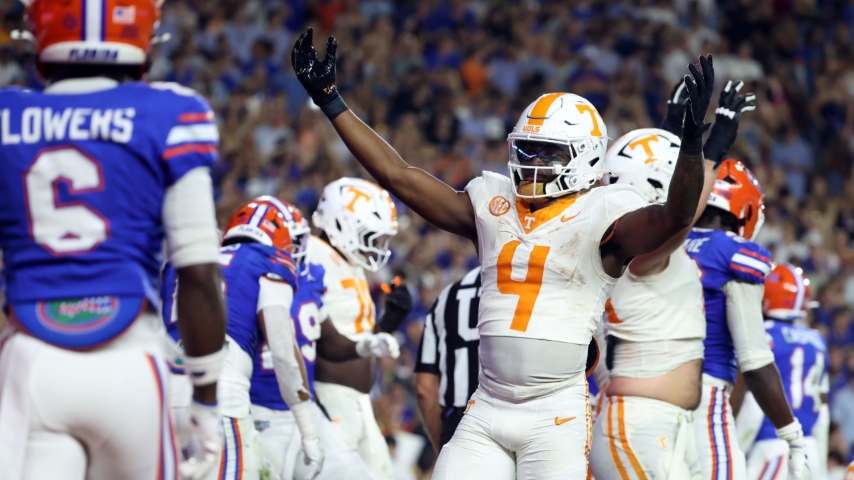
In two seasons with the Volunteers, Mike Matthews has caught 60 passes for 903 yards and six touchdowns.
What I like — We’re talking about a second-year receiver who had more yards than fellow five-star receivers from the Class of 2024, Cam Coleman and Ryan Coleman-Williams. Matthews had the Year 2 bump that Tennessee fans hoped for, and he did so for one of the nation’s most prolific offenses. So why isn’t he even higher on this list? He was the third option in that passing game, which I’d expect to regress, and he had twice as many drops (6) as contested catches (3). But Matthews being Josh Heupel’s next 1,000-yard receiver is very much in play.
9. Ryan Wingo, Texas WR
What I like — Wingo had what I’d call a disappointing season based on some lofty preseason expectations, and yet, he still finished with 68 catches for 837 yards, which included a 100-yard game during Texas’ furious comeback at Mississippi State. Can he improve? Absolutely. Seven drops is too many for a player of his caliber. But I like that Arch Manning still targeted him twice as much as any other player on that team, and while that distribution will inevitably shift with the arrival of the aforementioned Coleman, Wingo is still an extremely talented and trusted target who could be a dynamic player on one of the nation’s top offenses.
8. Anthony Evans III, Mississippi State WR
IMAGN IMAGES via Reuters Connect
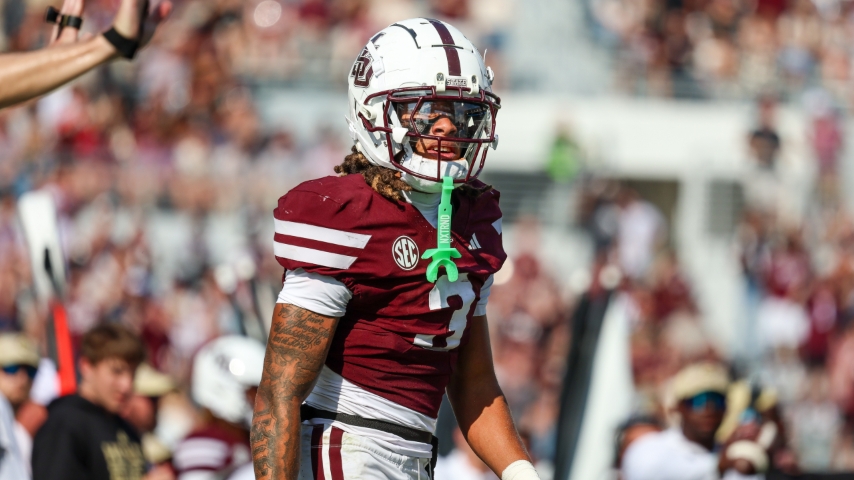
Anthony Evans III has played for both SEC Bulldogs, beginning his career at Georgia before transferring to Mississippi State ahead of 2025.
What I like — Take note this year when Kamario Taylor makes an unbelievable play to escape multiple pass-rushers, and inevitably finds Evans for a big gain. It’ll happen a lot in 2026. Evans had a breakout year after transferring from Georgia, and not coincidentally, his two biggest games came in Mississippi State’s two biggest wins (vs. Arizona State and vs. Arkansas). Evans might not have been the go-to option last year because of SEC receiving yards leader Brenen Thompson, but he’s poised to take that role in Jeff Lebby’s offense.
7. Isiah Canion, Georgia WR
What I like — The numbers won’t blow you away. Just 480 receiving yards and four touchdowns last year at Georgia Tech doesn’t suggest that Canion is about to become the second 1,000-yard receiver at Georgia after crossing enemy lines. But the more I actually watched Canion’s game in that low-volume passing offense at Georgia Tech, the more I talked myself into being an ideal fit with Gunner Stockton. The way that he moves at 6-foot-4 is going to make him the go-to target in that offense, and it won’t surprise me if he ends up leading the SEC in touchdown catches in 2026.
6. Braylon Staley, Tennessee WR
What I like — Casual college football fans couldn’t tell you that Staley was the SEC’s Offensive Freshman of the Year. Shoot, some diehard fans might not even be able to tell you that. Staley popped as a redshirt freshman, and he had a more productive season than second-year guys like Coleman, Coleman-Williams and Wingo. Staley could stand to improve his drops (6), but the guy who finished second in the conference in receptions per game is going to be heavily involved in a new-look Tennessee passing attack.
5. Ryan Coleman-Williams, Alabama WR
Gary Cosby Jr.-Imagn Images
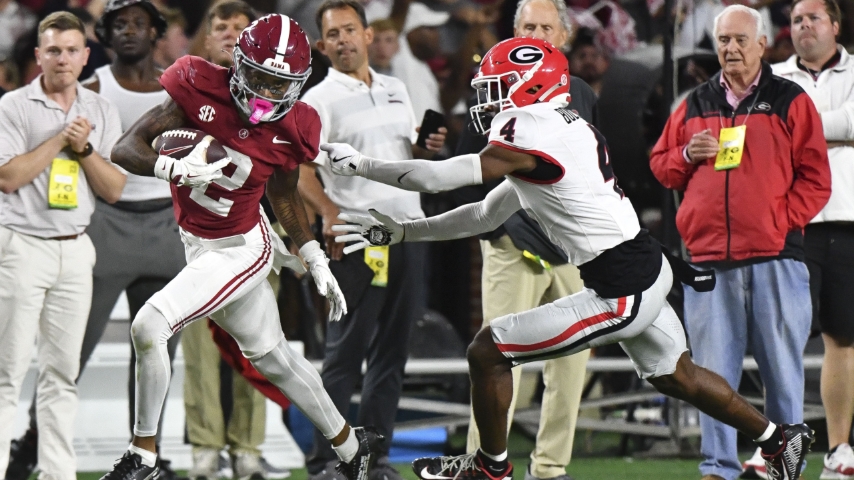
Ryan Coleman-Williams had 865 receiving yards as a true freshman in 2024 before reeling in 689 last fall.
What I like — Let’s start with this. I like the fact that Coleman-Williams is 19 years old, and he’s already got 1,600 scrimmage yards and 14 touchdowns playing in the SEC. It’s easy to lose sight of that because Coleman-Williams has been as dissected as any non-quarterback since his arrival in Tuscaloosa. The guy who led Power Conference receivers with 10 drops has to be more consistent. We know that. We also know that there are very few guys on this list that you’d say can take over a game with mammoth implications. Coleman-Williams checks that box.
4. Trey’Dez Green, LSU TE
What I like — I love that for 99 percent of pass-catchers, the goal-line fade is probably a bad play-call, but for Green, it’s a cheat code. The preseason All-American stayed at LSU instead of hitting the transfer portal because of how Lane Kiffin’s offense utilizes the tight end. His ability to high-point the football at 6-foot-7 is unmatched at the position. It’s why he had a whopping 12 contested catches (no other returning FBS tight end had more than eight). What’ll be fun to see is how he’s schemed open in space, which Charlie Weis Jr. consistently does well. Green might just turn into a cheat code all over the field in Year 1 of the Kiffin era.
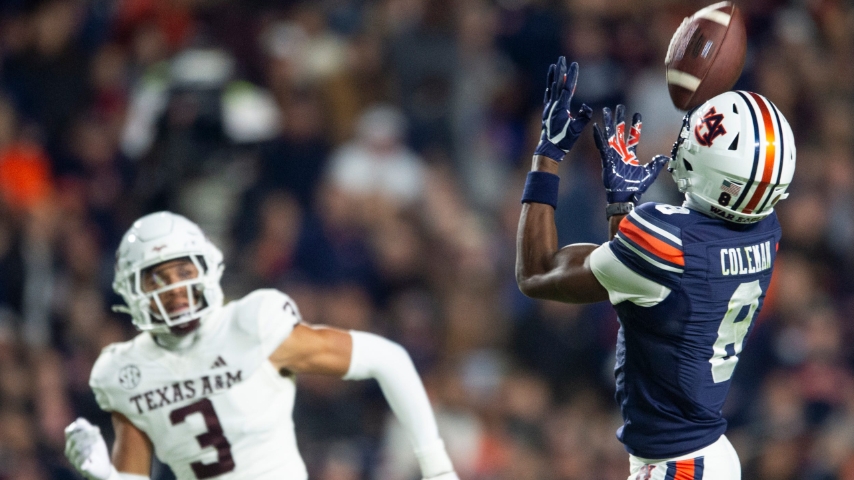
3. Cam Coleman, Texas WR
Jake Crandall/ Advertiser
Cam Coleman amassed 1,306 career receiving yards in 23 games at Auburn.
What I like — Look. If you think that Coleman is on the same level as Jeremiah Smith, take a deep breath and remember that we’re still waiting on him to finish in the top 15 in the SEC in receiving. If you think that Coleman isn’t an elite receiver, take a deep breath and remember that this guy led the SEC with nine contested catches on 20-yard throws even though he had a quarterback who refused to throw downfield. Coleman also had 13 contested catches, which was even more than No. 4 overall pick Carnell Tate. It wasn’t a coincidence that he had a career day in the first game after Hugh Freeze was fired, and it won’t be a coincidence when he has a career year in his first season after leaving Auburn for Texas.
2. Mario Craver, Texas A&M WR
What I like — When KC Concepcion blossomed into a first-round receiver, it seemed like too many people forgot about Craver. As in, the guy who had just two fewer catches and two fewer yards than Concepcion. Among Power Conference receivers, Malachi Toney and Zachariah Branch were the only guys who had more YAC yards than Craver. Go ask Notre Dame about what Craver can do after the catch. On top of that, Craver led SEC receivers with an average of 114 yards against teams that finished ranked in the AP Poll. Craver’s return was one of the most important among the 2025 Playoff teams, and there’s no doubt that he’ll continue to be a trusted target of Marcel Reed.
1. Isaiah Sategna, Oklahoma WR
What I like — It might be an unpopular opinion to put Sategna at the top of this list, but hear me out. All he did last year was lead the conference in receiving yards in SEC play, and he tied for the SEC lead with 18 catches for 20 yards or more. Oh, and he led all FBS receivers with 438 receiving yards on third down (that was 108 more than any Power Conference receiver). That context is important because Oklahoma’s passing game regressed with a banged-up John Mateer in the latter half of the season. If not for Sategna, who bailed them out in multiple late-season games, OU wouldn’t have made the Playoff. You can’t say that about any other SEC receiver. With a healthy Mateer, Sategna is poised for even bigger things in 2026.
Never miss the latest news from TexAgs!
Join our free email list