
A couple of months ago, one of our co-workers brought a plastic tub to us and said this was some possessions of an old family member and they were thinking about getting rid of them, would we want them. As we opened the tub, we were over powered by the smell of mildew, dust, and time. Within a few minutes, I could no longer say it was the allergens that were bringing the tears to my eyes.
Isaac Hutchin was born in the eastern Kansas county of Linn. He lived in La Cygne, KS until he joined the Marine Corps in 1939. He went to Boot Camp at MCRD San Diego and was then assigned to the FMF for a very short period. In 1940 he was transferred to Tientsen China. While on duty there, an impacted tooth forced him to U.S. Embassy in Peking for medical treatment. He would remain as part of the embassy guard until his transfer in 1941.
In early 1941, Hutchin learned his father was terminally ill. His mother originally wrote President Roosevelt asking for a humanitarian discharge, which Hutchin fought against. Instead he settled for a transfer to Mare Island to be close to home when his father passed. It was this re-assignment that prevented Hutchin from spending the war as a POW. When Japan attacked Pearl Harbor, the 4th Marines were scattered between posts in China and the Philippines. All would be captured or killed by mid-1942.
Hutchin, volunteered for the newly formed Para Marines, and spent early 1942 in Lakehurst, New Jeresey
and New River, North Carolina before becoming part of the 1st Marine Parachute Regiment.
With the invasion of Guadalcanal in August 1942, Hutchin participated in the assault on Gavutu and later the defense of Bloody Ridge on Guadalcanal. Hutchin would fight in the assault on Vella Lavella and Bouganville (Choiseul raid) where a near miss by a sniper put a hole in his helmet. During one of these actions (we have not been able to figure out exactly which one it was) Hutchin lured a Japanese officer out into open by calling out "come here" in Japanese. The Para Marines would receive a personal commendation from Halsey for its conduct during the Choiseul raid.
In February 1944, the Para Marines, a costly organization to train and who had never made a combat jump, were disbanded and the members sent to the newly organized 5th Marine Division. Hutchin was sent home for leave where his exploits made the Wichita Eagle newspaper.
After training the 5th division up to operational standards, Hutchin landed on Iwo Jima late in the afternoon of D-Day. He would fight through the majority of the campaign. On 19 March, while directing fire from a halftrack on enemy positions during the Battle of the Gorge he was killed. He was posthumously awarded the Silver Star for his actions.
Ironically, there was only a week left in the campaign. He had fought across the Pacific in some of the toughest battles and survived to the very end. I think that is what tears me up the most. The things he saw and had to do to make it that far and in the end, he had to give the biggest sacrifice. Hutchin was interred on Iwo Jima but later moved (1948) to a plot in Linn County along with another Marine who had enlisted in mid-1944.
His mother received his silver star and purple hear at a ceremony held at Naval Air Station, Olathe Kansas in 1947.
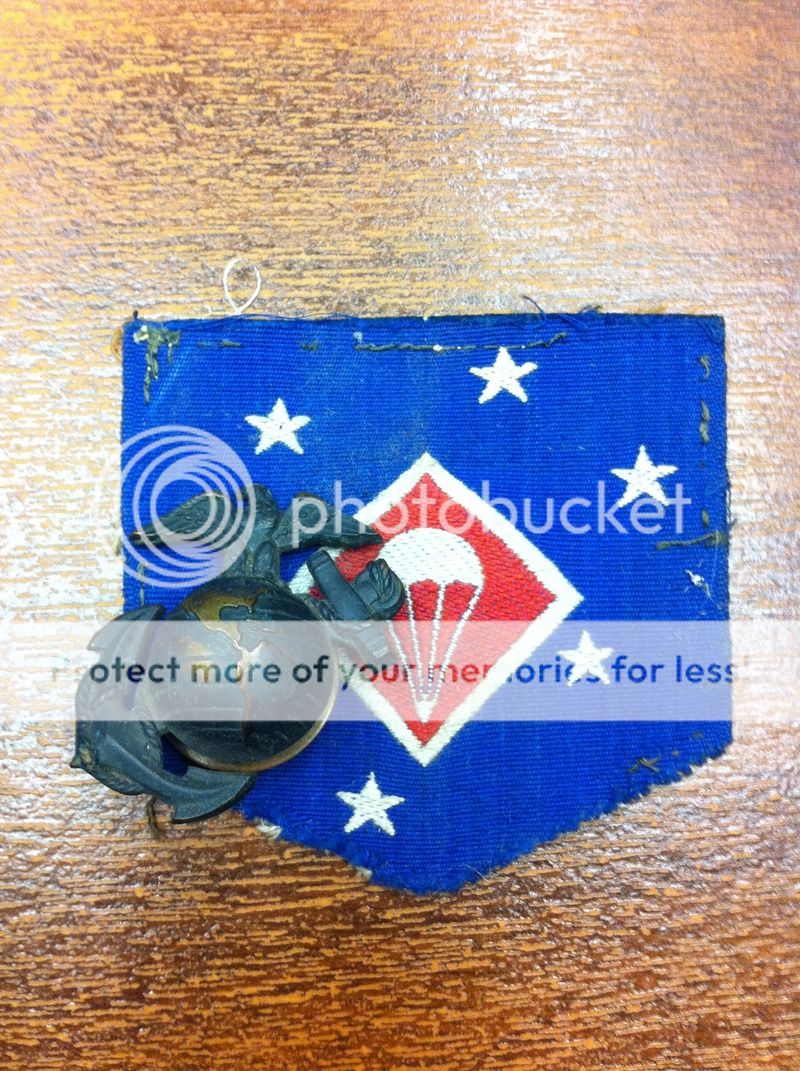
The EGA and patch that felt like a kick in the gut when I held them.
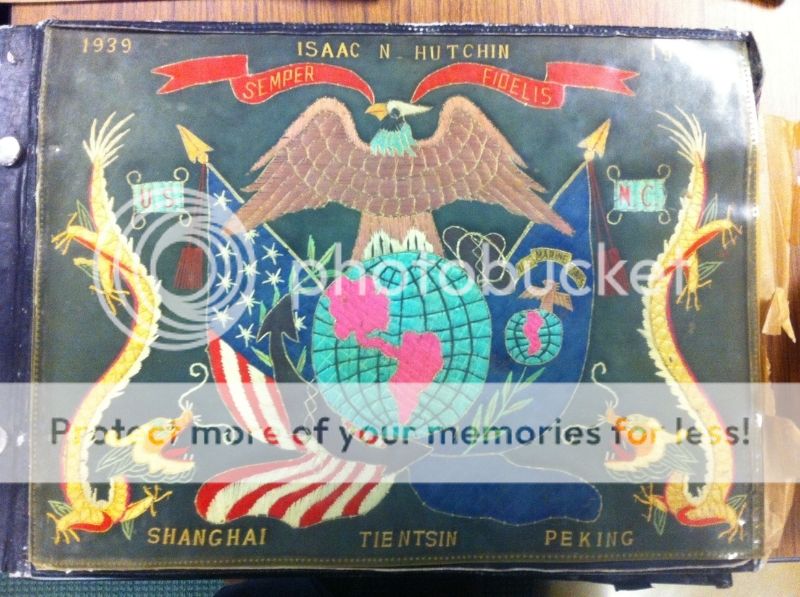
Hutchin's picture album from his time in China. He used it up to the end of 1943.
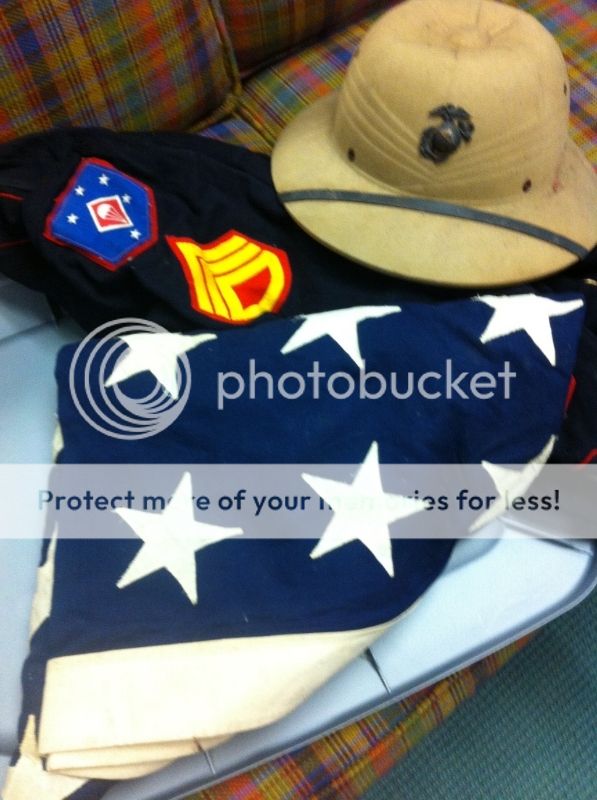
Hutchin's pith helmet and dress blue blouse. The 48 star flag is a heavy naval version with large sized metal rings. I am pretty sure it was not the one used on his casket or sent to the family.
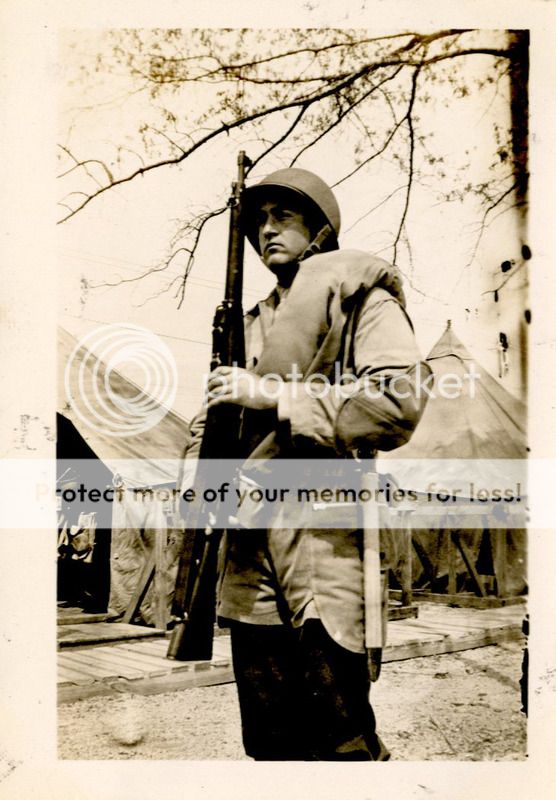
Hutchin at airborne training
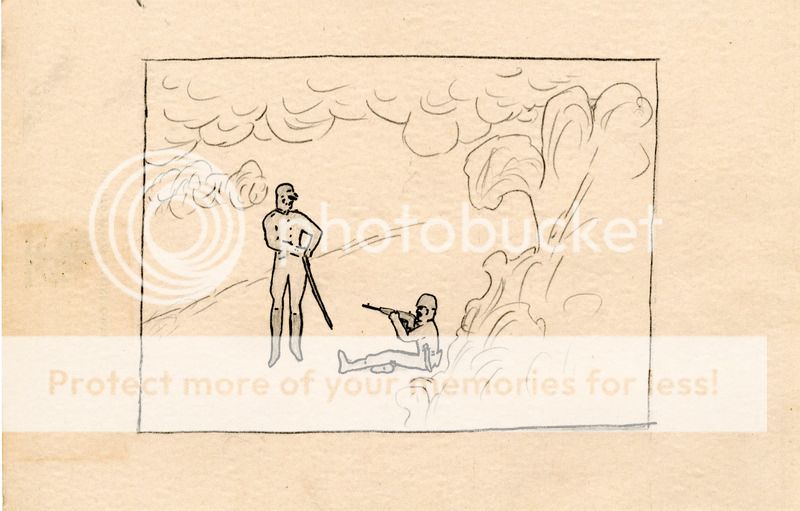 A sketch he made showing how he killed the Japanese officer
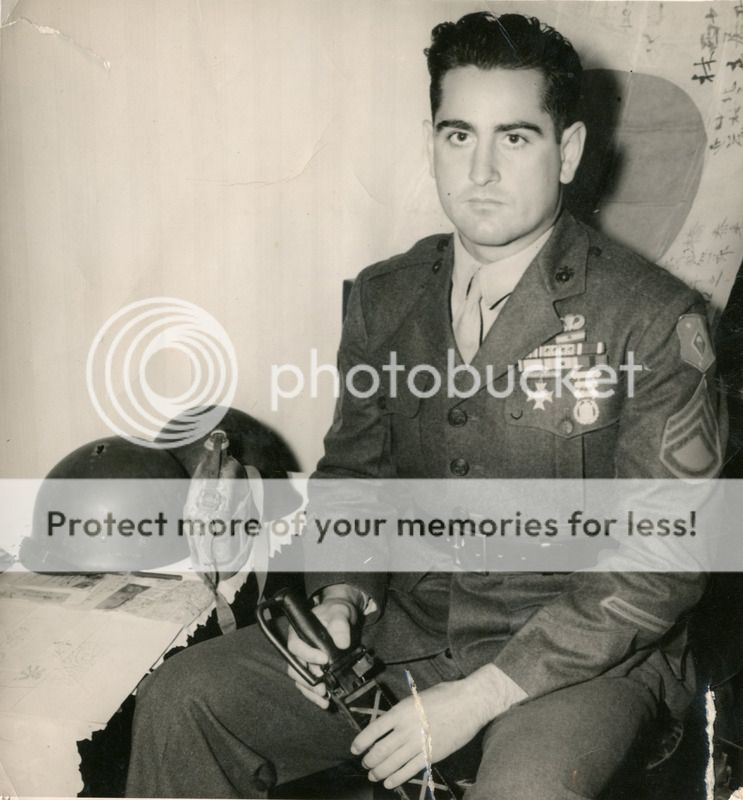
Home on leave, 1944. Picture for the Wichita Eagle. Shows his damaged helmet liner and combat knife he made from an altered bayonet.
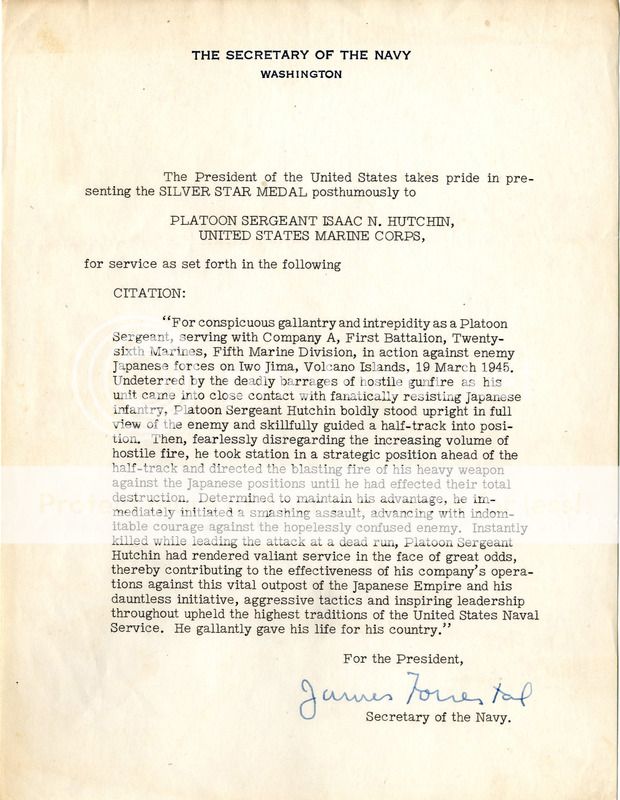
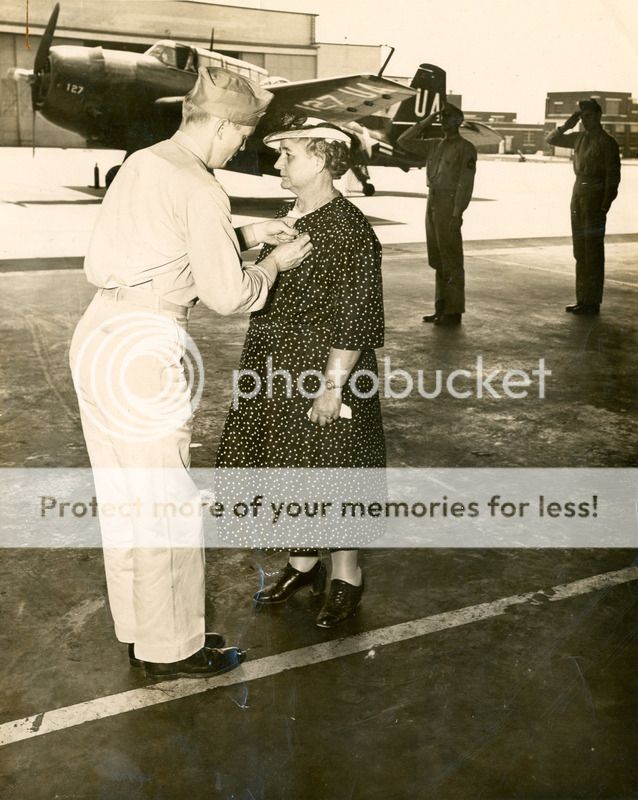
Bessie Hutchin receiving Isaac's silver star.
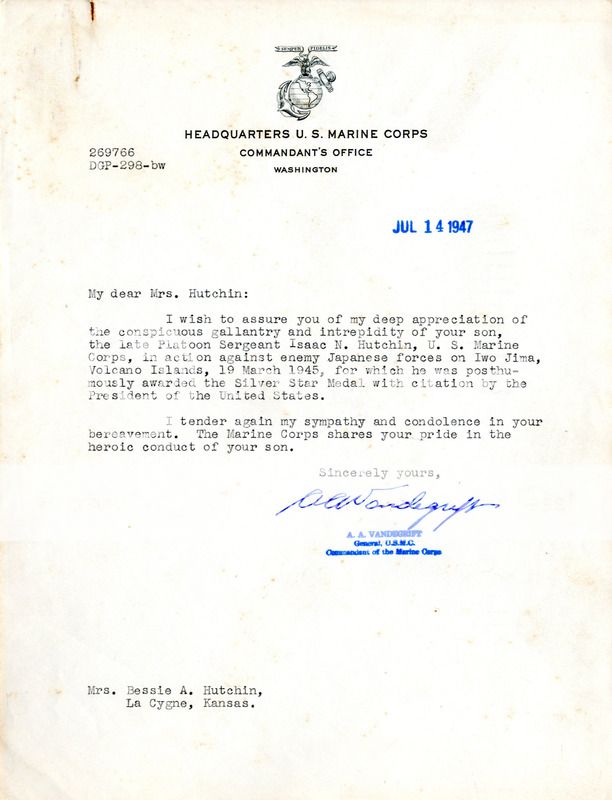
Letter from CMC Vandergrift to Mrs. Hutchin.
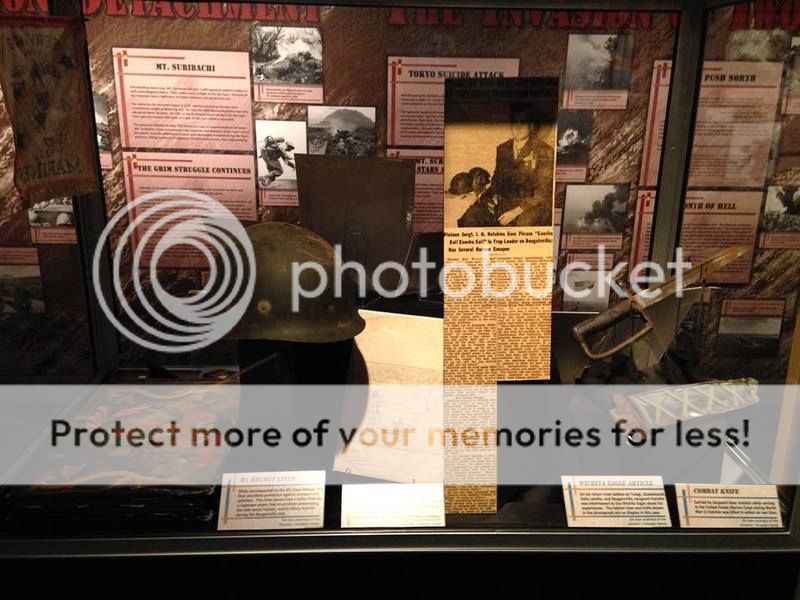 Part of the exhibit we put together in his honor.
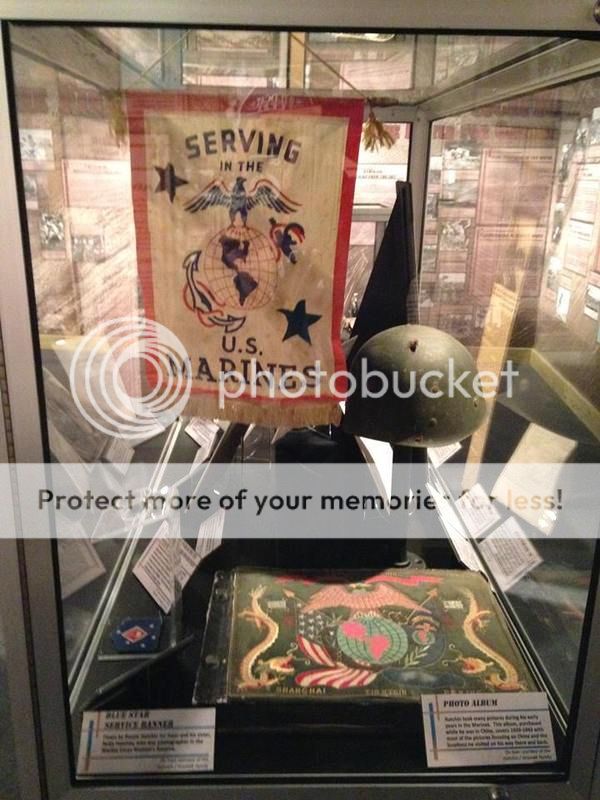
The Blue Star Banner flown by Bessie Hutchin. We have figured out the second star belonged to Isaac's sister Betty who joined the Corps in 1944 as a photographer. We are still trying to find information on her.
Isaac Hutchin was born in the eastern Kansas county of Linn. He lived in La Cygne, KS until he joined the Marine Corps in 1939. He went to Boot Camp at MCRD San Diego and was then assigned to the FMF for a very short period. In 1940 he was transferred to Tientsen China. While on duty there, an impacted tooth forced him to U.S. Embassy in Peking for medical treatment. He would remain as part of the embassy guard until his transfer in 1941.
In early 1941, Hutchin learned his father was terminally ill. His mother originally wrote President Roosevelt asking for a humanitarian discharge, which Hutchin fought against. Instead he settled for a transfer to Mare Island to be close to home when his father passed. It was this re-assignment that prevented Hutchin from spending the war as a POW. When Japan attacked Pearl Harbor, the 4th Marines were scattered between posts in China and the Philippines. All would be captured or killed by mid-1942.
Hutchin, volunteered for the newly formed Para Marines, and spent early 1942 in Lakehurst, New Jeresey
and New River, North Carolina before becoming part of the 1st Marine Parachute Regiment.
With the invasion of Guadalcanal in August 1942, Hutchin participated in the assault on Gavutu and later the defense of Bloody Ridge on Guadalcanal. Hutchin would fight in the assault on Vella Lavella and Bouganville (Choiseul raid) where a near miss by a sniper put a hole in his helmet. During one of these actions (we have not been able to figure out exactly which one it was) Hutchin lured a Japanese officer out into open by calling out "come here" in Japanese. The Para Marines would receive a personal commendation from Halsey for its conduct during the Choiseul raid.
In February 1944, the Para Marines, a costly organization to train and who had never made a combat jump, were disbanded and the members sent to the newly organized 5th Marine Division. Hutchin was sent home for leave where his exploits made the Wichita Eagle newspaper.
After training the 5th division up to operational standards, Hutchin landed on Iwo Jima late in the afternoon of D-Day. He would fight through the majority of the campaign. On 19 March, while directing fire from a halftrack on enemy positions during the Battle of the Gorge he was killed. He was posthumously awarded the Silver Star for his actions.
Ironically, there was only a week left in the campaign. He had fought across the Pacific in some of the toughest battles and survived to the very end. I think that is what tears me up the most. The things he saw and had to do to make it that far and in the end, he had to give the biggest sacrifice. Hutchin was interred on Iwo Jima but later moved (1948) to a plot in Linn County along with another Marine who had enlisted in mid-1944.
His mother received his silver star and purple hear at a ceremony held at Naval Air Station, Olathe Kansas in 1947.
The EGA and patch that felt like a kick in the gut when I held them.
Hutchin's picture album from his time in China. He used it up to the end of 1943.
Hutchin's pith helmet and dress blue blouse. The 48 star flag is a heavy naval version with large sized metal rings. I am pretty sure it was not the one used on his casket or sent to the family.
Hutchin at airborne training
A sketch he made showing how he killed the Japanese officer
Home on leave, 1944. Picture for the Wichita Eagle. Shows his damaged helmet liner and combat knife he made from an altered bayonet.
Bessie Hutchin receiving Isaac's silver star.
Letter from CMC Vandergrift to Mrs. Hutchin.
Part of the exhibit we put together in his honor.
The Blue Star Banner flown by Bessie Hutchin. We have figured out the second star belonged to Isaac's sister Betty who joined the Corps in 1944 as a photographer. We are still trying to find information on her.