Garages, where connected to houses, need to be finished with drywall by code. It's one of those places where "it's not just code because it's a law, it's a damned good idea".
Drywall forms a firebreak so when the over-pressured mower gas can next to your electric clothes dryer sparks a fire in your garage, it doesn't immediately spark a fire in your house.
Standard 1/2" drywall gives you about a 20-30 minute fire break. In the city, this is about enough time for you to find the fire and get the fire department on site. 5/8" commercial grade (x-grade, fire-grade, etc.) drywall with no other penetrations is good for about an hour on average. A double layer of 5/8" drywall is good for about two hours.
If I were to re-drywall an attached garage, I would choose a double layer of 5/8" drywall ALL walls and ceilings, as expensive and pain-in-the-ass as that might seem, so that you have two hours before a fire in your garage spreads to the rest of your structure. It's the difference between collecting vouchers from the Red Cross to stay at a Motel 8 for a few nights until your insurance company comes through and buys you something besides what you were wearing when you ran out of a fully involved structure fire, or having a slightly smoky smell in your house and getting bids on re-doing that drywall.
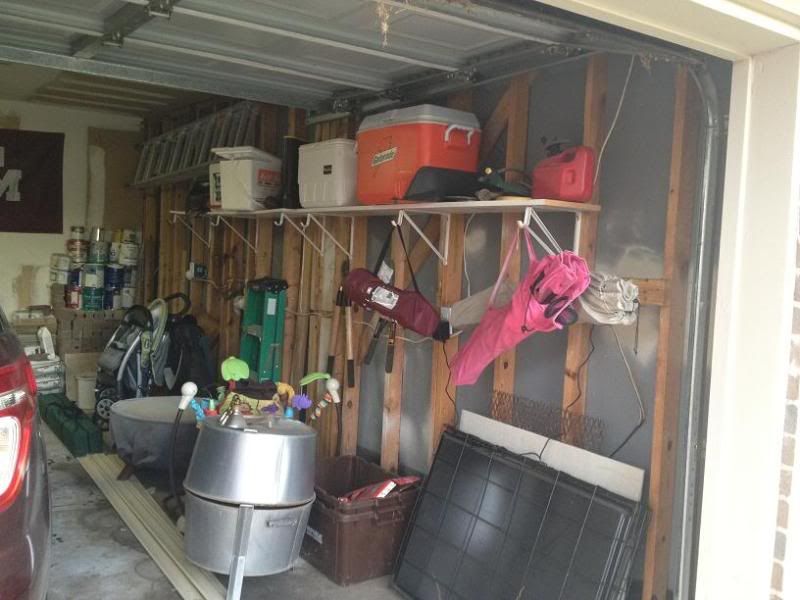
In the case of the partially finished garage with exposed wood studs, it looks like they built to minimum code and only finished the parts they needed to in order to help protect the main structure, which totally ignores the idea that the fire's going straight up those 2x4s and into your attic and will just burn your roof off. I would finish the rest, personally, but I've been through a residence fire when I was a young child and don't really want to repeat the experience.
(Note: The "the fire gets into your attic" is also why I'm not a huge fan of attic entrances in garages; it makes sense from an energy point of view but not from a fire protection point of view.)
The fire protection point of view is especially important if you live in the country and depend on volunteer fire departments to respond to structure fires. In that case, I'd most certainly make sure that any attached wooden framed structures were fit with the best passive fire protection that money can buy, and I'd also make sure that the attached structures were all fit with a smoke alarm system that communicates via wire or radio to alert you to a fire ASAP.
If your house is a newer one that is well sealed, and your drywall tape in the garage starts to fail, you should get the tape re-set and insist that the guys use a normal setting-type joint compound and not a "15 minute" mix-with-water type. Newer, well-sealed houses have a tendency to draw air *inwards* when someone's running the 100cfm shower fan, the 1000cfm vent hood for the stove, etc. This will draw the air that's in the garage into the structure. That means that when you run your bathroom fan to exhaust the air in your shower (GOOD idea or your shower will mold!) you're also drawing in gasoline fumes, exhaust fumes from your gas hot water heater or gas dryer or car, your husband's BO as he does his morning workout in the garage, etc. It's easy to refinish yourself if you need to and the materials cost about $10, but I'd hit the entire room with a coat or two of cheap latex paint afterwards, which will help keep everything dry and together.